Andrea del Verrocchio was a renowned artist, sculptor, and goldsmith of the Renaissance period. He was born in Florence, Italy in 1435 and is known for his contributions to the development of Renaissance art. In this article, we will explore the life and career of Andrea del Verrocchio in detail.
Verrocchio was born in the town of Florence and was the son of a wealthy merchant. From a young age, he showed an interest in the arts and was apprenticed to a goldsmith at the age of thirteen. He quickly rose to prominence as a talented artist and opened his own workshop in 1460.
Verrocchio's workshop was a hub of artistic activity and produced a wide range of art and crafts, including sculptures, paintings, and goldsmithing. Verrocchio was known for his attention to detail and his high standards, and he trained a number of talented apprentices, including Leonardo da Vinci.
Twenty questions, eight minutes on the clock, and a percentile measured against everyone who has taken it. No sign-up.
Take the IQ test →
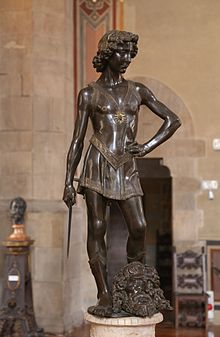
Verrocchio's artistic career was marked by a number of significant achievements. He was a member of the prestigious Guild of St. Luke and was known for his naturalistic style, which was influenced by the work of Donatello. His sculptures, such as the bronze statue of David, are known for their realism and attention to detail.
In addition to his sculptural works, Verrocchio was also a talented painter. He is known for a number of paintings, including the Baptism of Christ, which features a contribution by Leonardo da Vinci. In this painting, Leonardo painted the angel on the left side of the painting, and it is said that his work was so impressive that Verrocchio decided to stop painting altogether.
Verrocchio's impact on the art world cannot be overstated. He was a leading artist of his time and played a crucial role in the development of Renaissance art. His naturalistic style and attention to detail had a lasting influence on the art of the period, and his works continue to be admired and studied to this day.
Aside from his artistic pursuits, Verrocchio was also involved in the political and social life of Florence. He was a member of the Medici circle and was involved in the city's intellectual and cultural scene. He was also a patron of the arts and supported the work of other artists and writers.
Verrocchio passed away in 1488, leaving behind a legacy as one of the leading artists of the Renaissance period. His contributions to the world of art and his influence on the development of Renaissance art continue to be recognized and celebrated to this day.
In conclusion, Andrea del Verrocchio was a renowned artist, sculptor, and goldsmith of the Renaissance period. He was known for his naturalistic style and attention to detail, and his works continue to be admired and studied to this day. His impact on the art world cannot be overstated, and he played a crucial role in the development of Renaissance art. He was also involved in the political and social life of Florence and was a patron of the arts, supporting the work of other artists and writers. Verrocchio's legacy continues to be recognized and celebrated as one of the leading artists of the Renaissance period.
Top questions
Who was Andrea del Verrocchio?
Andrea del Verrocchio (c. 1435-1488) was an Italian sculptor, painter and goldsmith, renowned as one of the leading artists of the Italian Renaissance. Born in Florence, he trained as a goldsmith, adopting his master's surname, and later expanded his expertise to sculpture and painting.
Who were Verrocchio's famous pupils?
His workshop in Florence became a prominent center for artistic training, attracting notable apprentices such as Leonardo da Vinci, Pietro Perugino and Lorenzo di Credi. His influence is said to be evident in the work of his apprentices, such as Leonardo, who often spoke highly of his master's teachings and techniques.
What is Andrea del Verrocchio best known for?
Verrocchio is best known for the Equestrian Statue of Bartolomeo Colleoni (c. 1483-1488) in Venice, considered one of the greatest equestrian statues of the Renaissance. His other notable works include the bronze David with the Head of Goliath (c. 1465) and the bronze group Christ and Saint Thomas for the Orsanmichele church in Florence.
Did Leonardo da Vinci paint with Verrocchio?
Yes. The Baptism of Christ (c. 1470) was a collaborative work between Verrocchio and his apprentice Leonardo da Vinci. Leonardo painted the angel and parts of the landscape, and the painting contributed to the development of Renaissance art techniques.
What tombs did Verrocchio make for the Medici family?
Verrocchio designed and executed the funerary monuments for Cosimo de' Medici and for Piero and Giovanni de' Medici in the church of San Lorenzo in Florence. He also innovated in bronze casting and sculpture, influencing the direction of Renaissance art.
What was Verrocchio's family background?
Verrocchio was the son of Michele di Francesco Cioni, a tile and brick maker who later became a tax collector. Born in Florence, he trained as a goldsmith and adopted the surname of his master.