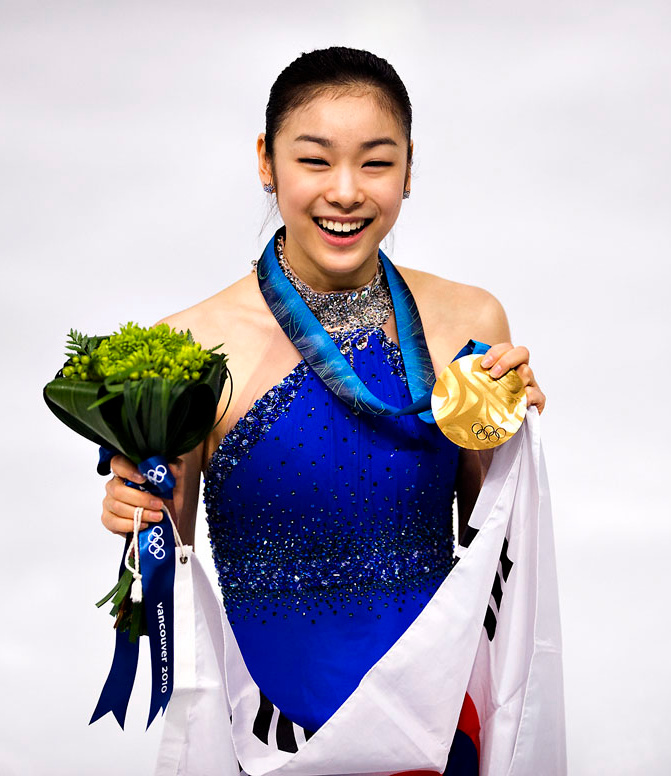
Kim Yuna was born on 5 September 1990 in Bucheon, a satellite city of Seoul, the younger of two daughters of a salaryman family with no skating background. Her mother Park Mi-hee took her to a local rink at the age of six because the older sister had started lessons and Yuna refused to be left at home. The coaches noticed immediately that the small girl had unusual rotation in her natural jump, and within months she was being routed into private lessons in a country that had almost no infrastructure for elite figure skating and no Olympic tradition in the sport.
The family's solution was relentless travel. Yuna and her mother spent her childhood commuting between rinks across the Seoul region, then later between Seoul and Toronto, where she would eventually train under the Canadian coach Brian Orser. South Korea had no national programme that could shape a champion of her level, no senior tradition to draw on and almost no ice. The story of how she became a champion is, in part, the story of a mother who paid for ice time and an ocean of plane tickets.
She won the World Junior Championship in 2006 and announced herself to the senior international circuit a season later, when she took bronze at the senior world championships. From the start her style was unusual. She combined the technical content of male skaters of her era, with consistent triple-triple combinations and a triple lutz that floated, with a musicality that the sport's old guard usually reserved for European skaters. By 2009, she was world champion.
Twenty questions, eight minutes on the clock, and a percentile measured against everyone who has taken it. No sign-up.
Take the IQ test →The Vancouver Olympics in 2010 cemented her status. Skating to Gershwin, she set world-record scores in both the short and free programmes and outpaced her closest rival, Mao Asada of Japan, by more than twenty points. The two skaters, born within months of each other, would shape an entire decade of the sport. Asada, a triple-axel specialist, became the symbol of beautiful technical risk; Kim, the symbol of programme construction and consistency. Their rivalry resonated far beyond the rinks.
After Vancouver she briefly stepped back from competition, returned to win another world title in 2013, and prepared for one last Olympic cycle in Sochi. The 2014 Olympic ladies free skate was, in the assessment of most observers and a generation of skaters, a clean and superior programme. The judges scored it second. She left the ice with silver and a controversy that would never fully die down. She did not protest, did not appeal, gave a short interview and retired.
Her achievement at home was the size of a moonshot. South Korea had no skating culture before her, no domestic competition strong enough to push a champion, and no Olympic medal in the sport. She produced a global gold and silver and pulled a generation of small Korean girls onto the ice. Every figure skater the country has produced since, from Cha Jun-hwan to Lee Hae-in, has acknowledged her as the reason they began.
She also became something rarer: an athlete the country trusted with its image. She delivered the closing speech that helped Pyeongchang win the right to host the 2018 Winter Olympics, lit the cauldron at those Games and used the platform to push for cleaner judging and better support for younger skaters. Her endorsement portfolio at her peak was so large that economists estimated her single-handed contribution to brand campaigns in the hundreds of millions of dollars, but she rarely spoke about money, and avoided most of the celebrity habits associated with that level of fame.
Yuna Kim married the singer Ko Woo-rim in 2022 and has since stepped back from the spotlight she once owned. She is the founding figure of Korean winter sport, the only Asian woman to have won an Olympic gold in singles figure skating and, in the view of many specialists, the most complete competitor the discipline produced in its post-2004 scoring era. Her last competitive programme, set to Adios Nonino, is still, more than a decade after she retired, one of the most replayed pieces of skating on the internet.
“I am not nervous because I am not at a competition. I am at practice with an audience.”— Kim Yuna
“I wanted to be the skater who made my country know what figure skating was.”— Kim Yuna
| Person | Country | Milestone | Age / Stat |
|---|---|---|---|
| Kim Yuna | South Korea | Two-time Olympic medalist; founding figure of Korean figure skating | 1990- |
| Mao Asada | Japan | Three-time world champion and Yuna's defining rival | 1990- |
| Sonja Henie | Norway | Three-time Olympic ladies champion of the early 20th century | 1912-1969 |
| Katarina Witt | East Germany | Two-time Olympic champion and crossover star | 1965- |
| Brian Orser | Canada | Olympic silver medalist and Yuna's longtime coach | 1961- |
She was the first South Korean ever to win an Olympic medal in figure skating, gold and silver, in a country with almost no winter-sport infrastructure.
She founded an entire national skating culture single-handedly, with every Korean skater since citing her as their reason to begin.
Discover More Korean Geniuses
50 of the most influential Koreans alive today — pop, film, sport, science, business — shaping global culture.
Explore Korean Geniuses →


