Every year, dozens of websites publish "highest IQ" rankings without ever explaining where the numbers come from. A score of 268 sits next to a score of 190 as though both were measured the same way — they weren't. One is a self-reported claim from a prodigy who took an unofficial test in childhood. The other is a retroactive estimate derived from a philosopher's published writings. Treating them identically is like comparing a marathon time from a GPS watch to one someone "thinks they ran" in 1789.
This guide does something different. We categorize every score by its evidence type — Test on record (a documented test result, often a childhood ratio score), Estimated (a historical estimate by researchers, almost always Cox 1926), and Claimed (a reported, self-reported or untraceable figure that cannot be checked). We profile the top 20 in full. We explain the methodology behind retroactive IQ estimation. And we address the most important question of all: does any of this actually predict greatness?
The IQ Ceiling Problem: Why "268" Is Not What You Think
Standard IQ tests — the Stanford-Binet, the Wechsler, the Cattell Culture Fair — are designed for a specific statistical purpose: to differentiate between individuals near the mean. The tests are normed so that 100 is average and one standard deviation equals 15 points. At the high end, the tests run out of ceiling around 160–200. Beyond that, there simply aren't enough test items to discriminate reliably between someone with an IQ of 190 and someone with an IQ of 240. Any score above that range is an extrapolation — a mathematical projection, not a measurement.
This matters enormously. When a prodigy takes a childhood test and performs at the maximum level on every item, a statistician can project what the score "would be" if the test extended further. That projection carries substantial error. It also assumes the test-taker's performance was consistent, that they were properly rested, and that the testing conditions were controlled. In practice, especially for childhood scores taken decades ago, none of these conditions can be verified.
Three Score Types — and Why They're Not Interchangeable
- Test on record: a documented result from a real test. Very few extreme scores qualify, and those that do are mostly childhood ratio scores: Marilyn vos Savant's 228 and Terence Tao's figure both come from childhood Stanford-Binet tests. Christopher Hirata's widely quoted 225 has no source at all.
- Estimated: Derived posthumously from historical records using the Cox (1926) method or similar frameworks. Examples: Isaac Newton (190), Leonardo da Vinci (180–220), Goethe (210). Error bars of ±30 points are standard; many historians argue they should be wider.
- Claimed: Self-reported, reported by a family member, or attributed by a third party. Includes most "extreme" scores above 230. These scores may be genuine — but they cannot be independently confirmed, and they should be read accordingly.
The Flynn Effect adds another layer of complexity for historical estimates. Named after New Zealand researcher James Flynn, the effect describes a well-documented pattern: raw IQ test scores have risen by roughly 3 points per decade throughout the 20th century, likely due to improvements in abstract thinking, nutrition, and education. This means a person born in 1650 who performed at the top of their cohort would score differently on a modern test than on one calibrated to contemporary norms. Historians who estimate IQ for historical geniuses attempt to correct for this — but the correction itself introduces additional uncertainty.
The bottom line: treat any IQ score above 200 as an upper bound, not a measurement. The ranking below uses best available evidence and clearly labels each score type.
Top 20 Highest IQ People Ever — Ranked Profiles
Each profile below includes the score type badge, a brief biography, and why the score is or isn't trustworthy. Click the name links to read full biography pages.
An American musician, composer, and multi-instrumentalist, Laibow-Koser began studying and playing music at the age of 3. The 268 is the highest figure on any published list, but it traces to an online ranking compiled by engineer Libb Thims, which calls it a "projected" score. No test, date, examiner or statement by Laibow-Koser is on record. His musical achievements are real and remarkable; the IQ number should be treated with corresponding caution.
A Singaporean child prodigy born in 1999, Cawley passed a chemistry A-level at age 7 — an extraordinary achievement that is independently documented, even if the IQ number itself is not. His early mastery of university-level science places him in genuinely rare cognitive territory, whatever the precise score.
Perhaps the most haunting figure on this list. Sidis entered Harvard at 11, lectured faculty members on four-dimensional bodies, and invented a new type of solid. He spoke over 40 languages and invented his own. He also died in obscurity at 46 in a boarding house, working a clerical job. The 250–300 comes from psychologist Abraham Sperling's 1946 book, relaying his sister's account of an unnamed psychologist; no test, date or examiner has ever been documented. What is beyond doubt is that Sidis was among the most precocious intellects in American history. His story is also the best argument for reading the "Does IQ Predict Greatness?" section below.
Tao took a Stanford-Binet test at six and scored like a typical 14-year-old, which by the old ratio method gives a figure just over 220. Tao himself calls the test noisy at that level and suggests "greater than 175" is more realistic. He went on to earn a Fields Medal in 2006 — mathematics' highest honor — and is widely regarded as the most productive research mathematician alive. He holds the record for the youngest participant in the International Mathematical Olympiad (age 10). His work, not the number, is the evidence.
Hirata won a gold medal at the International Physics Olympiad at 13 — the youngest American ever to do so. He went on to work with NASA on Mars colonization projects and is now a cosmologist at Ohio State University. The 225 attached to him has no test, statement or study behind it; its earliest traceable appearance is a 2012 "smartest people alive" infographic.
Kim spoke four languages by age 3 and solved differential calculus on Japanese television at age 5. He was listed in the Guinness Book of World Records from 1979 to 1990. Like Marilyn vos Savant, his Guinness record was retired when the organization concluded that IQ above a certain threshold was unmeasurable. Kim later returned to South Korea and lived a deliberately ordinary life, teaching at a local university — his own choice, and one he has described as deeply satisfying.
A Greek psychiatrist and psychotherapist, Katsioulis holds degrees in philosophy, medical research technology, and psychopharmacology. He is ranked #1 by the World Genius Directory and is a member of multiple high-IQ societies including Mega Society, Prometheus, and the International High IQ Society. The 205 (standard deviation 16) comes from a 2003 high-range test listed by his own society; no independent clinical record was found.
Twenty questions, eight minutes on the clock, and a percentile measured against everyone who has taken it. No sign-up.
Take the IQ test →Langan worked as a bouncer in Missouri bars while developing the Cognitive-Theoretic Model of the Universe (CTMU), a philosophical framework attempting to unify science and metaphysics. Filmmaker Errol Morris called him "the smartest man in America." Esquire reported in 1999 that his IQ was "measured at 195, give or take", naming no test; a neuropsychologist who tested him for ABC's 20/20 published no number. He appeared on the game show 1 vs. 100. Whether the CTMU constitutes a genuine intellectual contribution or elaborate autodidactic speculation remains genuinely debated among philosophers.
Guinness listed vos Savant for "Highest IQ" from 1985 to 1989, and retired the category in 1990 — officially concluding that IQ was too unreliable to track as a world record. She has been the "Ask Marilyn" columnist for Parade magazine since 1986 and is best known for her correct solution to the Monty Hall problem, which generated hundreds of outraged letters from mathematicians — all of them wrong. She was right.
Stern became the youngest graduate of Florida Atlantic University and went on to hold more than 120 US patents, primarily in computer science and telecommunications. Her father, Aaron Stern, raised her according to an intensive early stimulation program — reading her the Encyclopaedia Britannica as an infant. Whether the program created the IQ or the IQ enabled the program to work is one of the more interesting unsettled questions in developmental psychology.
Ranks #11–20: The Extended Leaderboard
Entered the University of Chicago at 9, earned an MD and PhD by 21. One of the best-documented modern prodigies; the 200 attached to him rests on no test record we could verify.
Kearney's claimed score of 325 is the highest on any list and almost universally considered a testing artifact or extrapolation error rather than a genuine measurement. His actual achievement — graduating from college at 10 — is genuinely remarkable on its own terms.
A Russian woman listed by the World Genius Directory with an IQ of 200. Little independent biographical information is available, making this one of the harder claims to evaluate.
Author of Faust, playwright, poet, novelist, scientist, and politician. Goethe's breadth across domains — the single strongest predictor in the Cox methodology — pushed his estimate among the highest of any historical figure. His scientific work on optics and plant morphology was serious enough to be cited into the 20th century.
The 40-point range here is honest, not evasive — it reflects the genuine difficulty of applying a 20th-century measurement to a 15th-century polymath. Da Vinci produced original work in painting, sculpture, architecture, music, mathematics, engineering, anatomy, geology, botany, and cartography. Whether his IQ was 180 or 220, he remains the canonical example of the category.
Newton invented calculus independently of Leibniz, formulated the laws of motion and universal gravitation, and made foundational contributions to optics — in roughly 18 months during a plague lockdown, while still in his mid-twenties. The Cox estimate of 190 is among the most widely accepted historical retroactive IQ figures.
Co-inventor of calculus, developer of binary arithmetic, founder of symbolic logic, philosopher of monads. Leibniz mastered Latin at 8 and had read most of the classics by 12. His estimate of 200 reflects both the breadth of his contributions and the early age at which they began.
Mill began learning Greek at 3, Latin at 8, and was reading Plato in the original by 10. His father ran a deliberate educational experiment on him — somewhat like Edith Stern's case, 150 years earlier. Mill's estimate is one of the more reliable historical retroactive figures because his childhood progression is documented in unusual detail in his own Autobiography.
Proved Euclid's 32nd theorem at 12. Invented a mechanical calculator at 19. Made foundational contributions to projective geometry, probability theory, and fluid mechanics — all before age 40. He also wrote Pensées, a work of philosophical theology that remains in print. His 195 estimate reflects a genuinely unusual combination of early mathematical mastery and cross-domain productivity.
The only chess player on this list, and one of the few with a real adult test on record. Kasparov became world chess champion at 22 and held the title for 15 years. In 1987 Der Spiegel arranged intelligence tests: he scored 135 on an Eysenck test and 123 on Raven's Progressive Matrices. The 190 that circulates online has no test behind it. Chess performance correlates with IQ but is not a perfect proxy.
The Methodology Behind Retroactive IQ Estimation
In 1926, psychologist Catherine Cox published a landmark study titled The Early Mental Traits of Three Hundred Geniuses. Working under Lewis Terman at Stanford, Cox gathered biographical data on 301 historical figures and attempted to estimate their childhood IQs using developmental milestones. Her methodology became the foundation for virtually every retroactive IQ estimate still cited today.
Cox's Four Proxy Variables
- Age of first documented skill acquisition — How old was the subject when they first read, wrote, performed a calculation, or mastered an instrument? Earlier mastery implies faster cognitive development.
- Complexity of earliest documented work — A child who reads Greek at 7 provides different evidence than one who reads basic French. Cox calibrated for complexity, not just age.
- Variety of domains mastered early — Cross-domain early mastery (mathematics and music and language) is a stronger predictor than depth in a single domain.
- Recorded mental feats and contemporaries' assessments — Letters, diary entries, and contemporary biographical accounts describing unusual mental performance were systematically coded.
Terman, who oversaw the study, was careful to note that the estimates carried a standard error of roughly ±10 IQ points for the best-documented subjects — and acknowledged that for figures with sparse early records, the error could exceed ±30 points. Modern historians who use the Cox method typically adopt the wider error bar.
There is an additional systematic bias: the Cox study, and most subsequent retroactive estimates, rely on figures who were documented precisely because they did remarkable things. The sample is biased toward unusually productive lives, which means we are not capturing the full distribution of high-IQ historical individuals — we are capturing the ones who left evidence. This is sometimes called survivorship bias in the historical record.
The practical upshot: when you see "Leonardo da Vinci, IQ 180–220," the range is not laziness or inconsistency. It is honest acknowledgment that the uncertainty is real, that the best available estimate spans 40 points, and that anyone who gives you a single number for a Renaissance polymath is expressing confidence they should not have.
High-IQ Societies: The Gatekeepers of the Extreme Range
Several formal organizations exist specifically to identify and connect people with verified high IQs. They use their own normed tests and have progressively stricter admission thresholds.
| Society | Percentile Required | IQ Equivalent | Est. Global Members |
|---|---|---|---|
| Mensa | Top 2% | IQ 130+ | ~134,000 |
| Intertel | Top 1% | IQ 135+ | ~2,000 |
| Triple Nine Society | Top 0.1% | IQ 146+ | ~1,200 |
| Prometheus Society | Top 0.003% | IQ 160+ | ~120 |
| Mega Society | Top 0.0001% | IQ 172+ | <30 |
| World Genius Directory | Various, self-submitted | Typically 170+ | ~1,000 listed |
Critically: most of the people on the ranked list above are not members of these societies. Historical figures pre-date them. Many living prodigies were tested in childhood and never joined formal societies. Membership in a high-IQ society is neither necessary nor sufficient for having the highest IQ — it reflects interest in participating, not cognitive ceiling.
The Mega Society, with fewer than 30 active members globally, represents the frontier of what can be measured through a standardized testing process. Above that threshold, all scores are extrapolations — the society itself does not claim its admission test reliably discriminates above 172.
Does IQ Predict Greatness? The Evidence Says: Partly
In 1921, Lewis Terman launched the most famous longitudinal study in psychology. He identified 1,500 California schoolchildren with IQ scores of 135 or above — his "Termites" — and tracked them for decades. His hypothesis: exceptionally high IQ would predict exceptional achievement.
The results were more nuanced than Terman expected. The Termites did well, on average — they were healthier, more educated, and more professionally successful than the general population. But none of them won a Nobel Prize. Two children who were screened for the study but excluded for failing to meet the IQ threshold went on to win Nobel Prizes in physics: William Shockley and Luis Alvarez.
Richard Feynman, whose IQ was measured at approximately 125 on a standard school test — well above average, but not prodigy-level — won the Nobel Prize in Physics in 1965 for quantum electrodynamics. His score was a floor, not a ceiling: the test simply wasn't measuring the aspects of cognition that made Feynman a great physicist.
William James Sidis — IQ estimated 250–300, entered Harvard at 11, spoke 40 languages — died alone at 46, never having published a major work under his own name. By any conventional measure of "greatness," he underperformed his IQ massively. Researchers who have studied his case suggest that extreme early pressure, social isolation, and psychological damage from his father's experiments contributed as much as IQ to his trajectory.
The emerging consensus in intelligence research is that IQ above approximately 120 functions as a threshold, not a predictor. Above 120, other variables — conscientiousness, creativity, resilience, opportunity, and what psychologist Angela Duckworth calls "grit" — increasingly determine outcomes. The marginal return of each additional IQ point decreases as you move higher. An IQ of 160 does not produce twice the achievement of an IQ of 130; it produces approximately the same achievement, with less friction.
This is not an argument against intelligence — it is an argument for a more complete picture. IQ is a floor, not a ceiling. The people on this list reached the floor others could never reach. What they built on top of it is a different story.
Complete IQ Rankings Table — Top 25
| Rank | Name | IQ Score | Score Type | Notable Achievement |
|---|---|---|---|---|
| 1 | Marnen Laibow-Koser | 268 | No source | Musician, composer; multi-instrumentalist since age 3 |
| 2 | Ainan Celeste Cawley | 263 | Unverified | Chemistry A-level at 7; Singaporean prodigy |
| 3 | William James Sidis | 250–300 | Reported | Harvard at 11; 40+ languages; died in obscurity at 46 |
| 4 | Terence Tao | 225–230 | Childhood test | Fields Medal 2006; childhood ratio score, Tao suggests "greater than 175" |
| 5 | Christopher Hirata | 225 | No source | Physics Olympiad gold at 13; no source for 225 |
| 6 | Michael Kearney | 325 (disputed) | Claimed | Graduated college at 10; score widely considered an error |
| 7 | Kim Ung-yong | 210 | Guinness | 4 languages at 3; calculus on TV at 5 |
| 8 | Evangelos Katsioulis | 205 | Self-reported | Greek psychiatrist; World Genius Directory #1 |
| 9 | Edith Stern | 200 | Unverified | Youngest FAU grad; 120+ US patents |
| 10 | Sho Yano | 200 | Unverified | University of Chicago at 9; MD/PhD by 21 |
| 11 | Nadia Camukova | 200 | Claimed | World Genius Directory listing; limited independent data |
| 12 | Gottfried Leibniz | 200 | Estimated | Co-invented calculus; founded symbolic logic |
| 13 | Christopher Langan | 195–210 | Reported | CTMU theory; "smartest man in America" (Errol Morris) |
| 14 | Blaise Pascal | 195 | Estimated | Proved Euclid at 12; invented calculator at 19 |
| 15 | Johann Wolfgang von Goethe | 210 | Estimated | Author of Faust; polymath across arts and sciences |
| 16 | Isaac Newton | 190 | Estimated | Invented calculus; laws of motion; plague-year productivity |
| 17 | John Stuart Mill | 190 | Estimated | Greek at 3; Latin at 8; leading 19th-century philosopher |
| 18 | Garry Kasparov | 135 (tested; 190 has no source) | Test on record | World chess champion 1985–2000 |
| 19 | Marilyn vos Savant | 186 | Guinness | Guinness listing 1985–1989 (228, childhood ratio score) |
| 20 | Leonardo da Vinci | 180–220 | Estimated | Painter, engineer, anatomist, musician, scientist |
| 21 | Nikola Tesla | 160–310 (range) | No source | AC electrical systems; 300 patents |
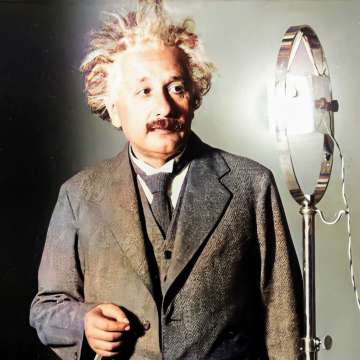
| 22 | Albert Einstein | 160–165 | No source | Special & general relativity; Nobel Prize 1921 |
| 23 | Richard Feynman | ~125 | Reported | Nobel Prize Physics 1965; school test reported by biographer James Gleick |
| 24 | Stephen Hawking | ~160 | No source | Black hole radiation; A Brief History of Time |
| 25 | Aristotle | ~180 | No source | Founder of formal logic; 200+ surviving works |
Frequently Asked Questions
The Takeaway
The question "who has the highest IQ" is more interesting than its answer. The answer depends entirely on how you define "highest" and what you accept as evidence. Marnen Laibow-Koser's 268 is the largest number on any list, and no test stands behind it. Terence Tao's figure comes from a childhood test he himself says should be read as "greater than 175". Leonardo da Vinci's 180 is a scholar's estimate from a 1926 book. Only the evidence tells them apart: see Famous IQ Claims, Fact-Checked.
What we can say with confidence: the cognitive ceiling for human performance is far higher than average tests reveal. A tiny fraction of people — perhaps 1 in a million — operate at a level of abstract reasoning, working memory, and pattern recognition that standard tests cannot fully capture. Some of them become Terence Tao. Some become Christopher Langan. Some become William James Sidis. The difference between those outcomes is not IQ.