The 14 names, ranked
- Isaac Newton — Laws of motion and gravitation, calculus, optics — Cox (1926) estimate 190
- Carl Friedrich Gauss — Number theory, statistics, geodesy, astronomy — later estimates 250–300
- Leonardo da Vinci — Painter, anatomist, engineer — estimates 180–220
- Gottfried Wilhelm Leibniz — Co-inventor of calculus, binary arithmetic — Cox (1926) estimate 205
- Albert Einstein — Relativity, photoelectric effect — estimates 160–190; never tested
- John von Neumann — Game theory, computer architecture, quantum mechanics — estimates 190
- James Clerk Maxwell — Unified electricity, magnetism and light — estimate 190
- Johann Wolfgang von Goethe — Poet, novelist, natural scientist — Cox (1926) estimate 210, the highest in her study
- Srinivasa Ramanujan — 3,900 results in number theory, largely self-taught — estimate 185
- Nikola Tesla — Alternating current, induction motor, radio — estimates 160–310
- Marie Curie — Two Nobel Prizes in two sciences — estimates 180–200
- William James Sidis — Harvard at 11; claimed 250–300, the highest figure ever attached to a person
- Blaise Pascal — Probability theory, the calculator, fluid pressure — Cox (1926) estimate 195
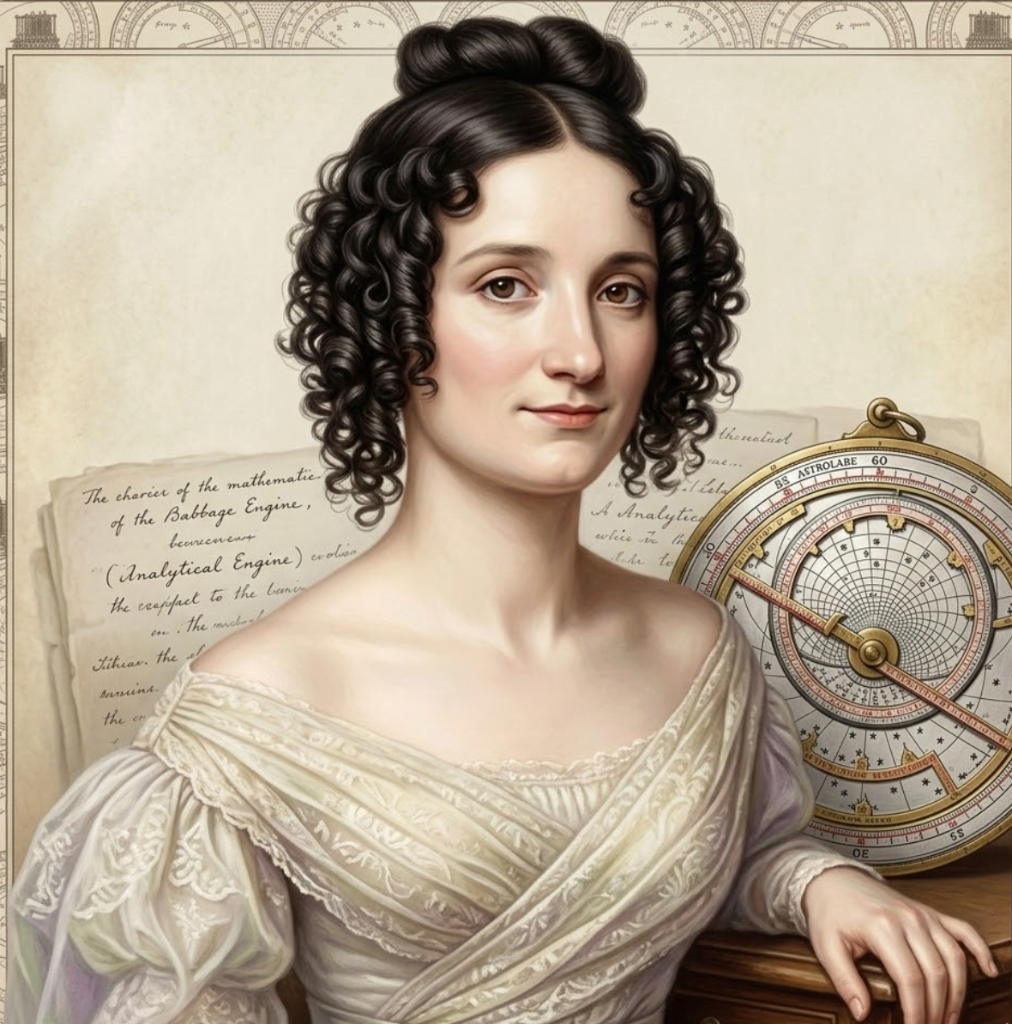
- Ada Lovelace — First published algorithm for a machine — no estimate on record
Ranking criterion: breadth, originality and durability of documented achievement. The IQ figures are the estimates most often cited (Catharine Cox, 1926; later popular estimates) and are shown so readers can see them labelled for what they are — none is a measured score.
That distinction matters. Intelligence tests are standardized assessments administered under particular conditions and norms. Newton, Leonardo da Vinci and most other historical candidates never sat a modern IQ test. A number assigned decades or centuries later cannot be treated as a measured score, even when it is presented with impressive precision.
On this page
Why there is no reliable historical IQ ranking
Some historical IQ lists trace back to retrospective studies that inferred ability from biographies, education and achievement. Those exercises can be interesting as history of psychology, but they are not equivalent to administering the same validated assessment to every person. They also inherit the limits of surviving records and of who had access to education, publication and recognition.
That is why this guide does not convert intellectual achievement into a ranked IQ table. It separates documented accomplishments from unverified numerical claims, and it treats the former as the stronger evidence.
What this guide uses instead
- Work that can be traced to a person: publications, discoveries, inventions, notebooks or formal results.
- Institutional and scholarly sources that explain why the work mattered.
- Historical context, including opportunity and barriers to participation.
- Clear uncertainty where the record cannot support a precise comparison.
Exceptional minds in history: evidence before numbers
These are not positions in an IQ leaderboard. They are examples of people whose intellectual impact is unusually well documented across different fields and eras.
Isaac Newton
Newton’s work on motion, gravitation and mathematics transformed natural philosophy. His Principia remains central to the history of physics; the case for his importance rests on that body of work, not on a posthumous IQ number. See Encyclopaedia Britannica’s biography.
Carl Friedrich Gauss
Gauss made foundational contributions across number theory, algebra, statistics, geodesy and astronomy. His standing comes from results that continue to shape mathematics, rather than a score that can be compared to a modern test result. See the MacTutor biography.
Twenty questions, eight minutes on the clock, and a percentile measured against everyone who has taken it. No sign-up.
Take the IQ test →Ada Lovelace
Lovelace’s notes on Charles Babbage’s Analytical Engine are enduring evidence of early thinking about general-purpose computation. Her historical importance is best assessed through those writings and their context, not an IQ estimate. See the Computer History Museum.
Srinivasa Ramanujan
Ramanujan made substantial contributions to number theory, infinite series and related fields despite limited formal training in pure mathematics. His surviving work, correspondence and later mathematical development provide the evidence; an alleged IQ does not. See MacTutor’s detailed biography.
Marie Curie
Curie’s research on radioactivity earned Nobel Prizes in Physics and Chemistry, a record documented by the Nobel Prize organization. Her achievement also shows why access to institutions and resources belongs in any serious account of intellectual history. See Nobel Prize biography.
Albert Einstein
Einstein’s work is an example of why a historical “highest IQ” question is too narrow. His impact is established through his scientific publications and their consequences, not a verified public IQ score. See the Nobel Prize biography.
John von Neumann
Von Neumann’s work reached pure and applied mathematics, computing, physics and economics. The Institute for Advanced Study documents his role in game theory and the development of modern computing—strong, specific evidence without needing an IQ figure. See Institute for Advanced Study.
How to read “highest IQ ever” claims
Ask whether the score was actually tested
A historical estimate should be labelled as an estimate. If a source does not name the test, the testing date, the norm group and the documented result, it is not a verified IQ record.
Do not compare numbers from different eras as if they were one table
Tests, norms, reporting practices and upper-range interpretations differ. Even genuine scores need context; retrospective estimates add another layer of uncertainty.
Use achievement as evidence, not a shortcut to a number
Original work, rigorous proof, durable inventions and scholarly recognition can show exceptional accomplishment. They do not yield a precise IQ score, and they should not be made to pretend otherwise.
Frequently asked questions
What is the highest IQ ever recorded?
228, scored by Marilyn vos Savant at age 10 on the 1937 Stanford–Binet test. Guinness World Records listed her under “Highest IQ” from 1985 to 1989 and retired the category in 1990, judging IQ tests too unreliable to name one record holder. Every higher figure in circulation is an estimate, not a test result.
Who had the highest IQ ever?
The highest figures ever attached to a person are the 250–300 claimed for William James Sidis and Catharine Cox's 1926 estimate of 210 for Goethe. Both are retrospective estimates: no historical figure on this page ever sat a modern standardized IQ test, so the ranked list above orders them by documented achievement instead.
What was Albert Einstein’s IQ?
There is no verified standardized IQ score for Einstein cited by this guide. Numbers repeated online are estimates and cannot settle who was “smartest.”
Are historical IQ estimates useless?
They may be relevant to the history of psychology, but they are weak evidence for a precise ranking. Their assumptions, sources and uncertainty should be made explicit.
What is a better way to compare historical genius?
Start with documented work and its influence, then compare people cautiously within their fields and historical circumstances. Intellectual achievement is broader than a single score.
Sources and further reading
- Institute for Advanced Study — John von Neumann: Life, Work, and Legacy.
- MacTutor History of Mathematics — Srinivasa Ramanujan.
- MacTutor History of Mathematics — Carl Friedrich Gauss.
- Nobel Prize — Marie Curie biographical.
- Nobel Prize — Albert Einstein biographical.
- Encyclopaedia Britannica — Isaac Newton.
- Catharine M. Cox, The Early Mental Traits of Three Hundred Geniuses (1926): a retrospective historical study, not a set of contemporaneous IQ test records.
Editorial standard: when a claim cannot be supported by a credible source, this page states the uncertainty instead of supplying a speculative score. Last reviewed August 23, 2026.
Explore evidence-led biographies
Browse people, ideas and achievements without turning uncertain IQ claims into facts.
Explore Geniuses.Club