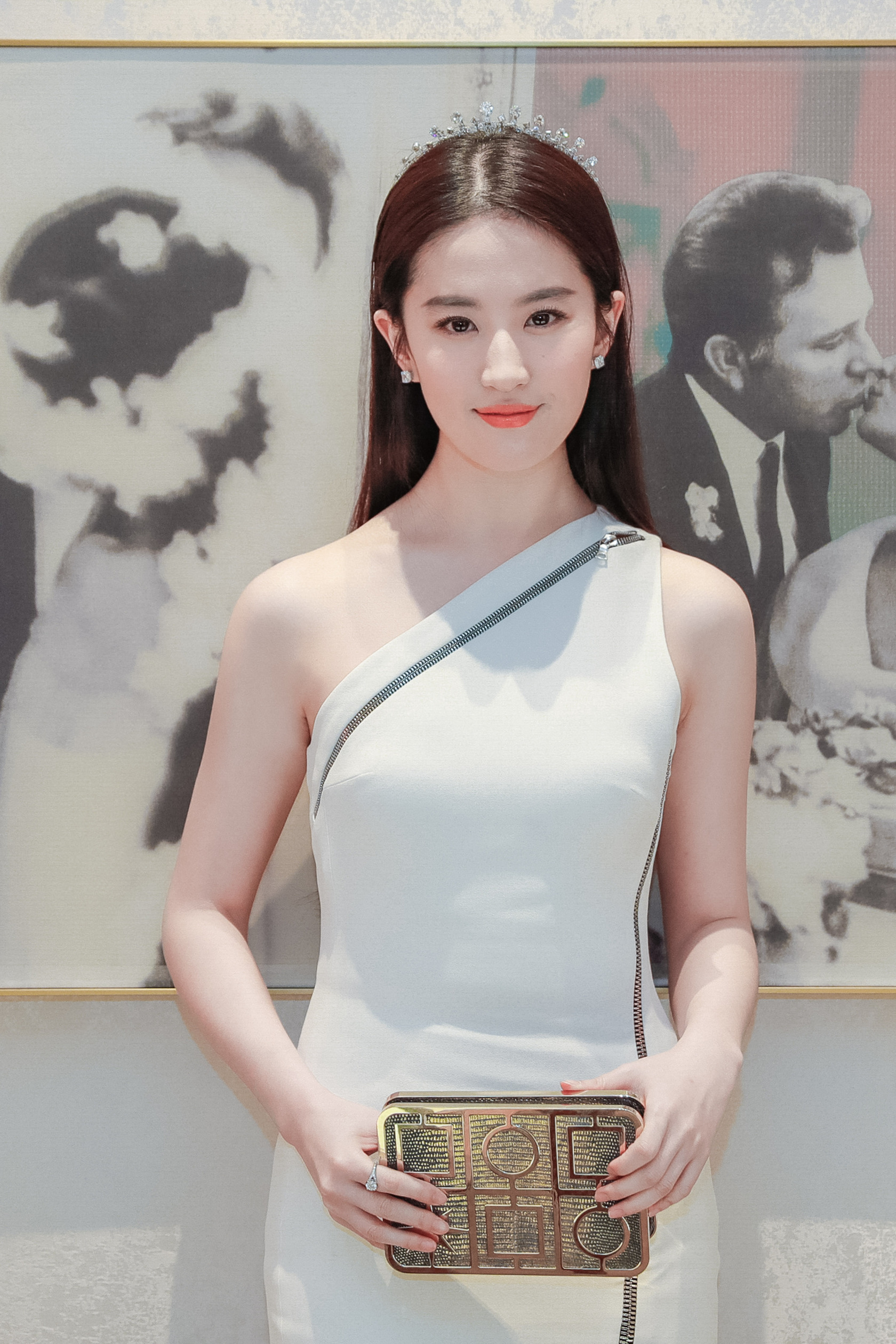
Wuhan in the late 1980s was a city of heavy industry and river commerce, its skyline dominated by factory smokestacks rather than the glass towers that would arrive decades later. Liu Yifei was born there on August 25, 1987, into a world that was beginning to open but had not yet imagined the scale of transformation coming. Her early childhood unfolded in Hubei province, where the Yangtze River carved through central landscapes and ancient trade routes still hummed with modern traffic. In 1997, when she was ten, her mother made a decision that would fracture and then define her daughter's future: they moved to New York. The transition was abrupt and total. Mandarin playgrounds gave way to English-language classrooms in a city that felt both limitless and utterly indifferent to newcomers. Liu absorbed American culture while her mother insisted she maintain fluency in Chinese language and classical traditions, a dual education that felt burdensome then and essential later.
New York carved a bicultural identity into Liu during years when most children develop their sense of belonging. She studied Chinese classical dance while navigating American pop culture, spoke Mandarin at home while perfecting English pronunciation in school hallways. The experience taught her to code-switch before she had language for the concept, to inhabit two sensibilities that rarely overlapped. In 2002, at fifteen, she made a choice that seemed to reverse her mother's earlier decision: she returned to Beijing and enrolled at the Beijing Film Academy, the institution that had trained generations of the nation's finest actors. The academy demanded rigor and discipline, qualities Liu's dance training had already instilled. She was not the most experienced student, but she possessed something her classmates lacked: genuine ease moving between cultures, an ability to understand American directness and Chinese subtlety with equal fluency. That same year, she landed her first television role in The Story of a Noble Family, a wuxia drama that introduced her to audiences who would follow her for two decades.
Wuxia television is not forgiving to amateurs. The genre demands physical grace, the ability to sell impossible wirework choreography with absolute conviction, and the emotional range to navigate stories that blend martial arts, romance, and mythology into serialized epics. Liu trained relentlessly, learning sword forms and aerial combat, her dance background lending her movements a fluidity that made fantastical fight sequences seem plausible. Between 2002 and 2005, she accumulated roles in period dramas, building technique and screen presence while directors recognized her particular appeal: classical features, quiet refinement, and an ethereal quality that suited the genre's preference for tragic warrior women. In 2005, stardom arrived with Chinese Paladin, a television series adapted from a beloved video game that became one of the year's most-watched programs. Liu played Zhao Ling'er, a half-human, half-deity character whose arc required both martial prowess and devastating emotional vulnerability. She was nineteen. The series made her a fixture on magazine covers and established her as a specialist in roles that were beautiful, deadly, and transcendent.
Twenty questions, eight minutes on the clock, and a percentile measured against everyone who has taken it. No sign-up.
Take the IQ test →For the next decade, Liu navigated the peculiar challenge of being famous in one market and invisible in another. She starred in The Forbidden Kingdom in 2008 opposite Jackie Chan and Jet Li, a project designed to bridge East and West but that satisfied neither audience completely. She appeared in Outcast in 2015 with Nicolas Cage and Hayden Christensen, another crossover attempt that disappeared without impact. These films taught hard lessons about international cinema: that box office in one territory could fund a production but not guarantee artistic coherence, that Hollywood remained largely uninterested in Asian stories unless packaged for maximum Western palatability. Yet she kept working, kept training, kept accepting roles in projects that promised something larger even when they delivered something smaller. Her English, refined during her New York childhood, set her apart from peers who dominated the domestic market but could not cross the Pacific. In an industry that worships youth, waiting past thirty felt like professional suicide. She waited anyway, accumulating skills and credits while Hollywood slowly began to reconsider what stories it would tell.
When Disney announced its live-action Mulan in 2017, the studio launched a global casting call that would span a year and evaluate nearly a thousand actresses across five continents. Director Niki Caro needed a performer who could handle demanding action sequences, carry a film mostly in English, and possess the cultural authenticity required to avoid the missteps that had plagued previous Western adaptations of Asian material. This version would skew closer to the original Chinese ballad than the 1998 animated feature, darker and more grounded, stripping away musical numbers and comic relief. Liu auditioned in 2018 and emerged with the role that would redefine her career. The announcement generated immediate attention in both markets. Domestic media celebrated one of their own landing Hollywood's biggest role for an Asian actress in years. American trade publications scrambled to explain who she was to readers unfamiliar with her fifteen-year career. Liu understood what the role represented: not just a legendary warrior, but an industry's bet that a story centered on Asian culture, performed by Asian actors, could succeed in global markets.
Filming Mulan across New Zealand and various locations in 2018 and 2019 demanded everything Liu had accumulated in two decades of training. She spent months performing her own stunts, executing sword fights and horseback sequences and wire-assisted aerial combat that required both physical stamina and the ability to make the impossible seem effortless. The production assembled a predominantly Asian cast, a rarity for a Hollywood tentpole, and Liu found herself shouldering not just dramatic weight but symbolic burden. The film's release in 2020 became complicated by the pandemic and by controversy over her comments on Hong Kong protests, which generated boycott calls in some quarters. The theatrical rollout collapsed, and Disney shifted the film to its streaming platform, a compromise that satisfied no one but reflected the chaos of that year. Despite the tumultuous release, Mulan found its audience and earned respectful reviews for Liu's performance. She had proven that stories rooted in specific cultural traditions could resonate across borders, that authenticity mattered more than Hollywood had previously acknowledged.
Today, at thirty-six, Liu occupies a unique position in global entertainment. She remains one of the most bankable stars in Chinese-language film and television, able to open a project on her name alone. Simultaneously, she represents a generation of performers who refuse to choose between markets, who insist that careers can span continents without requiring artists to abandon their identities. She has not abandoned wuxia television or domestic cinema, continuing to work across formats and genres in both territories. In a 2020 interview during the Mulan press tour, she reflected on the role's significance with characteristic directness: "Playing Mulan was playing every Chinese girl who was told to wait her turn." The comment captured both her personal journey and a larger shift in how global entertainment calculates whose stories deserve the largest budgets and widest distribution. Her trajectory suggests a future where the term crossover star becomes obsolete, where artists move fluidly between markets without one being considered lesser, where talent and training matter more than borders.
“Playing Mulan was playing every Chinese girl who was told to wait her turn.”— Liu Yifei, Mulan press tour, 2020
| Person | Country | Milestone | Age / Stat |
|---|---|---|---|
| Liu Yifei | 🇨🇳 China | ACTRESS | 1987 |
| Zhang Ziyi | 🇨🇳 China | ACTRESS | 1979 |
Liu Yifei Mulan trailer
Liu Yifei early TV career
Liu Yifei matters because she solved a problem that has plagued international cinema for decades: how to build a career that spans entertainment industries that rarely speak the same language. Her success in Mulan demonstrated that Hollywood's largest studio could center a $200 million production on an actress known primarily in Asian markets and find global success. That bet represented a fundamental shift in how the industry calculates risk and reward. For years, conventional wisdom held that Asian actors could support but not carry major Western productions, that audiences would not embrace stories that did not center Western perspectives. Liu's two-decade preparation, her bicultural fluency, and her willingness to wait for the right opportunity rather than accept diminished roles proved that conventional wisdom wrong. She showed that authenticity and training could overcome the structural barriers that had limited previous generations, that the global audience was more sophisticated than studios had assumed.
Within the larger narrative of contemporary achievement, Liu represents a particular kind of excellence: the refusal to accept false choices between markets, identities, or artistic traditions. Earlier generations of performers often had to choose between domestic success and international ambition, between cultural authenticity and commercial viability. Liu insisted on both. Her casting as Mulan changed how the world's largest entertainment companies think about Asian stories and Asian performers. It demonstrated that the domestic market had produced stars with the skills and appeal to anchor global productions, that bicultural fluency was an asset rather than a complication. She has made it easier for the performers who follow to imagine careers that do not require abandoning their first language or first market, to see cross-continental success not as crossover but as natural extension. That shift in imagination may be her most enduring contribution.
Discover More Child Prodigies
50+ stories of contemporary young geniuses changing chess, music, science, and art.
Explore All Prodigies →


