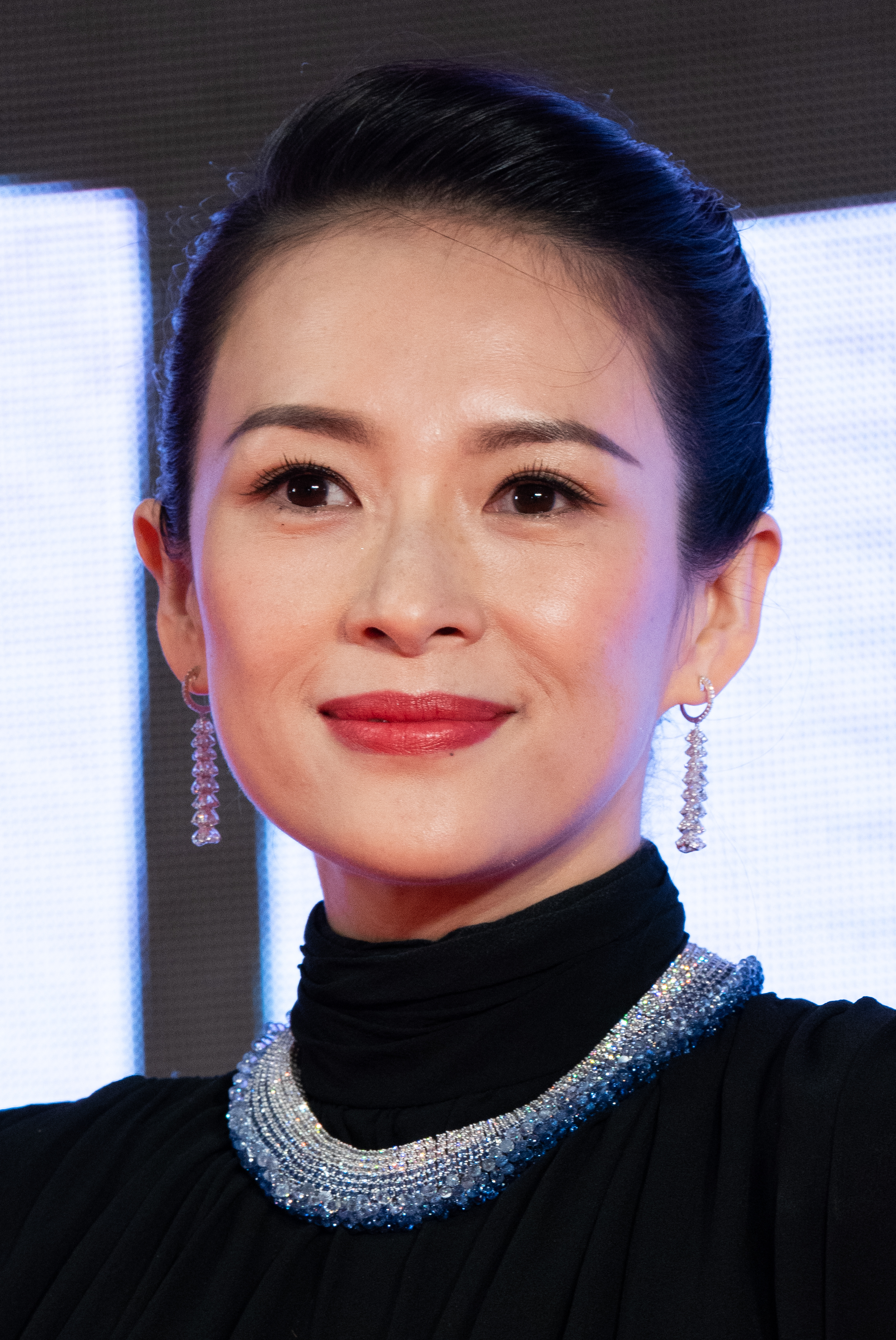
Beijing in 1987 was a city still emerging from decades of cultural upheaval, its performing arts academies rebuilding traditions interrupted by revolution. At eight years old, Zhang Ziyi entered the Beijing Dance Academy, one of the nation's premier training grounds for classical Chinese dance. The curriculum was unforgiving: six-hour days of stretching, leaping, and repetition designed to remake the body into an instrument of expression. She learned to hold positions until muscles burned, to execute movements with millimeter precision, to suppress fatigue behind a serene mask. Dance training in this tradition is not creative exploration but rigorous imitation, the slow absorption of forms perfected over centuries. For six years she bent and turned and balanced, her childhood subsumed into the relentless pursuit of physical mastery. The Academy produced dancers for state troupes and national companies, but it also built something less tangible: an understanding that art demands sacrifice, that beauty emerges only after the body has been disciplined beyond ordinary endurance.
At fifteen, Zhang made a decisive pivot. In 1994 she transferred to the Central Academy of Drama in Beijing, trading the dancer's barre for the actor's stage. The Central Academy was the nation's most prestigious training ground for theatrical performance, a conservatory that had produced generations of film and stage actors since its founding in 1950. The transition was not seamless. Acting required a different vocabulary—spoken language, character psychology, emotional access—skills her dance training had not emphasized. But the physical discipline traveled with her. She could hold stillness, command space, communicate through gesture with a specificity most actors spent years developing. The Academy's method drew from Stanislavski and traditional Chinese opera in equal measure, demanding both psychological realism and formalized movement. Zhang absorbed it all, a dancer learning to speak, a performer expanding her range beyond what the body alone could express. Three years of intensive study gave her the tools. The world beyond the Academy walls would give her the roles.
Director Zhang Yimou found her in 1998, a nineteen-year-old student whose combination of classical training and raw screen presence matched his vision for The Road Home. The 1999 film told a simple story—a village girl's courtship in 1950s rural China—but it required an actress who could convey innocence without naivety, devotion without sentimentality. Zhang Ziyi's performance, her first in a professional film, earned immediate recognition. The role won her a Hundred Flowers Award for Best Actress, the kind of domestic success that might have led to a comfortable career in Chinese-language cinema. Instead, it became an audition tape for something larger. Ang Lee was casting Crouching Tiger, Hidden Dragon, an ambitious wuxia epic designed to bridge Eastern martial arts tradition and Western narrative expectations. He needed a performer who could handle Mandarin dialogue, wire-work choreography, and emotional complexity in equal measure. Zhang's dance background made the physicality possible. Her nascent acting skill made the character—Jen Yu, a rebellious aristocrat torn between duty and desire—credible. Lee cast her opposite established stars Chow Yun-fat and Michelle Yeoh, a risk that would reshape her trajectory entirely.
Twenty questions, eight minutes on the clock, and a percentile measured against everyone who has taken it. No sign-up.
Take the IQ test →Crouching Tiger, Hidden Dragon premiered at the Cannes Film Festival in May 2000 and reached American theaters that December. The film became a cultural phenomenon, grossing over two hundred million dollars worldwide and winning four Academy Awards, including Best Foreign Language Film. Zhang's portrayal of Jen—proud, conflicted, capable of both tenderness and violence—demonstrated a range that transcended the wire-work spectacle. Critics noted her ability to shift registers within a single scene, moving from sullen defiance to vulnerability without melodrama. She was twenty-one years old and suddenly recognizable on three continents. The success opened doors previously closed to Chinese actors in Western productions. Hollywood began calling with offers that ranged from serious dramatic roles to martial arts stereotypes. Zhang navigated this terrain carefully, choosing projects that allowed complexity. She reunited with Zhang Yimou for Hero in 2002 and House of Flying Daggers in 2004, both of which built on the international appetite for Chinese historical epics while showcasing her evolving craft. The wire-work remained, but the roles deepened, demanding not just physical prowess but layered emotional performance.
The most scrutinized test came in 2005 when she accepted the role of Sayuri in Rob Marshall's Memoirs of a Geisha. The decision to cast Chinese actors as Japanese geisha sparked controversy in both nations, old wounds from wartime history erupting in online forums and editorial pages. Zhang defended the choice as an artistic challenge, an opportunity to inhabit a character across cultural lines. She trained for months in traditional dance forms distinct from those she had studied in Beijing, learning the shuffling walk and controlled gestures that defined geisha movement. The film received mixed critical response, but Zhang's performance earned a Golden Globe nomination and demonstrated her willingness to risk backlash for ambitious work. She followed it with 2046, Wong Kar-wai's languorous meditation on memory and desire, a film that required her to suggest entire relationships through glances and silences. Wong would become a crucial collaborator, a director whose patience matched her precision. Their partnership would culminate years later in a role that many consider her finest.
The Grandmaster arrived in 2013 after years of production, Wong Kar-wai's biographical portrait of Ip Man and the martial arts culture of Republican-era China. Zhang played Gong Er, the daughter of a legendary master, a woman who sacrifices love and family to preserve her father's kung fu legacy. Wong shot for three years, demanding hundreds of takes to capture moments of near-abstract beauty. Zhang trained in genuine Baji quan techniques, the Northern Chinese martial art her character embodied, until the movements became reflex rather than performance. The film premiered at the Berlin International Film Festival and earned her the Hong Kong Film Award for Best Actress. Critics noted that Gong Er represented a synthesis of everything Zhang had learned across fifteen years of screen work: the dancer's control, the dramatic actor's emotional access, the action performer's physical commitment. At Cannes in 2013, where she served as a member of the festival's main competition jury, she reflected on her training: "Dance taught me discipline. Acting taught me freedom inside that discipline." The statement captured her method—not abandoning structure but finding expression within it, using limitation as a creative frame rather than a cage.
Today Zhang Ziyi occupies a unique position in global cinema, a performer whose career spans Chinese-language auteur projects and international productions without fully belonging to either category. She has worked with directors as stylistically diverse as Ang Lee, Wong Kar-wai, Zhang Yimou, and John Woo, adapting her approach to match their distinct visions while maintaining a recognizable screen presence. Her choices reflect a calculation rare among actors who achieve early international fame: she has consistently prioritized artistic ambition over commercial certainty, turning down lucrative offers for roles that offered little beyond visibility. The risk has preserved her credibility. She remains a draw for serious filmmakers seeking an actress who can handle both the physical demands of action cinema and the emotional subtlety of dramatic work. Her influence extends beyond individual performances; she demonstrated that Chinese actors could command major international productions without abandoning Chinese-language cinema, creating a template that subsequent performers have followed. The girl who entered the Beijing Dance Academy at eight, who learned to control her body before she learned to control a scene, became the woman who proved that discipline and artistry are not opposing forces but complementary elements of lasting achievement.
“Dance taught me discipline. Acting taught me freedom inside that discipline.”— Zhang Ziyi, Cannes 2013
| Person | Country | Milestone | Age / Stat |
|---|---|---|---|
| Zhang Ziyi | 🇨🇳 China | ACTRESS | 1979 |
| Liu Yifei | 🇨🇳 China | ACTRESS | 1987 |
Zhang Ziyi Crouching Tiger fight
Zhang Ziyi career compilation
Zhang Ziyi fundamentally altered the international film industry's relationship with Chinese actors. Before Crouching Tiger, Hidden Dragon, Western audiences encountered Chinese performers primarily through martial arts genre films or as supporting players in English-language productions. Zhang became the first Chinese actress of her generation to achieve genuine leading-role status in both Eastern and Western cinema simultaneously, a feat that required navigating vastly different production cultures, audience expectations, and narrative traditions. Her success demonstrated that Chinese actors could carry blockbuster international films without conforming to reductive stereotypes, that physical training from Chinese classical traditions translated into screen charisma legible across cultures. Directors who had never considered casting Chinese leads began actively seeking them. Studios recognized that films rooted in Chinese aesthetics and history could find global audiences without significant compromise. Zhang's career created infrastructure—agents, casting directors, production partnerships—that subsequent Chinese performers have utilized. She proved that excellence in Chinese dramatic training could compete on the world's most visible stages, establishing a precedent that continues to shape international casting decisions two decades later.
Within the larger narrative of contemporary Chinese cultural influence, Zhang represents a crucial transition. She emerged at the moment when Chinese cinema was shifting from state-controlled artistic production to a more commercially ambitious, internationally oriented industry. Her success validated the investments that academies like the Central Academy of Drama had made in rigorous classical training, demonstrating that these institutions could produce performers who thrived in global markets without abandoning their foundational methods. She became proof that Chinese artists need not choose between domestic credibility and international recognition, that these goals could coexist within a single carefully managed career. Her presence on the Cannes jury, her collaborations with auteurs from multiple film traditions, her ability to move between Zhang Yimou's historical epics and Hollywood productions—all of it suggested a new paradigm for Chinese talent in global cultural conversations. She changed the calculus for how international audiences perceive Chinese actors: not as exotic novelties or martial arts specialists, but as trained artists capable of the full range of dramatic performance. That shift, more than any individual role, constitutes her most enduring contribution.
Discover More Child Prodigies
50+ stories of contemporary young geniuses changing chess, music, science, and art.
Explore All Prodigies →


