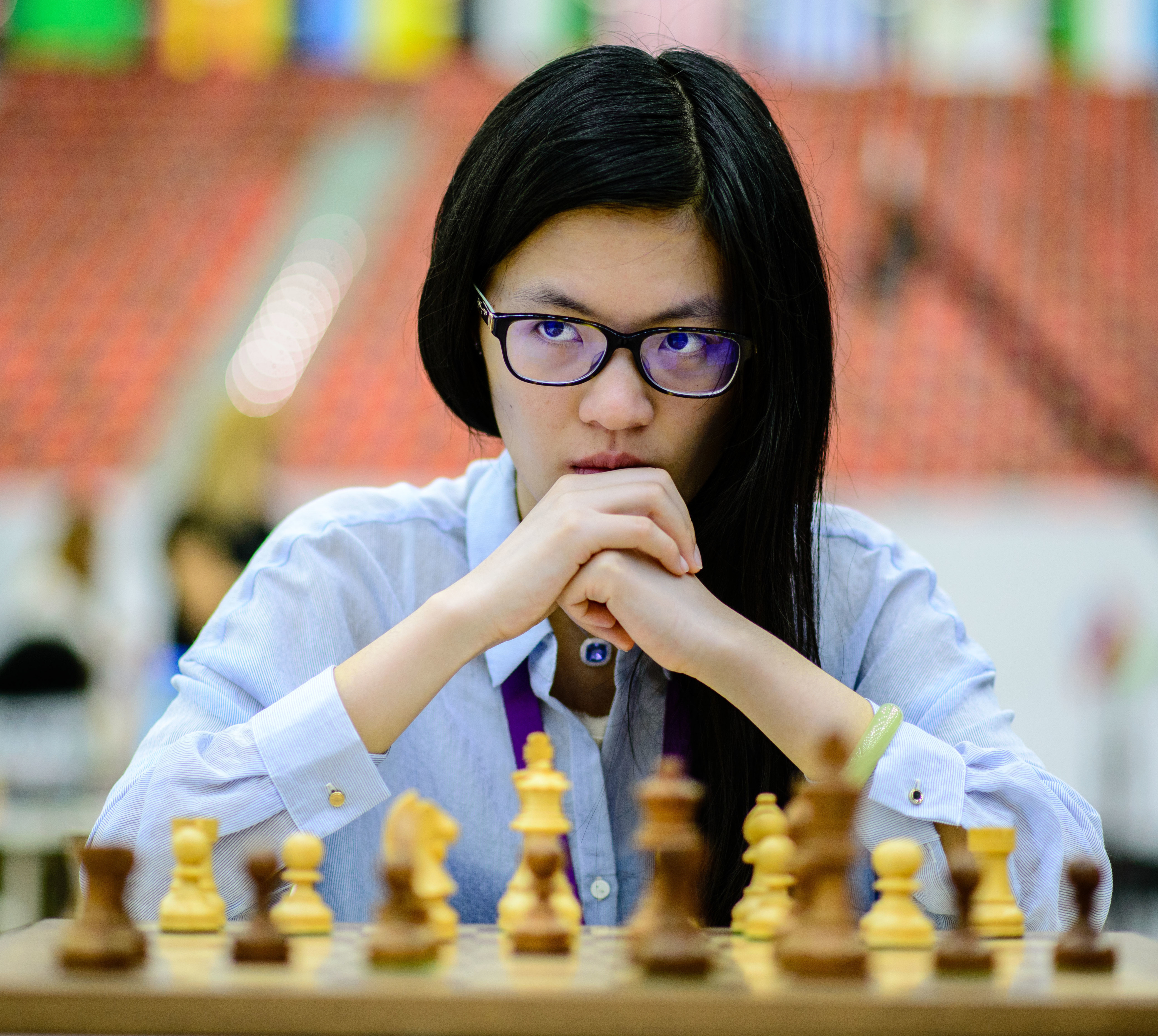
Hou Yifan's introduction to chess came at age three, when her father taught her the basic moves as a way to keep her occupied. What began as casual play revealed itself as something more profound within months. By five, she was enrolled at the Xinghua Children's Palace, where local coaches recognized a rare combination: photographic pattern recognition, emotional composure under pressure, and an almost eerie ability to calculate variations many moves deep. Her parents, neither of them chess players, made the decision to support her development fully. At six, she moved to the Shandong Chess Academy, training alongside boys several years older. The academy's Spartan regimen—eight hours of study daily, weekend tournaments, constant analysis—would have broken most children. Hou Yifan thrived. In 2003, at age nine, she traveled to Halkidiki, Greece, and claimed the World Under-10 Girls' Championship, her first international title. The margin of victory was emphatic: she won every game.
The path from promising junior to elite competitor is littered with players who peaked early. Hou Yifan accelerated. Between 2004 and 2008, she systematically dismantled every age-group record in women's chess. She studied the games of Bobby Fischer and Anatoly Karpov, absorbing classical principles while developing a style that blended solid positional understanding with tactical ferocity. In 2008, at fourteen years and six months, she earned the title of Woman Grandmaster, becoming the youngest female ever to achieve that rank. The record shattered the previous mark by months. What distinguished her was not just talent but work ethic. While other teenagers attended school dances, Hou Yifan analyzed endgame positions until midnight. Her coaches marveled at her discipline. By 2010, she was rated among the top five women in the world, playing in elite tournaments across Europe and Asia. She was ready for Antakya.
The 2010 Women's World Championship in Antakya, Turkey, was a knockout format, brutal and unforgiving. A single bad game meant elimination. Hou Yifan navigated the early rounds with surgical precision, defeating established grandmasters with a maturity that belied her age. The final against Ruan Lufei stretched across multiple games, each player searching for the smallest advantage. Hou Yifan prevailed, and at sixteen became the youngest world champion in the history of women's chess. The achievement reverberated globally. Here was a teenager who had conquered a field where most champions peak in their twenties or thirties. She would defend the title successfully in 2011, reclaim it in 2013 after briefly losing it, and win it again in 2016. Four world championships before her twenty-third birthday. The dominance was absolute. Her peak rating of 2686, achieved in 2015, placed her nearly a hundred points ahead of any contemporary female rival.
Twenty questions, eight minutes on the clock, and a percentile measured against everyone who has taken it. No sign-up.
Take the IQ test →But Hou Yifan wanted more than dominance within women's chess. She began competing almost exclusively in open tournaments against male grandmasters, a decision that drew both praise and criticism. The chess world operates on a dual-track system, with separate women's events carrying lower prestige and prize money. Hou Yifan rejected that ceiling. She competed in the elite Gibraltar Masters, the Tradewise Chess Festival, the Tata Steel tournament in Wijk aan Zee. Her results were mixed—she rarely won these events but held her own against players rated 2700 and above, the game's absolute elite. In 2015, she graduated from Peking University with a degree in International Relations, balancing academic rigor with tournament schedules that spanned four continents. The following year, she was accepted to Oxford University as a Rhodes Scholar, one of the most prestigious academic honors in the world. At Oxford she studied international relations, wrote her thesis, and continued competing at the highest level. Few athletes have managed such parallel excellence.
The appointment to Shenzhen University in 2017 marked a new chapter. At twenty-three, Hou Yifan became a full professor, the youngest in the institution's history. Her role was not ceremonial. She built a program exploring the intersection of competitive sport, education policy, and social development, delivering lectures, mentoring graduate students, and publishing research. She continued to compete selectively, choosing tournaments that fit her academic calendar. In 2018, she told an Oxford alumni interviewer: "If you want to find the limit, you have to push through where it hurts." The quote captured her philosophy—relentless self-examination, a refusal to accept conventional boundaries. She served as a role model not just for aspiring chess players but for young women across Asia navigating fields where they were told they didn't belong. Her Instagram following grew. Universities invited her to speak. She was becoming something rare: an intellectual athlete, equally comfortable analyzing rook endgames and discussing Belt and Road geopolitics.
In 2024, Hou Yifan captained the Chinese women's team to gold at the FIDE Chess Olympiad in Budapest. She played board one, the position reserved for a team's strongest player, and delivered crucial victories in the final rounds. The gold medal was China's first Olympiad title in the women's section in over a decade. Watching her young teammates celebrate, Hou Yifan embodied a generational bridge—she had been the prodigy, and now she was the veteran leader guiding the next wave. Her influence on Chinese chess infrastructure is measurable. Enrollment in youth chess programs across the country surged during her championship years. The government increased funding for chess education. Top universities began recruiting titled players, recognizing chess as a marker of analytical excellence. Garry Kasparov, the greatest player in chess history, told ChessBase simply: "She is the strongest woman ever to play this game. Period." Coming from Kasparov, a man not known for hyperbole, the statement carried weight.
Today, Hou Yifan splits her time between academic responsibilities at Shenzhen University, selective tournament appearances, and advocacy work promoting chess education in underserved communities. She has launched initiatives providing free chess instruction to rural schools, believing the game teaches critical thinking and resilience. She appears regularly on Chinese state television as a commentator during major tournaments, translating complex positions for general audiences with the same clarity she brings to her lectures. At thirty, she has already lived several careers. Her legacy is secure: four world championships, the youngest champion ever, the highest-rated woman of the modern era, a Rhodes Scholar, a professor. Yet those who know her suggest she is far from finished. She speaks occasionally of writing a book, of expanding her academic research, of finding new ways to challenge herself. The girl who mastered chess before adolescence continues to search for limits worth pushing through.
“If you want to find the limit, you have to push through where it hurts.”— Hou Yifan, Oxford alumni interview, 2018
“She is the strongest woman ever to play this game. Period.”— Garry Kasparov, ChessBase interview
| Person | Country | Milestone | Age / Stat |
|---|---|---|---|
| Hou Yifan | 🇨🇳 China | WOMEN'S CHESS | 1994 |
| Lei Tingjie | 🇨🇳 China | WOMEN'S CHESS | 1997 |
| Tan Zhongyi | 🇨🇳 China | WOMEN'S CHESS | 1991 |
Hou Yifan — Women's World Champion documentary
Hou Yifan vs Polgar — Gibraltar Chess
Hou Yifan matters because she redefined what was possible for women in chess at precisely the moment when the game was globalizing through online platforms and streaming media. Her four world championships and record-breaking achievements arrived during chess's digital explosion, making her the face of women's excellence in the sport for millions of new fans worldwide. She forced a conversation about the arbitrary separation between men's and women's chess by competing almost exclusively in open events after establishing her dominance. Her insistence on facing the strongest possible opposition, regardless of gender divisions, challenged institutional inertia within FIDE and national federations. Beyond the board, her parallel academic achievement—Rhodes Scholar, Oxford graduate, youngest professor at a major university—demolished the stereotype of the narrow chess savant. She proved that elite cognitive performance in chess correlates with elite performance in other intellectual domains. Young players now grow up seeing chess as a pathway to broader opportunities, not an isolated skill. That shift in perception is directly attributable to her example.
For the global chess community, Hou Yifan represents the maturation of Chinese dominance in a game historically centered in Europe and the former Soviet Union. The Soviet chess machine produced generations of world champions through state-funded academies and systematic training. As that system collapsed, Chinese infrastructure absorbed its lessons and scaled them across a population twenty times larger. Hou Yifan is both product and architect of that transformation. Her success validated massive public investment in youth chess programs, triggering a cascade effect that has made the country a consistent powerhouse in team competitions and produced dozens of grandmasters. She demonstrated that Chinese athletes could excel in domains requiring pure cognition and strategic creativity, not just technical execution or physical discipline. The world took notice. European academies now recruit Chinese coaches. American chess camps study Chinese training methods. Hou Yifan changed the geography of excellence in a thousand-year-old game, proving that dominance follows infrastructure, talent identification, and relentless commitment to development. She is the template.
Discover More Child Prodigies
50+ stories of contemporary young geniuses changing chess, music, science, and art.
Explore All Prodigies →


