Avicenna: Biography, Achievements & Lasting Legacy

Who Was Avicenna?
Ibn Sina (c. 980 – 22 June 1037), commonly known in the West as Avicenna ( A(H)V-ih-SEN-ə), was a preeminent philosopher and physician of the Muslim world. He was a seminal figure of the Islamic Golden Age, serving in the courts of various Iranian rulers, and was influential to medieval European medical and Scholastic thought.
Often described as the father of early modern medicine, Avicenna's most famous works are The Book of Healing, a philosophical and scientific encyclopedia, and The Canon of Medicine, a medical encyclopedia that became a standard medical text at many medieval European universities and remained in use as late as 1650.
Life and Career
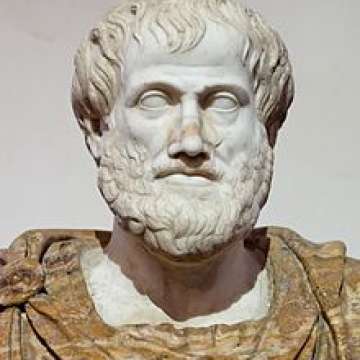
Besides philosophy and medicine, Avicenna's corpus includes writings on astronomy, alchemy, geography and geology, psychology, Islamic theology, logic, mathematics, physics, and works of poetry. His philosophy was of the Peripatetic school derived from Aristotelianism, of which he is considered among the greatest proponents within the Muslim world.
Avicenna wrote most of his philosophical and scientific works in Arabic but also wrote several key works in Persian; his poetry was written in both languages. Of the 450 works he is believed to have written, around 240 have survived, including 150 on philosophy and 40 on medicine.
Twenty questions, eight minutes on the clock, and a percentile measured against everyone who has taken it. No sign-up.
Take the IQ test →Key Facts
- Born: January 1, 980 in Afshona, Bukhara, Samanid Empire (now in present-day Uzbekis
- Died: 1037
- Field: Medicine
Legacy and Impact
The influence of Avicenna extends far beyond his own lifetime. He fundamentally shaped healthcare and human longevity, and his medical discoveries and treatments remain foundational to this day.
Though he passed away in 1037, his ideas continue to be studied, debated, and built upon by scholars and practitioners worldwide.
Discover more brilliant minds in Medicine
Explore Medicine GeniusesRelated Articles
Explore More
Read the full profile of Avicenna
View Avicenna's Profile →