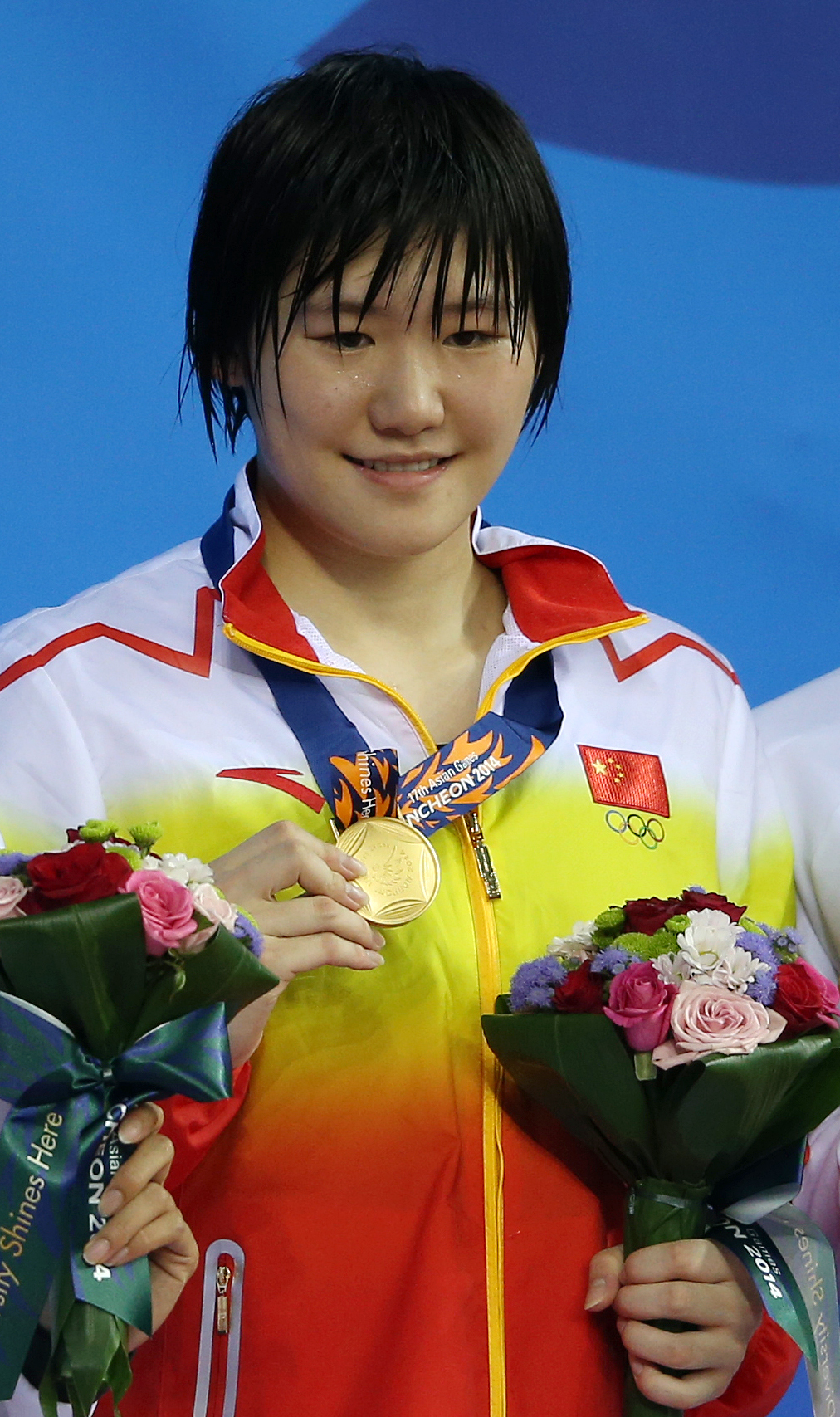
Ye Shiwen entered the water for the first time in 2001 at age five in Hangzhou, the capital of Zhejiang Province and a city with deep swimming traditions. Her coaches recognized immediately that her limbs were unusually long for her frame, offering biomechanical advantages in the medley events that demand versatility across all four strokes. She progressed rapidly through provincial youth squads, mastering the technical transitions between butterfly, backstroke, breaststroke, and freestyle that separate competent medley swimmers from champions. By her early teens, she had been selected for the national training center, where days began before dawn and ended under floodlights, six days a week, fifty weeks a year. The regimen was unforgiving: thousands of meters daily, strength sessions, video analysis, altitude camps. Ye adapted not merely to survive but to excel, her butterfly and freestyle legs showing a power that belied her slight build.
Her breakthrough arrived at the 2010 Asian Games in Guangzhou, where at fourteen she claimed her first major international title. The victory validated years of sacrifice and signaled to national selectors that Ye possessed the mental fortitude required for global competition. She carried that momentum into the 2011 World Championships in Shanghai, where she won the 200-meter individual medley and announced herself as a medal contender for London. The home crowd roared as she out-touched experienced rivals in the final fifty meters, a preview of the closing speed that would soon become her signature. Between Shanghai and London, her training intensified. Her coaches refined her underwater dolphin kicks off each turn and sharpened her pacing strategy, ensuring she could hold back enough energy to unleash a devastating final freestyle leg when opponents were fading.
London 2012 transformed Ye Shiwen from a rising talent into a global phenomenon. On July 28, she lined up for the 400-meter individual medley final as a relative unknown outside Asia. Four minutes and twenty-eight seconds later, she owned a world record and an Olympic gold medal. Her final hundred meters—58.68 seconds—was faster than any split in the meet, male or female, igniting a firestorm of commentary and suspicion. Critics questioned the performance. Officials tested her repeatedly. Every test came back clean. Ye faced the scrutiny with composure beyond her years, letting her preparation speak louder than her words. Two days later, she returned to win the 200-meter individual medley, confirming that London was no fluke. At sixteen, she had become the youngest Chinese swimmer to win two Olympic golds at a single Games, a distinction that placed her alongside the nation's most decorated athletes.
Twenty questions, eight minutes on the clock, and a percentile measured against everyone who has taken it. No sign-up.
Take the IQ test →The aftermath of London proved more complicated than the triumph itself. The weight of expectation, the relentless media attention, and the physical toll of maintaining world-record form began to show. Ye struggled with injuries and the natural maturation that alters a swimmer's body and buoyancy. At the 2013 World Championships in Barcelona, she defended her 200-meter title but could not replicate the explosive form of London. The 2016 Rio Olympics brought further disappointment: she failed to medal in either event, finishing eighth in the 200-meter IM and failing to advance from the heats in the 400. The Chinese swimming federation faced questions about training methods, periodization, and whether the system that had produced her peak at sixteen had failed to sustain it into her twenties. Ye withdrew from the public eye, her future in the sport uncertain.
Yet retirement did not come. Through the late 2010s, Ye remained in training, reshaping her stroke mechanics and rebuilding her base fitness. She enrolled at Tsinghua University, one of the nation's most prestigious institutions, balancing academic coursework with pool sessions. The decision reflected a shift in Chinese sports policy, which increasingly emphasized education alongside athletic achievement. Ye competed sporadically in domestic meets, her times improving incrementally but never approaching her London marks. Critics wrote her off as a cautionary tale, a prodigy who peaked too young. Then, in 2024, she returned to international competition, not as a world-record threat but as a veteran presence mentoring younger teammates. Her longevity itself became a statement: that athletic worth extends beyond medals, that perseverance matters as much as podiums.
Ye's career intersects with a broader transformation in Chinese swimming. When she entered the pool in 2001, the program was respected but not dominant. By the time she left London in 2012, it had become a global powerhouse, producing medalists across distances and strokes. Her success—and the scrutiny it attracted—forced international federations to reckon with the depth of investment flowing into Asian aquatic programs. Training centers in Kunming and Beijing rivaled anything in Australia or the United States. Sports science, nutrition, and biomechanics reached levels of sophistication that closed the gap with Western programs. Ye's world record stood as proof that the investment worked, that Chinese swimmers could not only compete but dominate on the sport's grandest stages. Her legacy extends beyond her own medals to the generation of swimmers she inspired and the infrastructure her success justified.
Today, Ye Shiwen remains a symbol of both achievement and the pressures that accompany it. Her image appears in swimming academies across the country, a reminder to young athletes that greatness is possible with discipline and sacrifice. She has spoken publicly about mental health, the isolation of elite training, and the difficulty of moving beyond a defining teenage triumph. Her willingness to discuss these challenges has made her a more complete icon, one whose story encompasses not just victory but the human cost of pursuing it. She has not ruled out a competitive return, though her focus has shifted toward coaching and promoting swimming among youth. Whether she races again or not, her place in the sport's history is secure: the teenager who swam faster than belief, survived the storm that followed, and endured.
“I trained every day for this one moment. Every single day.”— Ye Shiwen, London 2012
| Person | Country | Milestone | Age / Stat |
|---|---|---|---|
| Ye Shiwen | 🇨🇳 China | SWIMMING | 1996 |
| Sun Yang | 🇨🇳 China | SWIMMING | 1991 |
| Zhang Yufei | 🇨🇳 China | SWIMMING | 1998 |
Ye Shiwen 400m IM world record London 2012
Ye Shiwen 200m IM Olympic gold
Ye Shiwen matters because she redefined the ceiling for teenage swimmers and demonstrated that world records could fall to athletes still in high school. Her 400-meter individual medley performance in London remains one of the most statistically dominant swims in Olympic history—a margin of victory and improvement over the existing record that occurs perhaps once a decade. She proved that the individual medley, often seen as a test of well-rounded competence rather than explosive talent, could showcase the latter. Her closing speed forced coaches worldwide to rethink pacing strategies and terminal velocity in multi-stroke events. Beyond tactics, she expanded the global conversation about when athletes peak, how training systems nurture or exhaust young talent, and what scrutiny female athletes of color face when they achieve the extraordinary. Her career serves as a case study in sports science, periodization, and the ethics of youth athletic development.
Within the larger narrative of contemporary Chinese excellence, Ye Shiwen stands as a turning point. Her London golds arrived at a moment when the world was just beginning to grasp the scale and ambition of investment in Olympic sports across the nation. She changed how the international swimming community viewed Chinese programs—not as emerging threats but as established powers capable of producing generational talents. Her success accelerated funding, attracted coaching expertise from abroad, and validated a model that has since been replicated across sports. The scrutiny she endured also exposed lingering biases, the reflexive suspicion that greeted non-Western dominance in traditionally Western-dominated events. She handled that scrutiny with dignity, proving resilient not just in the pool but in the face of geopolitical and cultural skepticism. Her legacy is inseparable from the rise of Chinese swimming on the world stage, and her story remains a touchstone for understanding how talent, infrastructure, and national ambition converge to reshape global sport.
Discover More Child Prodigies
50+ stories of contemporary young geniuses changing chess, music, science, and art.
Explore All Prodigies →


