Li Ning entered the world on March 8, 1963, in Liuzhou, an industrial city in the Guangxi Zhuang Autonomous Region of southern China. His early years unfolded during the Cultural Revolution, when organized sports existed primarily within state-sponsored frameworks designed to identify and cultivate talent across the provinces. In 1972, at age eight, he began gymnastics training in local programs where coaches immediately recognized his exceptional spatial awareness and fearlessness on apparatus. His compact frame and natural kinesthetic intelligence suited the discipline perfectly. Within two years he had progressed beyond provincial competition, his performances drawing attention from talent scouts who fed promising athletes into the national development pipeline. The provincial gymnasium in Liuzhou became his second home, the place where repetition and discipline replaced childhood play with systematic athletic development.
Selection to the national team arrived in 1980, when Li Ning was seventeen. He joined an elite cohort training at facilities in Beijing under coaches who had studied Soviet methods and adapted them to Chinese athletes. The regimen was unforgiving: eight-hour training days, constant video analysis, repetition until movements became involuntary muscle memory. He specialized across all six men's apparatus—floor exercise, pommel horse, rings, vault, parallel bars, horizontal bar—developing the versatility that would define his Olympic triumph. His floor routines incorporated balletic elements rare among male gymnasts of that era, blending power tumbling with artistic expression that judges rewarded. By 1982 he had won multiple world championship medals, establishing himself as the anchor of a national program building toward Olympic glory since the country's return to the International Olympic Committee in 1979.
The 1984 Los Angeles Olympics marked a watershed. The Soviet-led boycott meant several strong teams were absent, but competition remained fierce with American, Japanese, and Romanian gymnasts filling Pauley Pavilion with partisan energy. Li Ning competed in all six apparatus finals, a grueling schedule compressed into days of preliminary rounds, team competition, all-around finals, and individual event finals. His rings routine—a display of held strength positions and clean dismount—earned his first gold. The vault gold followed, then floor exercise, where his choreography and tumbling execution outscored every competitor. Silver medals on pommel horse and in the all-around demonstrated consistent excellence across disciplines. His horizontal bar bronze completed the historic achievement: six medals, three gold, at a single Games. The record stands unchallenged nearly forty years later, a mark of comprehensive dominance unrepeated in modern Olympic history.
Twenty questions, eight minutes on the clock, and a percentile measured against everyone who has taken it. No sign-up.
Take the IQ test →The aftermath of Los Angeles transformed Li Ning into something beyond athlete. He became the face of sporting ambition for a nation of one billion, appearing on magazine covers, in state television specials, at diplomatic functions where athletic achievement served geopolitical purpose. He continued competing through the late 1980s, adding world championship medals and demonstrating longevity in a sport that typically consumes bodies before age twenty-five. Shoulder damage accumulated, ankle problems compounded, the inevitable wear of thousands of landings on unforgiving surfaces extracting their toll. His retirement from competition arrived in 1988, when most gymnasts his age had already abandoned the sport. He left with over one hundred career medals from international competitions, a collection unmatched by any Chinese gymnast before or since. The question became what comes after such comprehensive conquest.
The answer surprised even those who had watched him dominate apparatus finals. In 1990, Li Ning founded the Li-Ning Company, a sportswear and equipment manufacturer that would become one of the nation's leading athletic brands. He invested his Olympic earnings and celebrity into building a domestic alternative to Nike and Adidas, brands that dominated Asian markets in the early 1990s. The company sponsored Chinese athletes, opened retail stores across provincial capitals, and eventually expanded internationally. The logo—a stylized gymnast in flight—referenced his own athletic career while signaling aspirations beyond mere nostalgia. By the 2000s, Li-Ning had captured significant domestic market share, sponsoring professional basketball players and outfitting national teams. The transition demonstrated that athletic excellence could translate into commercial acumen when paired with timing and national pride, creating a business empire from Olympic glory.
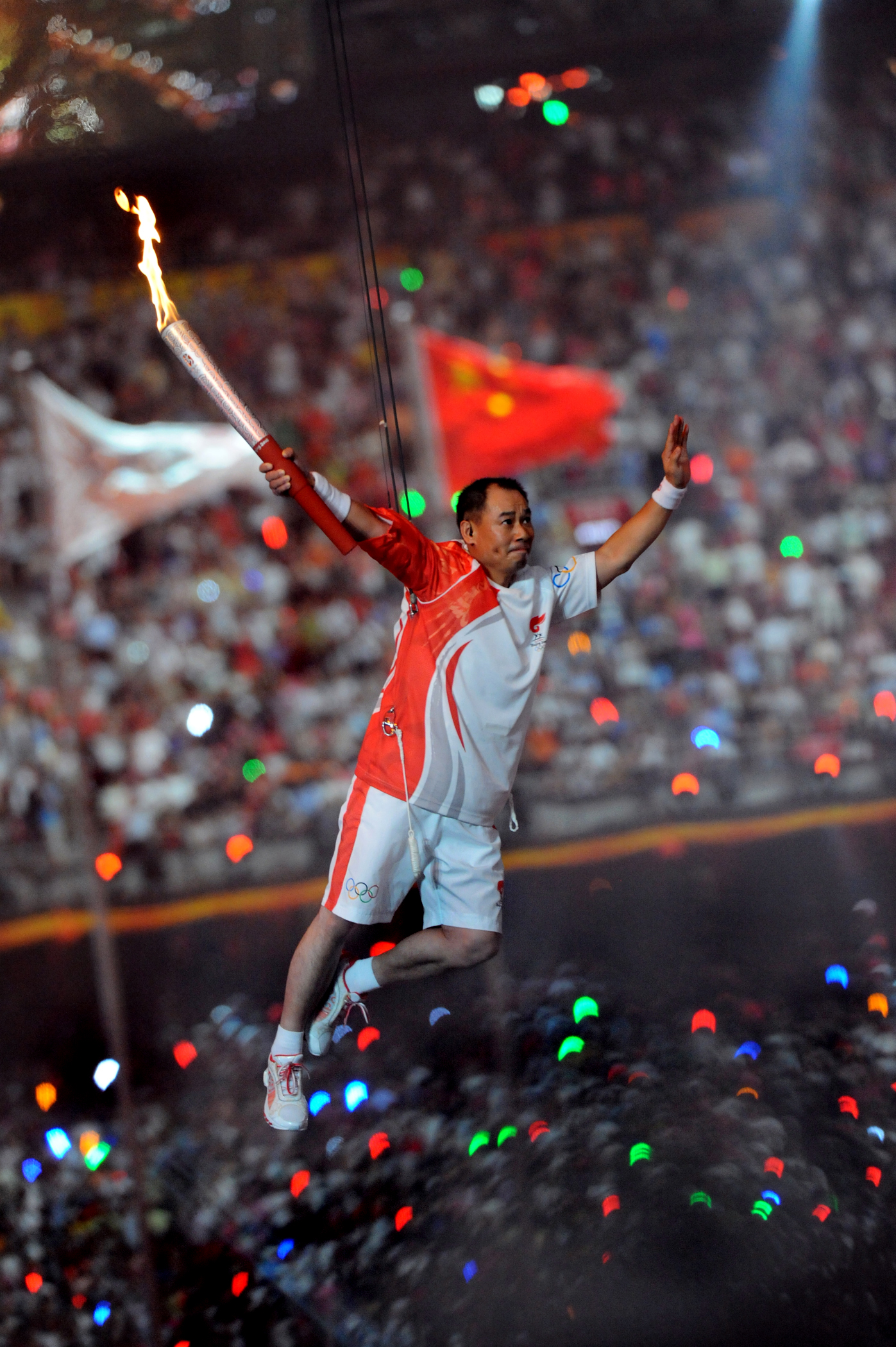
On August 8, 2008, inside Beijing's Bird's Nest stadium, before ninety-one thousand spectators and a global television audience estimated at one billion viewers, Li Ning received the Olympic torch. What followed became one of the most spectacular cauldron-lighting ceremonies in Olympic history. Suspended on cables, he ran horizontally around the stadium's upper rim, appearing to defy gravity as he circled the venue's interior, torch blazing, before ascending to ignite the cauldron that would burn throughout the Games. The selection carried profound symbolism: the nation's first individual Olympic superstar lighting the flame for its first Olympics, connecting past athletic glory to present geopolitical arrival. "Light the cauldron, light the country," he said afterward, acknowledging the weight of the moment. The ceremony closed a twenty-four-year circle from Los Angeles to Beijing, from emerging competitor to host nation supremacy.
Today Li Ning remains active in both business and sports development. The Li-Ning Company navigates competitive global markets, balancing heritage branding with contemporary athletic technology, competing against multinational corporations while maintaining its identity as the brand built by Olympic achievement. He serves on sports administration committees, advising on youth development programs and Olympic preparation strategies, passing accumulated knowledge to generations who know his name from textbooks rather than live competition. His 1984 achievement retains its statistical supremacy—no gymnast at any subsequent Olympics has matched six medals in a single Games, though several have tried. The record stands as testament to an era when athletic versatility across apparatus mattered more than specialization, when one competitor could dominate an entire Olympic program through sheer comprehensive excellence. His trajectory from Liuzhou gymnasium to Olympic cauldron to corporate boardroom maps the transformation of athletics from state project to global force.
“Light the cauldron, light the country.”— Li Ning, Beijing 2008
| Person | Country | Milestone | Age / Stat |
|---|---|---|---|
| Li Ning | 🇨🇳 China | GYMNASTICS LEGENDS | 1963 |
Li Ning lights the Beijing 2008 cauldron
Li Ning Los Angeles 1984 performance
Li Ning's six medals at the 1984 Los Angeles Olympics represent gymnastics achievement no competitor has replicated in four decades. The record stands because modern gymnastics has shifted toward specialization, with elite athletes focusing on two or three apparatus rather than competing across all six men's events. His comprehensive dominance—three golds, two silvers, one bronze—demonstrated mastery across every discipline the sport demands: the held strength of rings, the technical precision of pommel horse, the explosive power of vault, the artistic expression of floor exercise, the swing and release elements of horizontal bar. The performance established a standard of versatility that subsequent rule changes and training methodologies have made nearly impossible to match. His Olympic haul exceeds even the greatest gymnasts who followed, including those who accumulated more total career Olympic medals across multiple Games. The 1984 achievement remains the single greatest individual performance in Olympic gymnastics history, a concentrated display of excellence that defined what comprehensive mastery looks like.
Beyond individual achievement, Li Ning transformed how the world perceived athletic talent emerging from the world's most populous nation. Before Los Angeles, international gymnastics was dominated by Soviet, Romanian, and Japanese programs. His six-medal performance announced a new power in the sport, validating decades of state investment in athletic development and demonstrating that systematic training could produce world-class results. The transition from gymnast to successful entrepreneur further challenged assumptions about athletes from state-sponsored systems, proving that Olympic excellence could translate into commercial success and global brand recognition. The Li-Ning Company's growth into a major sportswear manufacturer demonstrated business acumen that defied stereotypes about athletes as mere products of institutional machinery. His selection to light the 2008 Beijing Olympic cauldron acknowledged his role as bridge between eras, the athlete who first brought Olympic glory home and lived to see his country host the Games as global superpower. He changed gymnastics from a sport dominated by Eastern European programs into one where Asian excellence became expected, normal, inevitable.
Discover More Child Prodigies
50+ stories of contemporary young geniuses changing chess, music, science, and art.
Explore All Prodigies →


.jpg)