Rudolf Virchow: Biography, Achievements & Lasting Legacy

Who Was Rudolf Virchow?
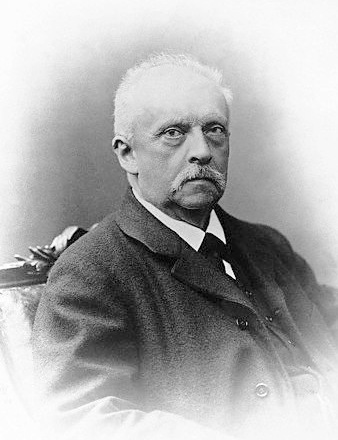
Rudolf Ludwig Carl Virchow ( VEER-koh, FEER-khoh; German: [ˈʁuːdɔlf ˈvɪʁço, - ˈfɪʁço]; 13 October 1821 – 5 September 1902) was a German physician, anthropologist, pathologist, prehistorian, biologist, writer, editor, and politician. He is known as "the father of modern pathology" and as the founder of social medicine, and to his colleagues, the "Pope of medicine".
Virchow studied medicine at the Friedrich Wilhelm University under Johannes Peter Müller. While working at the Charité hospital, his investigation of the 1847–1848 typhus epidemic in Upper Silesia laid the foundation for public health in Germany, and paved his political and social careers. From it, he coined a well known aphorism: "Medicine is a social science, and politics is nothing else but medicine on a large scale". His participation in the Revolution of 1848 led to his expulsion from Charité the next year. He then published a newspaper Die Medizinische Reform (The Medical Reform). He took the first Chair of Pathological Anatomy at the University of Würzburg in 1849. After seven years, in 1856, Charité reinstated him to its new Institute for Pathology. He co-founded the political party Deutsche Fortschrittspartei, and was elected to the Prussian House of Representatives and won a seat in the Reichstag. His opposition to Otto von Bismarck's financial policy resulted in duel challenge by the latter. However, Virchow supported Bismarck in his anti-Catholic campaigns, which he named Kulturkampf ("culture struggle").
Life and Career
A prolific writer, he produced more than 2000 scientific writings. Cellular Pathology (1858), regarded as the root of modern pathology, introduced the third dictum in cell theory: Omnis cellula e cellula ("All cells come from cells"), although this concept is now widely recognized as being plagiarized from Robert Remak. He was a co-founder of Physikalisch-Medizinische Gesellschaft in 1849 and Deutsche Gesellschaft für Pathologie in 1897. He founded journals such as Archiv für Pathologische Anatomie und Physiologie und für Klinische Medicin (with Benno Reinhardt in 1847, later renamed Virchows Archiv), and Zeitschrift für Ethnologie (Journal of Ethnology). The latter is published by German Anthropological Association and the Berlin Society for Anthropology, Ethnology and Prehistory, the societies which he also founded.
Virchow was the first to describe and name diseases such as leukemia, chordoma, ochronosis, embolism, and thrombosis. He coined biological terms such as "neuroglia", "agenesis", "parenchyma", "osteoid", "amyloid degeneration", and "spina bifida"; terms such as Virchow's node, Virchow–Robin spaces, Virchow–Seckel syndrome, and Virchow's triad are named after him. His description of the life cycle of a roundworm Trichinella spiralis influenced the practice of meat inspection. He developed the first systematic method of autopsy, and introduced hair analysis in forensic investigation. Opposing the germ theory of diseases, he rejected Ignaz Semmelweis's idea of disinfecting. He was critical of what he described as "Nordic mysticism" regarding the Aryan race. As an anti-Darwinist, he called Charles Darwin an "ignoramus" and his own student Ernst Haeckel a "fool". He described the original specimen of Neanderthal man as nothing but that of a deformed human.
Twenty questions, eight minutes on the clock, and a percentile measured against everyone who has taken it. No sign-up.
Take the IQ test →Key Facts
- Born: October 13, 1821 in Schivelbein, Pomerania, Kingdom of Prussia, German Confedera
- Died: 1902
- Field: Medicine
- Awards: Copley Medal (1892)
Legacy and Impact
The influence of Rudolf Virchow extends far beyond his own lifetime. He fundamentally shaped healthcare and human longevity, and his medical discoveries and treatments remain foundational to this day.
Though he passed away in 1902, his ideas continue to be studied, debated, and built upon by scholars and practitioners worldwide.
Discover more brilliant minds in Medicine
Explore Medicine GeniusesRelated Articles
Explore More
Read the full profile of Rudolf Virchow
View Rudolf Virchow's Profile →