Rudolf Clausius: Biography, Achievements & Lasting Legacy

Who Was Rudolf Clausius?
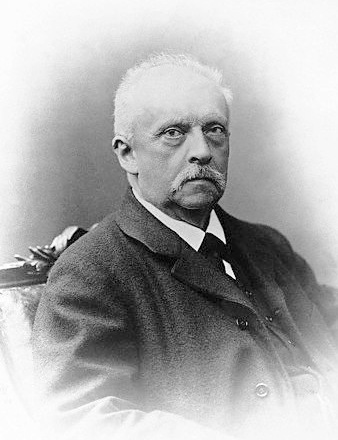
Rudolf Julius Emanuel Clausius (German pronunciation: [ˈʁuːdɔlf ˈklaʊzi̯ʊs]; 2 January 1822 – 24 August 1888) was a German physicist and mathematician and is considered one of the central founding fathers of the science of thermodynamics. By his restatement of Sadi Carnot's principle known as the Carnot cycle, he gave the theory of heat a truer and sounder basis. His most important paper, "On the Moving Force of Heat", published in 1850, first stated the basic ideas of the second law of thermodynamics. In 1865 he introduced the concept of entropy. In 1870 he introduced the virial theorem, which applied to heat.
Key Facts
- Born: January 2, 1822 in Köslin, Province of Pomerania, Prussia (present-day Koszalin
- Died: 1888
- Field: Science
- Awards: Copley Medal (1879)
Legacy and Impact
The influence of Rudolf Clausius extends far beyond his own lifetime. He fundamentally shaped our understanding of the natural world, and his discoveries and theories remain foundational to this day.
Though he passed away in 1888, his ideas continue to be studied, debated, and built upon by scholars and practitioners worldwide.
Twenty questions, eight minutes on the clock, and a percentile measured against everyone who has taken it. No sign-up.
Take the IQ test →Discover more brilliant minds in Science
Explore Science GeniusesRelated Articles
Explore More
Read the full profile of Rudolf Clausius
View Rudolf Clausius's Profile →