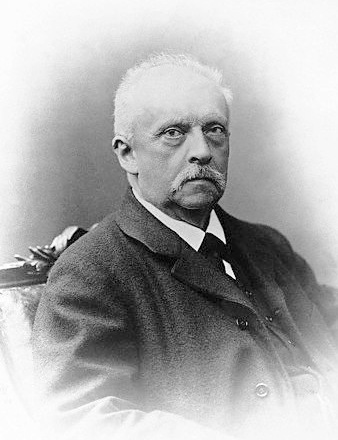
Martin Heidegger: Biography, Achievements & Lasting Legacy

Who Was Martin Heidegger?
Martin Heidegger (26 September 1889 – 26 May 1976) was a German philosopher whose work was central to the development of phenomenology, hermeneutics, and existentialism. He has had significant impact within subsequent philosophy, social sciences and humanities, and theology.
Heidegger's magnum opus, Being and Time (1927), is widely considered one of the most significant works of modern philosophy. In it, he introduced the concept of Dasein ("being-there") to describe the distinctive character of human existence, arguing that humans possess a "pre-ontological" understanding of being that shapes how they live and act, which he analyzed in terms of the unitary structure of "being-in-the-world". Through his analysis of Dasein, Heidegger sought to reawaken what he called "the question of being": the fundamental inquiry into what makes entities intelligible as the entities they are. In other words, Heidegger's governing "question of being" is concerned with what makes beings intelligible as beings. This question, he believed, had been neglected or obscured throughout the history of Western philosophy since the ancient Greeks.
Life and Career
His later work turned increasingly to questions of technology, language, art, and poetry, developing themes of human "dwelling" in the world and critiquing what he saw as the nihilistic trajectory of modern technological civilisation. Thinkers as varied as Jean-Paul Sartre, Hans-Georg Gadamer, Hannah Arendt, Jacques Derrida, and Richard Rorty were substantially shaped by engagement with his thought, whether in agreement or opposition.
Heidegger's legacy has been complicated and shadowed by his involvement with National Socialism. In April 1933, he was elected rector of the University of Freiburg and joined the Nazi Party, a membership he retained until 1945. The nature and extent of his commitment to Nazism, and the question of whether his philosophy is inherently connected to his political choices, remain subjects of significant scholarly controversy. After the war, he was banned from teaching following denazification proceedings, a ban later lifted in 1949, after which he returned to lecturing at the University of Freiburg. During this period of enforced withdrawal, he nevertheless continued to exert influence through private seminars and audiences at his home. His refusal to publicly repudiate his Nazi involvements or express remorse in unambiguous terms has continued to trouble interpreters of his work.
Key Facts
- Born: September 26, 1889 in Meßkirch, Baden, German Empire
- Died: 1976
- Field: Philosophy
Legacy and Impact
The influence of Martin Heidegger extends far beyond his own lifetime. He fundamentally shaped human thought and intellectual discourse, and his ideas and philosophical frameworks remain foundational to this day.
Twenty questions, eight minutes on the clock, and a percentile measured against everyone who has taken it. No sign-up.
Take the IQ test →Though he passed away in 1976, his ideas continue to be studied, debated, and built upon by scholars and practitioners worldwide.
Martin Heidegger remains one of the most celebrated minds to emerge from Germany, a testament to the rich intellectual heritage of the region.
Notable Geniuses from Germany
Germany has produced many remarkable minds. Alongside Martin Heidegger:
View all geniuses from Germany →
Discover more brilliant minds in Philosophy
Explore Philosophy GeniusesRelated Articles
Explore More
Read the full profile of Martin Heidegger
View Martin Heidegger's Profile →