Alexander von Humboldt: Biography, Achievements & Lasting Legacy

Who Was Alexander von Humboldt?
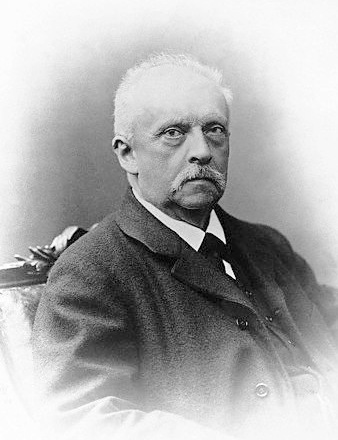
Friedrich Wilhelm Heinrich Alexander von Humboldt (14 September 1769 – 6 May 1859) was a German polymath, geographer, naturalist, explorer, and proponent of Romantic philosophy and science. He was the younger brother of the Prussian minister, philosopher, and linguist Wilhelm von Humboldt (1767–1835). Humboldt's quantitative work on botanical geography laid the foundation for the field of biogeography, while his advocacy of long-term systematic geophysical measurement pioneered modern geomagnetic and meteorological monitoring. Humboldt and Carl Ritter are both regarded as the founders of modern geography as they established it as an independent scientific discipline.
Between 1799 and 1804, Humboldt travelled extensively in the Americas, exploring and describing them for the first time from a non-Spanish European scientific point of view. On these travels, along with French explorer Aimé Bonpland, he traversed thousands of miles through some of the most difficult and little-known places on Earth, to include identifying the source of the Orinoco River and in 1802 climbing the highest mountain in Ecuador to a height of 19,286 feet, at the time a world record altitude for a Westerner. His description of the journey was written up and published in several volumes over 21 years.
Life and Career
Humboldt resurrected the use of the word cosmos from the ancient Greek and assigned it to his multivolume treatise, Kosmos, in which he sought to unify diverse branches of scientific knowledge and culture. This important work also motivated a holistic perception of the universe as one interacting entity, which introduced concepts of ecology leading to ideas of environmentalism. In 1800, and again in 1831, he described scientifically, on the basis of observations generated during his travels, local impacts of development causing human-induced climate change.
Humboldt is seen as "the father of ecology" and "the father of environmentalism".
Key Facts
- Born: September 14, 1769 in Berlin, Prussia, Holy Roman Empire
- Died: 1859
- Field: Science
- Awards: Copley Medal (1852)
Legacy and Impact
The influence of Alexander von Humboldt extends far beyond his own lifetime. He fundamentally shaped our understanding of the natural world, and his discoveries and theories remain foundational to this day.
Twenty questions, eight minutes on the clock, and a percentile measured against everyone who has taken it. No sign-up.
Take the IQ test →Though he passed away in 1859, his ideas continue to be studied, debated, and built upon by scholars and practitioners worldwide.
Alexander von Humboldt remains one of the most celebrated minds to emerge from Germany, a testament to the rich intellectual heritage of the region.
Notable Geniuses from Germany
Germany has produced many remarkable minds. Alongside Alexander von Humboldt:
View all geniuses from Germany →
Discover more brilliant minds in Science
Explore Science GeniusesRelated Articles
Explore More
Read the full profile of Alexander von Humboldt
View Alexander von Humboldt's Profile →