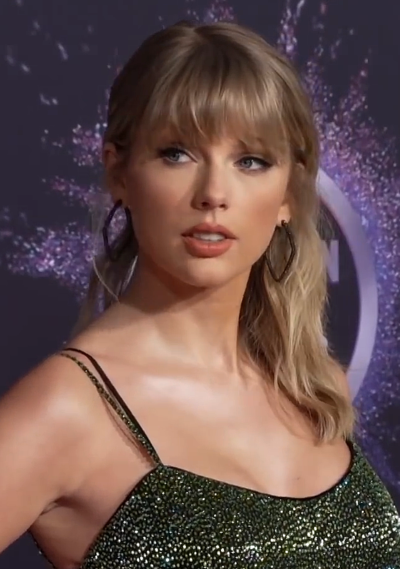
Biography
In the spring of 2004, a fourteen-year-old girl from Wyomissing, Pennsylvania, walked into the offices of RCA Records in Nashville with a collection of original songs and a specific proposition: she wanted to be a songwriter, not just a performer, and she wanted creative ownership of her music as a condition of any deal. The executives were polite. They offered her a development deal. She turned it down because it contained no guarantee of a recording contract. It was an unusual negotiating position for a teenager. It would define her career for the next twenty years.
Taylor Alison Swift was born December 13, 1989, in West Reading, Pennsylvania, to Scott Swift, a financial adviser, and Andrea Swift, a former marketing executive. She began performing in musical theatre at age nine and was playing guitar by eleven, learning from a local musician who taught her a series of three-chord progressions and then, crucially, showed her how to combine them into original compositions. By the time she was twelve she was writing songs with a level of structural sophistication unusual for her age — not technically complex, but emotionally precise, with a narrative specificity that her theatrical training had instilled.
Her parents relocated the family from Pennsylvania to Hendersonville, Tennessee, in 2004, specifically to support her music career. Nashville was, and remains, the center of the American country music industry, and getting close to its institutions was a strategic decision made by her family with unusual clarity of purpose. The RCA development deal she declined was followed, in late 2004, by a meeting with Scott Borchetta, who was preparing to launch a new independent label, Big Machine Records. He signed her in 2005. She was fourteen. She was the label's first signing.
"I was determined to be taken seriously as a songwriter. I wrote every single song on my first album. That was non-negotiable."— Taylor Swift
Her self-titled debut album was released in October 2006, when she was sixteen. It was written entirely or co-written by Swift herself — a deliberate, unprecedented choice for a major-label debut by a teenage artist in country music, where outside songwriters typically supply material. The album spent 24 weeks at number one on the Billboard Top Country Albums chart and eventually sold over five million copies in the United States. The lead single, "Tim McGraw," written by Swift alone when she was fourteen, reached the top ten on the Hot Country Songs chart.
Fearless, released in 2008, was the record that transformed her from a country prodigy into a cultural phenomenon. It won the Grammy Award for Album of the Year at the 52nd ceremony in January 2010. Swift was twenty years old — the youngest artist to win that award in the Grammy's history at that point. She also won Best Country Album, Best Country Song, and Best Female Country Vocal Performance. The sweep announced not just commercial success but critical recognition that her songwriting was something the industry's most respected institution considered genuinely important.
"Fearless is not the absence of fear. It's having fears but jumping anyway — because love is worth it."— Taylor Swift
The subsequent decade produced a body of work that tracked, in real time, her evolution from country songwriter to pop architect. Speak Now (2010), Red (2012), 1989 (2014), Reputation (2017), Lover (2019), Folklore and Evermore (2020), Midnights (2022) — each album represented a distinct creative phase, often accompanied by a re-evaluation of her public identity and a deliberate strategic pivot. The decision to re-record her first six albums beginning in 2021, after her original masters were sold without her consent, demonstrated a willingness to subordinate short-term commercial logic to long-term creative ownership — the same instinct that had led her to reject that RCA deal at fourteen.
By 2023, the Eras Tour had become the highest-grossing concert tour in history, with economists documenting its measurable impact on local economies wherever it stopped. She had won the Grammy for Album of the Year four times — more than any other artist in the award's history. The fourteen-year-old who insisted on writing her own songs had, across two decades, made that insistence into one of the most successful creative bets in the history of popular music.
Timeline
Watch & Listen
Peers in Perspective
| Artist | Signed Age | Debut Album Age | Grammy Album of the Year | Notable First |
|---|---|---|---|---|
| Taylor Swift | 14 | 16 | Age 20 (youngest ever) | Most Grammy AOTY wins (4) |
| Billie Eilish | 14 | 17 | Age 18 | Youngest Big Four sweep |
| Adele | 18 | 19 | Age 23 (21 album) | First artist to win Grammy Big Six |
| Justin Bieber | 14 | 15 | — | 4 top-40 hits from debut album |







.jpg)
