
The spelling bee, 2013
TIME's account of the 2013 Scripps National Spelling Bee finals describes a 13-year-old boy from Tower Lakes, Illinois, who quizzed the officials about etymology, in the magazine's phrase, like a parent asking a naughty child questions he already knows the answers to. He spelled odontoloxia and haupia correctly. Eleven finalists had started the evening; Sivakumar was one of the last two left.
He lost on cyanophycean. TIME's diagnosis was blunt and technical: he had the wrong root. The title went to Arvind Mahankali, also 13, of Bayside Hills, New York, on knaidel, a German-derived Yiddish word for a small dumpling, as The New York Times reported the following morning. The judges that year worked from a sheet of 25 final words, with a provision that two contestants who spelled all of them correctly would be declared co-champions.
The quasar search, 2015
Two years later his name appeared on a very different list. Google's 2015 Science Fair drew thousands of teenagers worldwide and narrowed them to 20 global finalists, who were to present their projects to judges at Google headquarters in Mountain View, California, on 21 September 2015. Sivakumar was listed among them, from the United States, with the project title “Automated search for gravitationally lensed quasars in the Sloan digital sky survey”.
The title describes a real problem in observational astronomy. Quasars are extremely luminous, extremely distant objects; when a massive galaxy lies between one and Earth, its gravity bends the light and can produce multiple images of the same quasar. Finding those cases by eye in a survey that catalogues hundreds of millions of objects is impractical, which is why an automated search is worth building. The Sloan Digital Sky Survey is the public sky catalogue the project was run against.
What the Google Science Fair was
The competition was run by Google, with Andrea Cohen as its programme leader, and offered a $50,000 scholarship and other prizes to its winners. Reaching the last 20 out of thousands of entrants was the achievement recorded in the coverage used here.
What that coverage does not record is the outcome. The EdTech Magazine article used for this page was published in August 2015, before the finalists presented, and lists the projects rather than the results. Whether Sivakumar won a named award at the 2015 fair is not established by any source used here.
What is documented, and what is not
Firm: he was 13 in May 2013 and from Tower Lakes, Illinois; he reached the closing stages of the 2013 Scripps National Spelling Bee and went out on cyanophycean after spelling odontoloxia and haupia; and he was one of 20 global finalists at the 2015 Google Science Fair with a quasar-lensing project.
Twenty questions, eight minutes on the clock, and a percentile measured against everyone who has taken it. No sign-up.
Take the IQ test →Not documented: his date of birth, his school, his family, and what he studied afterwards. A claim circulates that he received the Virgin Galactic Pioneer Award at the 2015 fair; it is not supported by any source used here, and the Google announcement consulted for a later edition of the fair shows that award going to a different student in a different year. Until a primary source confirms it, it should be treated as unverified.
Why the pairing is unusual
Spelling bees and science fairs test almost opposite things. The bee rewards a memory trained on orthographic patterns and language roots, retrieved instantly in front of a television audience; a research project rewards months of unsupervised work, mostly failure, with no audience at all. The bridge between them, in Sivakumar's case, is visible in TIME's description of him interrogating the officials about etymology rather than simply asking for the word again.
That is the habit of someone reconstructing a rule rather than recalling a fact. Applied to a sky survey, the same instinct becomes a search algorithm: rather than look at every object, work out what a lensed quasar has to look like and let the computer find the ones that match. Two national stages, two years apart, and the same method underneath.
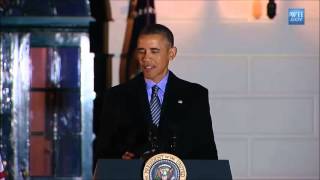
Watch: Pranav Sivakumar on camera

| Person | Country | Milestone | Age / Stat |
|---|---|---|---|
| Cannan Huey-You | United States | Presenting research on a Milky Way gas cloud at the American Astronomical… | Age 11 |
| Franklin Wang | United States | He pointed a machine-learning model at public telescope archives and six u | Age 17 |
| Pranav Sivakumar | United States | Two years after losing a spelling bee on cyanophycean, he was hunting lens | — |
| Ana Humphrey | United States | First place, 2019 Regeneron Science Talent Search | — |
| Wolf Cukier | United States | Spotting TOI 1338 b, TESS's first circumbinary planet | — |
What is documented — and what is not
✓ Documented
- Aged 13 and from Tower Lakes, Illinois, at the 2013 Scripps National Spelling Bee (TIME)
- One of the last two spellers; went out on cyanophycean after odontoloxia and haupia
- One of 20 global finalists at the 2015 Google Science Fair
- Project title: automated search for gravitationally lensed quasars in the Sloan Digital Sky Survey
? Unverified, disputed or wrong
- Date of birth, school and family are not stated in any source used
- The result of his 2015 Google Science Fair entry is not recorded in this material
- A reported Virgin Galactic Pioneer Award at the 2015 fair is unverified here
- Nothing documents his studies or work after 2015
Questions people ask about Pranav Sivakumar
How old is Pranav Sivakumar?
TIME described him as 13 in May 2013. No source used here gives his date of birth, so his current age cannot be stated.
What did Pranav Sivakumar do?
He reached the closing stages of the 2013 Scripps National Spelling Bee as one of the last two competitors, and in 2015 was named one of 20 global finalists at the Google Science Fair for an automated search for gravitationally lensed quasars.
Which word did he go out on?
Cyanophycean. TIME reported that he had the wrong root. He had already spelled odontoloxia and haupia correctly.
Who won the 2013 Scripps National Spelling Bee?
Arvind Mahankali, 13, of Bayside Hills, New York, on the word knaidel, a German-derived Yiddish word for a small dumpling.
Did he win the Google Science Fair?
Not according to any source used here. The coverage consulted was published before the finalists presented and records his place among the last 20, not the result.
Is Pranav Sivakumar on Wikipedia?
No Wikipedia article on him was found among the sources used for this page.
Where is Pranav Sivakumar now?
Not documented. None of the sources used here follows him beyond September 2015.
Quick quiz: how well do you know Pranav’s story?
Which word ended Pranav Sivakumar's run at the 2013 spelling bee?
What sky survey did his Google Science Fair project search?
How many global finalists did the 2015 Google Science Fair have?
Sources
- Google Spotlights 20 Student Science Fair Finalists — EdTech Magazine, 2015-08-11
- What You Missed While Not Watching the National Spelling Bee Finals — TIME, 2013-05-31
- Queens Boy, 13, Wins Scripps Spelling Bee With 'Knaidel' — The New York Times, 2013-05-31
Checked by the Geniuses.club editorial team. Ages are given as of September 2026.
Discover More Child Prodigies
50+ stories of contemporary young geniuses changing chess, music, science, and art.
Explore All Prodigies →Related Child Prodigy Profiles
 Cannan Huey-You🇺🇸 United States — At eleven he stood in front of professional astronomers…
 Ana Humphrey🇺🇸 United States — First place in a competition that has produced thirteen…
 Franklin Wang🇺🇸 United States — He pointed a machine-learning model at public telescope…
 Wolf Cukier🇺🇸 United States — Three days into a summer internship…
 Shania Muhammad🇺🇸 United States — She finished a bachelor's degree at 15. A year later she…
 Arvind Mahankali🇺🇸 United States — He spelled 'knaidel', won the national bee…


