Calendar calculation
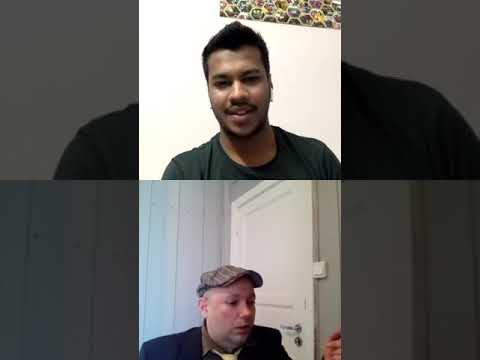
His strongest discipline is the calendar: given a date from any year, name the day of the week. Competitors answer as many as they can in sixty seconds. Boukovalas solved 54 at the 2016 World Cup for a bronze medal, and his official high score in the event is 82.
Eighty-two dates in a minute is roughly one every three-quarters of a second, including hearing the date and speaking the answer. The method is a compact algorithm — codes for centuries, years and months, combined and reduced — drilled until the arithmetic disappears.
Found through a mailing list
He discovered the discipline through the Yahoo Mental Calculation Group in the early 2000s, where he read about the Mind Sports Olympiad and the Mental Calculation World Cup. He watched the competitions from 2004 to 2006 before entering one himself.
That is a precise picture of how a niche sport recruited before social media. A mailing list, a few hundred subscribers worldwide, and the slow conversion of a reader into a competitor over the course of several years.
A mathematician's route
Boukovalas holds degrees in mathematics and physics, and competed in the Greek National Mathematical Olympiads in 1997 and 1999. Competitive calculation and competitive mathematics are separate pursuits — one is speed under a stopwatch, the other is proof — but the entry point is often the same person.
His record at the senior World Cup places him among the leading Europeans outside the traditional powers: the research record gives him fifteenth place in 2012 and fourteenth in 2018, in a field that draws the strongest calculators in the world to a single hall on a single day. Finishing in the top fifteen of that field, repeatedly, over eight years, is the definition of a national number one.
Fifteen minutes at a time
His training description is the most useful thing in his file. For square roots he worked half an hour every single day for six weeks, split into two fifteen-minute sessions, and concentrated on accuracy rather than speed. Speed, in his account, is what accuracy turns into.
Twenty questions, eight minutes on the clock, and a percentile measured against everyone who has taken it. No sign-up.
Take the IQ test →For flash anzan — his weakest event, because he did not train on a soroban as a child — he uses complements and pre-memorised combinations such as 7+7+6=20. He calls it a rather slow approach, but one that entails more creativity.
What is documented — and what is not
Documented: competition at every World Cup since 2010, the Memoriads in Antalya in 2012 and Las Vegas in 2016, silver in square roots at the 2012 Memoriad, bronze in calendar calculation at the 2016 World Cup with 54 dates, an official calendar high score of 82, degrees in mathematics and physics, and olympiad appearances in 1997 and 1999.
Not documented in these sources: his age, his birth year, his city and his occupation. The research record adds World Cup placings of fifteenth in 2012 and fourteenth in 2018, drawn from the official results tables.
| Person | Country | Milestone | Age / Stat |
|---|---|---|---|
| Wenzel Grüß | Germany | Most Versatile Calculator, 2018 Mental Calculation World Cup | Age 9 |
| Andrej Živanović | Serbia | Junior Mental Calculation World Championship titles | Age 11 |
| Marc Jornet Sanz | Spain | Second place at the 2010 and 2014 Mental Calculation World Cups | Age 16 |
| Freddis Reyes Hernández | Cuba | Winning multiplication and the Memoriad Trophy at the 2012 Mental… | Age 27 |
| Nodas Boukovalas | Greece | Being Greece's leading mental calculator | — |
What is documented — and what is not
✓ Documented
- He has competed at every Mental Calculation World Cup since 2010.
- He won bronze in calendar calculation at the 2016 World Cup, solving 54 dates in a minute, and his official high score is 82.
- He won silver in square roots at the 2012 Memoriad in Antalya.
- He holds degrees in mathematics and physics and competed in Greek national mathematical olympiads in 1997 and 1999.
? Unverified, disputed or wrong
- His age, birth year and home city.
- His occupation.
- His full list of World Cup placings beyond 2012 and 2018.
- Whether he has competed since 2018.
Questions people ask about Nodas Boukovalas
What is Nodas Boukovalas best at?
Calendar calculation — naming the weekday for any date. His official high score is 82 dates in one minute, and he won World Cup bronze in 2016 with 54.
How old is Nodas Boukovalas?
The sources used here do not give his age or birth year.
How did he get into mental calculation?
Through the Yahoo Mental Calculation Group in the early 2000s, where he read about the Mind Sports Olympiad and the World Cup. He watched from 2004 to 2006 before competing.
How does he train?
In short sessions with accuracy as the target. For square roots he worked two fifteen-minute sessions a day for six weeks, focusing on getting answers right rather than fast.
What is his weakest event?
Flash anzan, because he never trained on a soroban. He compensates with complements and pre-memorised combinations, which he calls slower but more creative.
What has he studied?
Mathematics and physics. He also competed in the Greek National Mathematical Olympiads in 1997 and 1999.
What is the Memoriad?
An international mental-sports competition. Boukovalas took part in the editions in Antalya in 2012, where he won square-roots silver, and in Las Vegas in 2016.
Is Nodas Boukovalas on Wikipedia?
The research record finds no article under his name. His results are published by the World Cup organisers.
Quick quiz: how well do you know Nodas’s story?
What is Nodas Boukovalas's strongest discipline?
How many dates did he solve for World Cup bronze in 2016?
How did he first learn about the sport?
Sources
- Nodas Boukovalas interview — World Mental Calculation, 2018-09-09
- Mental Calculation World Cup 2018 — Results — Mental Calculation World Cup, 2018
- Mental Calculation World Cup 2012 — Results — Mental Calculation World Cup, 2012
Checked by the Geniuses.club editorial team. Ages are given as of September 2026.
Discover More Child Prodigies
50+ stories of contemporary young geniuses changing chess, music, science, and art.
Explore All Prodigies →Related Child Prodigy Profiles
 Andrej Živanović🇷🇸 Serbia — Serbia's human calculator has won world junior titles in…
 Freddis Reyes Hernández🇨🇺 Cuba — Two eight-digit numbers…
 Marc Jornet Sanz🇪🇸 Spain — At sixteen, Marc Jornet Sanz finished second in the world…
 Wenzel Grüß🇩🇪 Germany — Wenzel Grüß multiplies eight-digit numbers while heading a…
 Willem Bouman🇳🇱 Netherlands — He told an interviewer he was finished with tournaments.…
 Mohammad El Mir🇱🇧 Lebanon — Five junior world titles, a Memoriad record…
