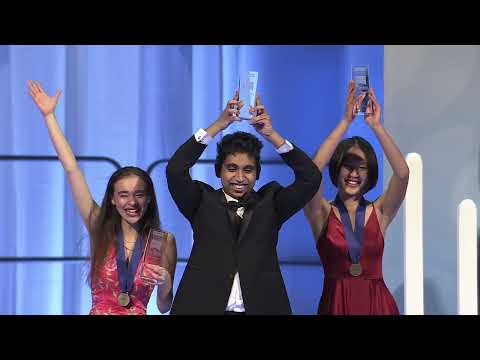
The disease
Kawasaki disease inflames the blood vessels of small children. The Society for Science describes it as the leading cause of acquired heart disease in young children, and the danger lies in the coronary arteries, which can be permanently damaged if the illness is not treated in time.
The reason a photograph is a plausible input is that several of the signs clinicians look for appear on the surface of the body rather than in a laboratory result. The difficulty is that those signs overlap with the ordinary illnesses of childhood, so recognition depends on a clinician assembling a pattern rather than reading a single test.
Timing is the whole argument for a triage tool. A condition that is treatable but easy to mistake for something ordinary creates a window in which the useful intervention is not a new therapy but earlier recognition, and that is the gap the project was aimed at.
The algorithm
Xu's approach was to use smartphone photographs as that input. An algorithm trained on such images can act as a prompt — a second opinion offered at the point where a parent or a clinician is deciding whether what they are looking at is worth escalating.
The award description states the purpose and the method without publishing the training data, the accuracy, the validation or any clinical trial. Those omissions matter for a diagnostic tool, and they are recorded here as gaps. What this page can state is what the competition organiser published: an algorithm using smartphone photos to help diagnose the disease, judged third best among 40 finalists.
Third place, and the money
The Regeneron Science Talent Search, founded in 1942, reached its 82nd year in 2023. Nearly 2,000 students entered and 40 reached the final; $1.8 million went to finalists and $3.1 million in total including school awards. Regeneron has backed the competition since 2017 under a ten-year, $100 million commitment.
Neel Moudgal of Michigan took first place and $250,000 for a model predicting RNA structure; Emily Ocasio of Virginia took second and $175,000 for AI analysis of racial disparity in homicide coverage. Xu's $150,000 was third. Maya Ajmera, the Society's chief executive, said she was "in awe of their creativity and conviction."
Why phone-based diagnosis is a live field
A smartphone camera is the most widely distributed medical sensor on earth. Systems that read visible signs — skin lesions, eye disease, jaundice in newborns — have been built for exactly that reason, and the appeal is the same each time: the hardware is already in the patient's home.
Twenty questions, eight minutes on the clock, and a percentile measured against everyone who has taken it. No sign-up.
Take the IQ test →The hard part is never the first demonstration. It is proving that the result holds across skin tones, cameras, lighting and populations, and that the tool changes what a clinician does without generating a flood of false alarms. Those are the questions that separate a prize-winning algorithm from a deployed one, and none of them is answered in this record.
What is documented — and what is not
Firm: third place, the $150,000, her age, her home city, the disease and the method, published by the Society for Science in March 2023.
Open: performance figures, validation, regulatory status, any publication, and what Xu has done since. This page makes no claim that the algorithm is available or approved for use, because no source gathered here says so.
| Person | Country | Milestone | Age / Stat |
|---|---|---|---|
| Sawsan Ahmed | United States | Broward College's youngest graduate, at 12, in December 2021 | Age 12 |
| Arvind Mahankali | United States | Won the 2013 Scripps National Spelling Bee at 13 | Age 13 |
| Kerry Close | United States | Won the 2006 Scripps National Spelling Bee at 13 | Age 13 |
| Shania Muhammad | United States | Langston University's youngest graduate, at 15 | Age 15 |
| Ellen Xu | United States | Kawasaki disease is missed because it looks like everything else. Her algo | Age 17 |
What is documented — and what is not
✓ Documented
- Third place and $150,000 at the 2023 Regeneron Science Talent Search, aged 17 (Society for Science)
- Project: smartphone-photo algorithm to help diagnose Kawasaki disease
- Kawasaki disease described by the organiser as the leading cause of acquired heart disease in young children
? Unverified, disputed or wrong
- No accuracy, training data or validation results published in this record
- No regulatory status, clinical trial or public release documented
- No information on her university or work after 2023
Questions people ask about Ellen Xu
What did Ellen Xu develop?
An algorithm that uses smartphone photographs to help diagnose Kawasaki disease.
What is Kawasaki disease?
An illness that inflames blood vessels in young children; the Society for Science describes it as the leading cause of acquired heart disease in young children.
What did she win?
Third place and $150,000 at the 2023 Regeneron Science Talent Search.
How old was she?
Seventeen at the time of the award.
Is the algorithm available to parents?
No source in this record states that it has been released, validated clinically or approved by a regulator.
Where is she from?
San Diego, California.
Where is Ellen Xu now?
Not documented in the sources gathered for this page.
Who won first and second place?
Neel Moudgal ($250,000) for RNA structure prediction and Emily Ocasio ($175,000) for AI analysis of homicide coverage.
Quick quiz: how well do you know Xu’s story?
Which disease does Ellen Xu's algorithm address?
What does the algorithm use as input?
What place did she take in 2023?
Sources
- Students Win More Than $1.8 Million at 2023 Regeneron Science Talent Search — Society for Science, 2023-03-14
Checked by the Geniuses.club editorial team. Ages are given as of September 2026.
Discover More Child Prodigies
50+ stories of contemporary young geniuses changing chess, music, science, and art.
Explore All Prodigies →Related Child Prodigy Profiles
 Anika Cheerla🇺🇸 United States — She automated the detection of Alzheimer's disease…
 Shania Muhammad🇺🇸 United States — She finished a bachelor's degree at 15. A year later she…
 Arvind Mahankali🇺🇸 United States — He spelled 'knaidel', won the national bee…
 Sawsan Ahmed🇺🇸 United States — She took her teddy bear into a college biology lab at 10.…
 Kerry Close🇺🇸 United States — Four national bees ended in defeat. The fifth ended with a…
 Sriram Hathwar🇺🇸 United States — He was the bee's youngest speller at eight. Six years…


