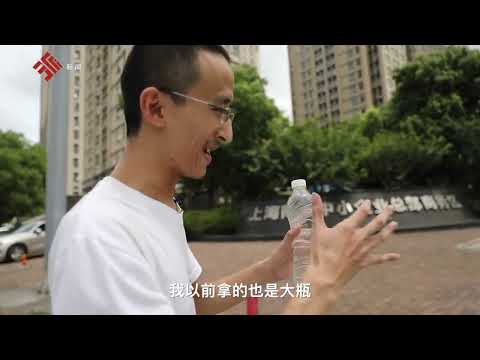
A childhood built for exams
Zhang Xinyang (张炘炀) was born in 1995 in Panjin, a mid-sized city in China’s Liaoning province. His mother was a schoolteacher; his father, Zhang Huixiang, a civil servant, later wrote a book about how he had trained his son. By the family’s account the boy knew more than a thousand Chinese characters before he was three.
What followed was acceleration by design. He started primary school at five, was moved up a grade within a month and reached fifth grade within about six months. He raced through junior middle school, skipped the first two years of senior high and entered its final year before he turned nine. His father was frank about the method: exam-oriented education was a reality, he said, and the only option was to face it and get the child to the goal. The family bought practice papers by the stack; when the boy finished high school, his father sold the used ones as scrap paper for more than 100 yuan.
“I was small, so I always sat in the front row and ate plenty of chalk dust,” he told China Youth Daily at sixteen (translated from Chinese). His biggest regret, he added, was never having toiled through high school the way other students did.
University at ten
In June 2005, aged ten, he sat the gaokao, China’s national university entrance examination, and scored 505 out of 750 — the figure China Youth Daily reported in 2011; some later accounts say 510. He was admitted to the Tianjin University of Technology and Education. China Daily called his entry at ten a record in China. His diary entry for June 8, 2005, translated from Chinese, read: “Exam-oriented education is finally over!”
Campus life was harder. His family stayed close by, according to later accounts, and a boy of ten had little in common with classmates twice his age. He finished the undergraduate coursework in three years. One of his teachers, Zhang Yuehui, recalled that a professor had arranged a graduate place for him in Germany — but he was too young: students had to be at least fourteen to study there alone. The teachers urged his father to wait a year. His father insisted on going straight on to a master’s degree.
A master’s student at thirteen
In 2008, at thirteen, Zhang began a master’s degree in mathematics at the Beijing University of Technology. He later described spending four days on a single problem, only to discover it was simple. His former teacher Zhang Yuehui’s assessment was pointed: he was strong at studying on his own and very poor at living on his own, because his father had done everything for him.

The apartment ultimatum
In 2011, as he finished the master’s degree, Zhang gave his parents an ultimatum: buy an apartment in Beijing outright — about 90 square meters, worth roughly two million yuan — or he would not defend his thesis or sit the doctoral entrance exam. His parents rented a flat and told him they had bought it. On September 1, 2011, aged sixteen, he enrolled as a doctoral student in applied mathematics at Beihang University.
The story became national news when China Central Television broadcast an interview with him on October 16, 2011. “When I finish my PhD I won’t even have a place to live,” he said on air, in remarks translated from Chinese. “What use is a PhD? What use is a postdoc?” A psychologist called the demand revenge for a lost childhood; the Global Times ran an opinion piece defending him as a young man reacting to Beijing’s housing prices. Quoted by China Daily a month later, he was disarmingly modest: “I’m nothing outstanding. I know how to pass exams.” He wanted, he said, a flat, a Beijing household registration and a good job — and would rather take a low-paid post at an air-conditioned research institute than a competitive high-paying one.

Eight years to a doctorate
The doctorate took eight years. Zhang published his first paper in an indexed science journal in 2017 and a second in 2019; one of his former teachers said the paper requirement delayed him by about five years. Beihang conferred his PhD in 2019, when he was about 24.
He then taught on contract at Ningxia Normal University, in China’s northwest, until August 2021, when he resigned and began taking freelance projects with friends.
“I never took off”
In September 2023, at 28, Zhang gave a long interview to Jiupai News. He had no fixed job and a few thousand yuan in the bank, and his parents sent him 10,000 yuan every two or three months. The apartment still rankled. “They still owe me a Beijing apartment,” he said, adding that by now it should be worth more than ten million yuan. He also said he was content — “no job, no burden,” in his words — and that he could go his whole life without working.
Asked about the “fallen prodigy” label that Chinese media had pinned on him, he rejected its premise: “I never took off — so how can anyone talk about a fall?” His old teacher Zhang Yuehui offered a gentler image: “Maybe he really is a plane that could fly ten thousand li, but he never left the runway — he’s still taxiing.” The Beijing News drew a wider lesson, calling prodigy education at root adult-centered, “a denial of childhood.” (Quotations translated from Chinese.)
Where is Zhang Xinyang now?
The last report by a mainstream outlet dates from late 2023. In February 2026, several Chinese self-media accounts relayed a blogger’s interview in which Zhang, about 30, was said to be working as a research assistant at a university in Yinchuan, the capital of Ningxia, with his family settled in Tianjin. In that account he said his parents no longer owed him an apartment: he had food, clothes and a roof, and was content. No mainstream outlet has confirmed the interview, and this page treats it as unverified.
Born in 1995, he is 30 or 31 in 2026. His birthday has not been published.
“私は大学に行くのに十分な年齢でした。大学が私を受け入れる準備ができていたかどうかは別の問題です。”— 張心陽、Sinaインタビュー、2010年
張心陽ドキュメンタリー
| 人物 | 国 | 節目 | 年齢 / 記録 |
|---|---|---|---|
| Zhang Xinyang | 🇨🇳 中国 | 学術分野の神童 | 1995 |
| Wei Yongkang | 🇨🇳 中国 | 学術分野の神童 | 1983 |
What is documented — and what is not
✓ Documented
- Born 1995 in Panjin; university at ten (Tianjin University of Technology and Education, 2005).
- Master’s degree program in mathematics at Beijing University of Technology from 2008, at thirteen.
- Doctoral student at Beihang University from 2011, at sixteen; doctorate conferred in 2019.
- The 2011 apartment ultimatum, and his parents’ rented flat.
- Contract teaching at Ningxia Normal University, 2019–2021; the September 2023 interview.
? Unverified, disputed or wrong
- “Peking University” — wrong; his doctorate was at Beihang.
- Tianjin as his hometown — wrong; he was born in Panjin.
- “China’s youngest PhD student” — a media label; no official registry exists.
- Gaokao score of 505 or 510; PhD field described as applied or pure mathematics.
- The 2026 research-assistant job (self-media only) and an IQ of about 140 (self-reported).
張心陽が重要である理由は、彼が極端な教育的飛び級が達成できることとできないことの外縁を表しているからである。彼の事例は、以前は憶測で語られていた議論に実証的データを提供した。20年分の学校教育を1年未満に圧縮することが、機能する学者を生み出すのか、それとも印象的な成績証明書を持つだけの傷ついた子供を生み出すのか。数学そのものは、STEM分野の卓越性は珍重されるが人間化されることは稀な文化において、稀有な公的擁護者を得た。何百万人もの人々が彼の物語を追い、彼を通して高等数学の抽象的な美しさと残酷な困難を垣間見た。彼の軌跡は、急進的な外れ値に対するインフラストラクチャを開発するよう機関に強いた。今では他の若い学者たちが高度なプログラムをナビゲートする際に恩恵を受けるプロトコルである。より根本的には、張は知的能力だけでは繁栄を保証しないことを実証した。明白な社会的苦闘と結びついた彼の学術的成功は、人間の発達の多次元的性質を明らかにし、知能と準備を同一視する還元的モデルに挑戦した。彼の人生が提起する最適なペース配分、親の権限、機関の責任についての疑問は未解決のままであり、教育哲学への彼の継続的な関連性を保証している。
現代中国の達成というより大きな物語の中で、張は野心とその影の代償の両方を体現している。彼の物語は、オリンピックの金メダルとノーベル賞が文明的活力の尺度に見えた、世界クラスの人材育成への激しい国家的焦点の時期に現れた。彼は中国の学生が単に競争するだけでなく基準を再定義できることを証明し、西洋の子供たちがまだ分数を習得している年齢で大学に入学した。しかし彼の事例はまた、中国教育のプレッシャークッカーが子供たちに奉仕するのか消費するのかについて、稀な公的内省を促した。中国の学習を機械的暗記として固定観念化していた国際的観察者たちは、真の数学的創造性を持つ人物に直面し、単純化された東西比較を複雑化させた。彼の経験は、最終的に控えめな改革をもたらした政策議論に影響を与え、最も極端な飛び級慣行を和らげた。張は同時に例外的で警告的であることで認識を変え、中国の教育文化が人的コストと正直に取り組みながら驚異的な結果を生み出せることを思い起こさせた。彼は、持続可能な卓越性がどのようなものかについての議論において試金石であり続けている。最年少が常に最も賢明な道ではないことの証明である。
Questions people ask about Zhang Xinyang
Where is Zhang Xinyang now?
The last mainstream report, in late 2023, found him freelancing and supported by his parents. Chinese self-media accounts of a February 2026 interview say he works as a research assistant at a university in Yinchuan; no mainstream outlet has confirmed it.
How old is Zhang Xinyang?
Born in 1995, he is 30 or 31 in 2026. His birthday has not been published.
Did Zhang Xinyang finish his PhD?
Yes. Beihang University conferred his doctorate in 2019, eight years after he enrolled at sixteen.
Did Zhang Xinyang go to Peking University?
No. His doctorate was at Beihang University (Beijing University of Aeronautics and Astronautics). Many English-language reports confuse the two.
What was the apartment story?
In 2011 he demanded his parents buy a Beijing flat outright — about two million yuan — or he would not defend his master’s thesis or sit the doctoral exam. His parents rented one and told him they had bought it. CCTV aired the story on October 16, 2011.
What is Zhang Xinyang’s IQ?
No formal score has been published. He has said his IQ is around 140 or higher — a self-report, not a verified result.
What was Zhang Xinyang’s gaokao score?
505 out of 750, according to China Youth Daily in 2011; some 2023 reports say 510.
What happened to Zhang Xinyang after his PhD?
He taught on contract at Ningxia Normal University from 2019 to August 2021, then took freelance projects. He rejects the “fallen prodigy” label: “I never took off.”
Quick quiz: how well do you know Zhang’s story?
At what age did Zhang Xinyang enter university?
He passed the gaokao in June 2005, at ten.
What did he demand from his parents in 2011?
A flat in Beijing, bought outright — or no thesis defense.
Where did he earn his PhD?
Beihang University, in applied mathematics, conferred in 2019.
Sources
- Prodigies seeking a class act in universities — China Daily, November 14, 2011
- Profile of Zhang Xinyang, 16-year-old doctoral student — China Youth Daily, September 19, 2011
- Report on the Zhang family’s methods (Southern Daily) — China Education Online, October 31, 2011
- Boy genius unfairly heckled over housing — Global Times, October 20, 2011
- Wolf fathers and Harvard girls — The Diplomat, November 2011
- Downfall of a prodigy: China’s youngest graduate student still financially dependent — South China Morning Post, September 2023
- “They owe me”: former child prodigy, now 28 — AsiaOne, October 4, 2023
- Wenhui Daily interview report — Guangming Online, September 22, 2023
- Former teacher on Zhang Xinyang — The Paper, September 26, 2023
- Chinese child prodigy interview — Mothership, December 4, 2023
- Jiupai News interview, reprinted (Chinese) — Sohu, September 20, 2023
- CCTV interview report (Tianfu Morning Post, Chinese) — ScienceNet, October 18, 2011
- Psychologist on the apartment demand (Chinese) — China News Service, October 18, 2011
- Commentary on prodigy education (Chinese) — The Beijing News, September 21, 2023
- Self-media report of a 2026 interview (Chinese, unverified) — Sohu, February 16, 2026
Checked by the Geniuses.club editorial team. Ages are given as of September 2026.