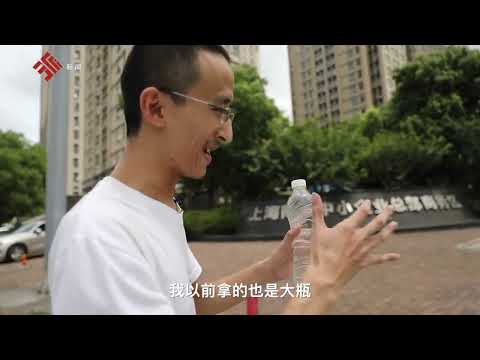
A childhood built for exams
Zhang Xinyang (张炘炀) was born in 1995 in Panjin, a mid-sized city in China’s Liaoning province. His mother was a schoolteacher; his father, Zhang Huixiang, a civil servant, later wrote a book about how he had trained his son. By the family’s account the boy knew more than a thousand Chinese characters before he was three.
What followed was acceleration by design. He started primary school at five, was moved up a grade within a month and reached fifth grade within about six months. He raced through junior middle school, skipped the first two years of senior high and entered its final year before he turned nine. His father was frank about the method: exam-oriented education was a reality, he said, and the only option was to face it and get the child to the goal. The family bought practice papers by the stack; when the boy finished high school, his father sold the used ones as scrap paper for more than 100 yuan.
“I was small, so I always sat in the front row and ate plenty of chalk dust,” he told China Youth Daily at sixteen (translated from Chinese). His biggest regret, he added, was never having toiled through high school the way other students did.
University at ten
In June 2005, aged ten, he sat the gaokao, China’s national university entrance examination, and scored 505 out of 750 — the figure China Youth Daily reported in 2011; some later accounts say 510. He was admitted to the Tianjin University of Technology and Education. China Daily called his entry at ten a record in China. His diary entry for June 8, 2005, translated from Chinese, read: “Exam-oriented education is finally over!”
Campus life was harder. His family stayed close by, according to later accounts, and a boy of ten had little in common with classmates twice his age. He finished the undergraduate coursework in three years. One of his teachers, Zhang Yuehui, recalled that a professor had arranged a graduate place for him in Germany — but he was too young: students had to be at least fourteen to study there alone. The teachers urged his father to wait a year. His father insisted on going straight on to a master’s degree.
A master’s student at thirteen
In 2008, at thirteen, Zhang began a master’s degree in mathematics at the Beijing University of Technology. He later described spending four days on a single problem, only to discover it was simple. His former teacher Zhang Yuehui’s assessment was pointed: he was strong at studying on his own and very poor at living on his own, because his father had done everything for him.

The apartment ultimatum
In 2011, as he finished the master’s degree, Zhang gave his parents an ultimatum: buy an apartment in Beijing outright — about 90 square meters, worth roughly two million yuan — or he would not defend his thesis or sit the doctoral entrance exam. His parents rented a flat and told him they had bought it. On September 1, 2011, aged sixteen, he enrolled as a doctoral student in applied mathematics at Beihang University.
The story became national news when China Central Television broadcast an interview with him on October 16, 2011. “When I finish my PhD I won’t even have a place to live,” he said on air, in remarks translated from Chinese. “What use is a PhD? What use is a postdoc?” A psychologist called the demand revenge for a lost childhood; the Global Times ran an opinion piece defending him as a young man reacting to Beijing’s housing prices. Quoted by China Daily a month later, he was disarmingly modest: “I’m nothing outstanding. I know how to pass exams.” He wanted, he said, a flat, a Beijing household registration and a good job — and would rather take a low-paid post at an air-conditioned research institute than a competitive high-paying one.

Eight years to a doctorate
The doctorate took eight years. Zhang published his first paper in an indexed science journal in 2017 and a second in 2019; one of his former teachers said the paper requirement delayed him by about five years. Beihang conferred his PhD in 2019, when he was about 24.
He then taught on contract at Ningxia Normal University, in China’s northwest, until August 2021, when he resigned and began taking freelance projects with friends.
“I never took off”
In September 2023, at 28, Zhang gave a long interview to Jiupai News. He had no fixed job and a few thousand yuan in the bank, and his parents sent him 10,000 yuan every two or three months. The apartment still rankled. “They still owe me a Beijing apartment,” he said, adding that by now it should be worth more than ten million yuan. He also said he was content — “no job, no burden,” in his words — and that he could go his whole life without working.
Asked about the “fallen prodigy” label that Chinese media had pinned on him, he rejected its premise: “I never took off — so how can anyone talk about a fall?” His old teacher Zhang Yuehui offered a gentler image: “Maybe he really is a plane that could fly ten thousand li, but he never left the runway — he’s still taxiing.” The Beijing News drew a wider lesson, calling prodigy education at root adult-centered, “a denial of childhood.” (Quotations translated from Chinese.)
Where is Zhang Xinyang now?
The last report by a mainstream outlet dates from late 2023. In February 2026, several Chinese self-media accounts relayed a blogger’s interview in which Zhang, about 30, was said to be working as a research assistant at a university in Yinchuan, the capital of Ningxia, with his family settled in Tianjin. In that account he said his parents no longer owed him an apartment: he had food, clothes and a roof, and was content. No mainstream outlet has confirmed the interview, and this page treats it as unverified.
Born in 1995, he is 30 or 31 in 2026. His birthday has not been published.
“저는 대학에 갈 만큼 나이가 들었습니다. 대학이 저를 받아들일 준비가 되어 있었는지는 다른 문제입니다.”— 장신양, Sina 인터뷰, 2010
장신양 다큐멘터리
| 인물 | 국가 | 이정표 | 나이 / 기록 |
|---|---|---|---|
| Zhang Xinyang | 🇨🇳 중국 | 학문 영재 | 1995 |
| Wei Yongkang | 🇨🇳 중국 | 학문 영재 | 1983 |
What is documented — and what is not
✓ Documented
- Born 1995 in Panjin; university at ten (Tianjin University of Technology and Education, 2005).
- Master’s degree program in mathematics at Beijing University of Technology from 2008, at thirteen.
- Doctoral student at Beihang University from 2011, at sixteen; doctorate conferred in 2019.
- The 2011 apartment ultimatum, and his parents’ rented flat.
- Contract teaching at Ningxia Normal University, 2019–2021; the September 2023 interview.
? Unverified, disputed or wrong
- “Peking University” — wrong; his doctorate was at Beihang.
- Tianjin as his hometown — wrong; he was born in Panjin.
- “China’s youngest PhD student” — a media label; no official registry exists.
- Gaokao score of 505 or 510; PhD field described as applied or pure mathematics.
- The 2026 research-assistant job (self-media only) and an IQ of about 140 (self-reported).
장신양이 중요한 이유는 그가 극단적인 교육 가속화가 성취할 수 있는 것과 성취할 수 없는 것의 외곽 경계를 나타내기 때문이다. 그의 사례는 이전에 추측에 의존했던 논쟁에 경험적 데이터를 제공했다. 20년의 학교 교육을 1년도 안 되는 기간으로 압축하는 것이 기능적인 학자를 만드는가, 아니면 인상적인 성적표를 가진 손상된 아이들을 만드는가. 수학 자체는 STEM 우수성이 귀중하게 여겨지지만 거의 인간화되지 않는 문화에서 보기 드문 공공 옹호자를 얻었다. 수백만 명이 그의 이야기를 따랐으며, 그를 통해 고등 수학의 추상적 아름다움과 잔인한 어려움을 엿보았다. 그의 궤적은 기관들이 급진적 이상치를 위한 인프라, 고급 프로그램을 탐색하는 다른 젊은 학자들에게 현재 혜택을 주는 프로토콜을 개발하도록 강요했다. 더 근본적으로 장신양은 지적 능력만으로는 번영을 보장하지 않는다는 것을 보여주었다. 명백한 사회적 어려움과 결합된 그의 학문적 성공은 인간 발달의 다차원적 성격을 드러냈으며, 지능을 준비성과 동일시하는 환원적 모델에 도전했다. 그의 삶이 제기하는 최적 속도, 부모의 권위, 기관의 책임에 대한 질문들은 여전히 해결되지 않았으며, 교육 철학에 대한 그의 지속적인 관련성을 보장한다.
현대 중국 성취의 더 큰 서사 내에서 장신양은 열망과 그 그림자 비용을 모두 구현한다. 그의 이야기는 세계적 수준의 인재 육성에 대한 강렬한 국가적 집중 기간 동안 등장했으며, 올림픽 금메달과 Nobel Peace Prize가 문명적 활력의 척도로 보였던 때였다. 그는 중국 학생들이 단순히 경쟁할 뿐만 아니라 기준을 재정의할 수 있음을 입증했으며, 서구 아이들이 여전히 분수를 마스터하는 나이에 대학에 입학했다. 그러나 그의 사례는 또한 중국 교육의 압력솥이 아이들을 섬기는지 아니면 그들을 소비하는지에 대한 드문 공개적 성찰을 촉발했다. 중국 학습을 기계적 암기로 고정관념화했던 국제 관찰자들은 진정한 수학적 창의성의 인물과 대면했으며, 단순한 동서 비교를 복잡하게 만들었다. 그의 경험은 결국 가장 극단적인 가속화 관행을 완화하는 온건한 개혁을 낳은 정책 토론에 영향을 미쳤다. 장신양은 동시에 예외적이고 경고적임으로써 인식을 변화시켰으며, 중국 교육 문화가 인간적 비용과 정직하게 씨름하면서 놀라운 결과를 낼 수 있다는 것을 상기시켰다. 그는 지속 가능한 우수성이 어떤 모습인지에 대한 논쟁에서 시금석으로 남아 있으며, 가장 어린 것이 항상 가장 현명한 길은 아니라는 증거이다.
Questions people ask about Zhang Xinyang
Where is Zhang Xinyang now?
The last mainstream report, in late 2023, found him freelancing and supported by his parents. Chinese self-media accounts of a February 2026 interview say he works as a research assistant at a university in Yinchuan; no mainstream outlet has confirmed it.
How old is Zhang Xinyang?
Born in 1995, he is 30 or 31 in 2026. His birthday has not been published.
Did Zhang Xinyang finish his PhD?
Yes. Beihang University conferred his doctorate in 2019, eight years after he enrolled at sixteen.
Did Zhang Xinyang go to Peking University?
No. His doctorate was at Beihang University (Beijing University of Aeronautics and Astronautics). Many English-language reports confuse the two.
What was the apartment story?
In 2011 he demanded his parents buy a Beijing flat outright — about two million yuan — or he would not defend his master’s thesis or sit the doctoral exam. His parents rented one and told him they had bought it. CCTV aired the story on October 16, 2011.
What is Zhang Xinyang’s IQ?
No formal score has been published. He has said his IQ is around 140 or higher — a self-report, not a verified result.
What was Zhang Xinyang’s gaokao score?
505 out of 750, according to China Youth Daily in 2011; some 2023 reports say 510.
What happened to Zhang Xinyang after his PhD?
He taught on contract at Ningxia Normal University from 2019 to August 2021, then took freelance projects. He rejects the “fallen prodigy” label: “I never took off.”
Quick quiz: how well do you know Zhang’s story?
At what age did Zhang Xinyang enter university?
He passed the gaokao in June 2005, at ten.
What did he demand from his parents in 2011?
A flat in Beijing, bought outright — or no thesis defense.
Where did he earn his PhD?
Beihang University, in applied mathematics, conferred in 2019.
Sources
- Prodigies seeking a class act in universities — China Daily, November 14, 2011
- Profile of Zhang Xinyang, 16-year-old doctoral student — China Youth Daily, September 19, 2011
- Report on the Zhang family’s methods (Southern Daily) — China Education Online, October 31, 2011
- Boy genius unfairly heckled over housing — Global Times, October 20, 2011
- Wolf fathers and Harvard girls — The Diplomat, November 2011
- Downfall of a prodigy: China’s youngest graduate student still financially dependent — South China Morning Post, September 2023
- “They owe me”: former child prodigy, now 28 — AsiaOne, October 4, 2023
- Wenhui Daily interview report — Guangming Online, September 22, 2023
- Former teacher on Zhang Xinyang — The Paper, September 26, 2023
- Chinese child prodigy interview — Mothership, December 4, 2023
- Jiupai News interview, reprinted (Chinese) — Sohu, September 20, 2023
- CCTV interview report (Tianfu Morning Post, Chinese) — ScienceNet, October 18, 2011
- Psychologist on the apartment demand (Chinese) — China News Service, October 18, 2011
- Commentary on prodigy education (Chinese) — The Beijing News, September 21, 2023
- Self-media report of a 2026 interview (Chinese, unverified) — Sohu, February 16, 2026
Checked by the Geniuses.club editorial team. Ages are given as of September 2026.