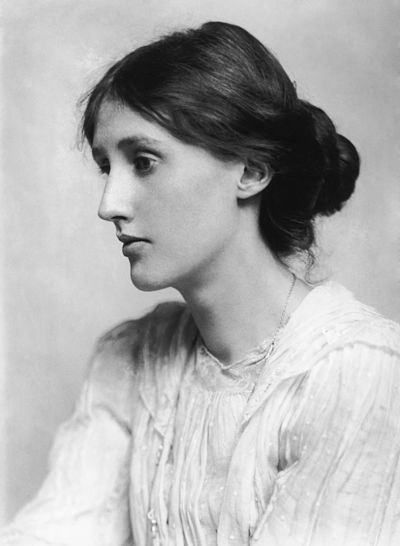
Fast Facts
- Born
- January 25, 1882
- Zodiac
- ♒ Aquarius (Jan 20 – Feb 18)
- Died
- March 28, 1941 (age 59)
- Nationality
- British
- Major Works
- Mrs Dalloway, To the Lighthouse, The Waves, Orlando
- Key Essay
- A Room of One's Own (1929)
- Literary Movement
- Modernism, Stream-of-Consciousness
- Circle
- Bloomsbury Group (Keynes, Forster, Bell)
- Press
- Hogarth Press, co-founded 1917
The argument Virginia Woolf made in 1924 — in the essay "Mr Bennett and Mrs Brown" — was precise and consequential: the Edwardian novelists, she wrote, built their fiction out of external facts, social circumstance, economic condition, the furniture of the room; but human character, she insisted, does not reside in the furniture of the room. It resides inside the head. The novel, if it was to remain truthful, had to follow consciousness inward. She had already begun building the technique to do this, and she would spend the next fifteen years completing it, producing in Mrs Dalloway (1925) and To the Lighthouse (1927) two novels that changed not only what the novel could do but what reality it was capable of representing.
Adeline Virginia Stephen was born on January 25, 1882, in Kensington, London, into one of the most intellectually distinguished households of late Victorian England. Her father, Leslie Stephen, was a prominent literary critic, editor of the Dictionary of National Biography, and a man of formidable intellectual presence. Her mother, Julia Prinsep Stephen, was a celebrated beauty who died when Virginia was thirteen — a loss that triggered the first of her serious mental breakdowns and haunted her fiction for the rest of her life. She was educated at home, in her father's enormous library, while her brothers went to Cambridge. The exclusion was a wound she never forgot and eventually theorized in A Room of One's Own. Leslie Stephen died in 1904; Virginia moved with her siblings to Bloomsbury, and the group that would bear the neighborhood's name began to form around them.
The Bloomsbury Group — economists, painters, writers, philosophers, all interconnected by friendship, love, and intellectual argument — was the intellectual context in which Woolf developed. John Maynard Keynes, E. M. Forster, Roger Fry, Lytton Strachey, and her sister Vanessa Bell all belonged to it. In 1917, she and her husband Leonard Woolf founded the Hogarth Press in their living room, initially as therapy for her mental health. It would go on to publish T. S. Eliot's The Waste Land, Freud's Collected Papers in English, and all of Woolf's own books, giving her complete editorial control over her work — a freedom she used to push the novel into territory no commercial publisher would have risked.
"Examine for a moment an ordinary mind on an ordinary day. The mind receives a myriad impressions — trivial, fantastic, evanescent, or engraved with the sharpness of steel."
— Virginia Woolf, "Modern Fiction," 1925Mrs Dalloway (1925) takes place entirely on a single day in London — June, 1923 — and moves between the consciousness of Clarissa Dalloway, a society hostess preparing a party, and Septimus Warren Smith, a shell-shocked veteran who will not survive the day. The novel operates through free indirect discourse and stream of consciousness: the narrative slides in and out of characters' minds without announcement, capturing the texture of thought as it actually moves — associative, digressive, layered with memory, saturated with sensation. To the Lighthouse (1927), in many ways more experimental still, uses the same techniques across three time frames to explore the interior lives of the Ramsay family around their Scottish summer house and their plan to sail, one day, to a lighthouse they can see from shore.
"A woman must have money and a room of her own if she is to write fiction."
Venti domande, otto minuti di orologio e un percentile misurato su tutti quelli che l’hanno fatto. Senza registrazione.
Fai il test del QI →A Room of One's Own (1929), based on two lectures delivered at Cambridge women's colleges, made the case — with an elegance and an anger held in perfect tension — that women had been denied the conditions necessary to produce great literature: money, education, time, and literal physical space. It invented the character of "Judith Shakespeare," William's equally talented imaginary sister, to demonstrate what would have happened to female genius in Elizabethan England, and it remains the foundational text of feminist literary criticism. The Waves (1931), her most formally radical novel, dispensed with conventional narrative entirely in favor of alternating interior monologues that trace six characters across a lifetime. She died by drowning on March 28, 1941, having waded into the River Ouse near her Sussex home, pockets filled with stones. She was fifty-nine. Leonard found her letter: "I don't think two people could have been happier than we have been."
Key Milestones
Questions people ask about Virginia Woolf
What is Virginia Woolf known for?
English modernist novelist, essayist, and critic. The novel, if it was to remain truthful, had to follow consciousness inward.
When was Virginia Woolf born?
Virginia Woolf was born in 1882 in Kensington, London, England.
What happened to Virginia Woolf?
None of the sources used on this page follows Virginia Woolf beyond the events described above. That absence is reported here rather than filled in.
What is Virginia Woolf’s IQ?
No IQ figure for Virginia Woolf appears in any source used on this page. Geniuses.club publishes an IQ number only when a named outlet has reported one.
Modernist Writers Compared
| Author | Country | Famous Work | Key Technique |
|---|---|---|---|
| Virginia Woolf | United Kingdom | Mrs Dalloway | Stream-of-consciousness |
| James Joyce | Ireland | Ulysses | Stream-of-consciousness |
| Marcel Proust | France | In Search of Lost Time | Memory, interior monologue |
| Franz Kafka | Austria-Hungary | The Trial | Absurdist realism |
| Ernest Hemingway | USA | The Sun Also Rises | Minimalism, omission |
Video Library
Virginia Woolf — life, work, and legacy
Mrs Dalloway — stream-of-consciousness explained
Why Virginia Woolf Matters
Woolf gave the novel its interior life. Before her, fiction could represent thought as reported speech — dialogue, summary, the author's description of what a character was thinking. After her, it could render thought as it actually moves: associative, fragmented, layered with memory and sensation, governed not by clock time but by the mind's own recursive drift. Stream-of-consciousness is now so standard a technique that its radical novelty in 1925 is easy to underestimate. Her formal innovations were inseparable from her political argument: if what happens inside a woman's head is as real and as significant as what happens in the world's official spaces — parliaments, battlefields, offices — then the novel that renders that interior truthfully is itself a political act. A Room of One's Own remains the clearest statement of the conditions necessary for women's creative production ever written. Both the technique and the argument are permanent acquisitions of literature.


