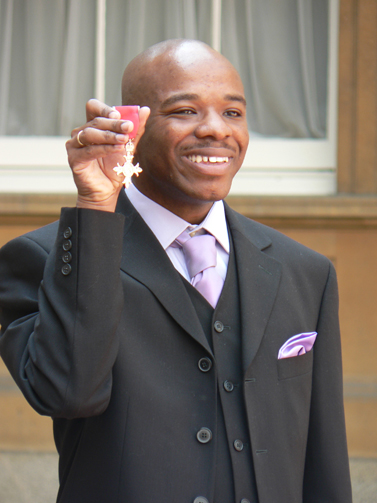
Aleksander Kwaśniewski served as the President of Poland from 1995 to 2005. He is best known for overseeing Poland's accession to NATO in 1999 and the European Union in 2004. A former communist youth minister, he successfully transitioned into a Western-aligned statesman and later acted as an international mediator during Ukraine's 2004 Orange Revolution.
Aleksander Kwaśniewski: The Communist Who Delivered Poland to NATO
Aleksander Kwaśniewski's political career runs through an improbable reversal: a former Communist Party youth minister became, within a decade of that party's collapse, the president who brought Poland into NATO and set it on the path into the European Union — and then, a decade after that, flew to Kyiv as an international mediator to help settle Ukraine's Orange Revolution peacefully. Few post-communist leaders in Europe made the crossing from party functionary to trusted Western statesman as completely.
From Party Press to Party Sports Ministry
Kwaśniewski was born November 15, 1954, in Białogard, in northwestern Poland. He studied economics at the University of Gdańsk, where he chaired the socialist student organization and was active in student politics through the 1970s. He joined the ruling Polish United Workers' Party in 1977 and moved to Warsaw to edit party youth publications, running Itd from 1981 to 1984 and Sztandar Młodych from 1984 to 1985. He rose through the party's institutional structure from there, serving as minister of youth affairs from 1985 to 1987, then chairing the Committee for Youth and Physical Culture from 1987 to 1990 while simultaneously heading Poland's Olympic committee from 1988 to 1991. In the late 1980s, as the communist system began to crack, he took part in the Round Table negotiations between the government and Solidarity, co-chairing discussions with the trade unions that helped chart Poland's transition away from one-party rule.
Twenty questions, eight minutes on the clock, and a percentile measured against everyone who has taken it. No sign-up.
Take the IQ test →Reinventing the Party, Then Reinventing Himself
After communism's collapse, Kwaśniewski co-founded the Democratic Left Alliance (SLD) in 1991, rebuilding the political left around former party structures repositioned as a modern social-democratic force. The SLD won a parliamentary plurality in 1993 and formed a coalition government with the Peasant Party. Two years later Kwaśniewski ran for president himself, defeating the Solidarity icon Lech Wałęsa in a narrow 1995 runoff — a result that turned partly on Wałęsa's declining popularity after five turbulent years in office — and he was re-elected comfortably in 2000, a striking outcome given that he had begun his political life inside the very party apparatus that Wałęsa's Solidarity movement had spent a decade fighting to dismantle.
Steering Poland Into the West
Kwaśniewski's presidency, which ran until constitutional term limits forced him from office in 2005, was defined by delivering Poland into the Western institutions his own former party had once stood against. His administration presided over the adoption of Poland's 1997 constitution, oversaw the country's admission to NATO in 1999, and guided it into the European Union in 2004. He supported the American-led war on terrorism after the September 11 attacks and deployed Polish troops to Iraq in 2003. On matters of historical reckoning, he formally apologized for the 1941 Jedwabne massacre of Polish Jews and moved to restore citizenship to Jews who had been stripped of it under communist rule, though he vetoed separate property-compensation legislation. An avowed agnostic, he also worked to improve relations with the Vatican during his tenure.
Mediating the Orange Revolution
Kwaśniewski's most consequential act after leaving formal domestic power came in Ukraine. According to accounts of his post-presidential diplomatic career, he helped inspire and lead international mediation efforts during Ukraine's 2004 Orange Revolution, working alongside other European figures to help the country's fraudulent election crisis resolve through negotiation and a court-ordered rerun rather than through violence — a role that placed him directly alongside the events that would soon make Viktor Yushchenko president and Yulia Tymoshenko prime minister.
A Second Career as an Elder Statesman
After leaving the presidency in 2005, Kwaśniewski moved into an international academic and advisory role, becoming a Distinguished Scholar at Georgetown University's School of Foreign Service in 2006, where he taught on contemporary European politics, the transatlantic relationship, and democratization in Central and Eastern Europe. He went on to serve on the Board of Trustees of the International Crisis Group, as a member of the Atlantic Council of the United States and the Bilderberg Group, as head of the International Council on Tolerance and Reconciliation, and as head of the board of the Yalta European Strategy forum — accumulating a portfolio of roles focused on exactly the causes his presidency had advanced: NATO and EU enlargement, and reconciliation between Poland and its German, Jewish, and Ukrainian neighbors.
Why Aleksander Is Called a Genius
Kwaśniewski is not credited with intellectual originality in the sense of scholarship or invention — his university training was in economics, not a field in which he produced notable research, and his career is one of institutional management rather than ideas. What he is credited with, across a career spanning the collapse of communism, two presidential terms, and two decades of international diplomacy since, is an unusually flexible and durable political skill: the ability to read which way history is moving and reposition himself and his political vehicle to remain relevant to it — from party youth minister to post-communist social democrat to NATO-and-EU president to international mediator and elder statesman. That adaptability is the real asset behind his reputation, not any singular flash of brilliance. The honest counter-case is that this same flexibility invites the charge of pure opportunism: a man who spent his early career inside the apparatus of one-party rule and then became one of its most polished Western-facing critics is, to skeptics, evidence less of genius than of an unusually well-timed set of career pivots. What is not disputed is the outcome — Poland entered NATO and the EU on his watch, and he has spent every year since working the diplomatic circuit built around exactly those achievements.
Legacy
Kwaśniewski's legacy is bound up with Poland's own post-communist transformation: he is remembered as the president who converted the country's fragile 1990s democracy into a fully integrated NATO and EU member, and as one of the rare communist-era officials who built a credible, decades-long second career as a Western democratic statesman rather than fading from relevance once his party's old order collapsed.