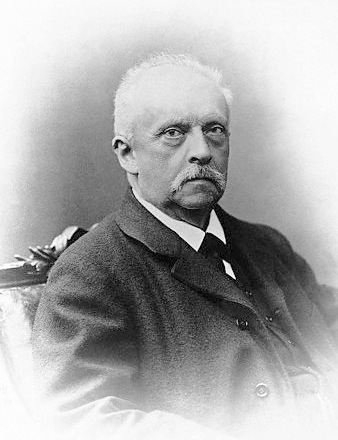
George Boole and Gottlob Frege are the two figures most responsible for transforming logic from an Aristotelian verbal art into a precise mathematical discipline. Boole (1854) created Boolean algebra — a symbolic system for logical reasoning using 0s and 1s. Frege (1879) created predicate logic — a far more expressive formal language that could represent mathematical reasoning completely. Together they laid the foundations for mathematical logic, computer science, and the philosophy of language.
| Category | George Boole | Gottlob Frege |
|---|---|---|
| Born | 1815, Lincoln, England | 1848, Wismar, Germany |
| Died | 1864, Cork, Ireland | 1925, Bad Kleinen, Germany |
| Core contribution | Boolean algebra: symbolic logic with two values (0,1); AND, OR, NOT operators; Laws of Thought (1854) | Predicate logic: quantifiers (∀, ∃), functions, relations; Begriffsschrift (1879) — first complete formal logic |
| Expressive power | Propositional logic — limited; no quantifiers | First-order predicate logic — can express mathematical proofs; quantify over variables |
| Relationship to computers | Boolean algebra is the direct foundation of digital circuits; every computer gate implements Boolean logic | Predicate logic underpins programming language semantics, theorem provers, type systems |
| Reception | Influential but viewed as curiosity; Boolean algebra's importance not recognized until Shannon (1937) | Begriffsschrift largely ignored initially; Russell recognized its significance and built on it |
| Historical standing | Essentially created the algebra underlying all digital computation | Essentially created modern logic; influenced Russell, Wittgenstein, and 20th-century analytic philosophy |
Frege's logic is more expressive and philosophically profound; Boole's is more directly applicable to technology. The digital revolution is built on Boolean logic; modern mathematics and computer science theory rests on Fregean predicate logic.
See the full interactive comparison of George Boole vs Gottlob Frege on Geniuses.Club
Twenty questions, eight minutes on the clock, and a percentile measured against everyone who has taken it. No sign-up.
Take the IQ test →
Kim Ung-yongSolved calculus as a small child, then chose a quiet career as a civil engineer
Shakuntala DeviMultiplied two 13-digit numbers in her head in 28 seconds
Stephen WiltshireAutistic Savant Drawing Entire Cities from Memory — MBE from…
Michael KearneyBachelor's at 10 Years, 4 Months — Youngest U.S. College…