Wilhelm von Humboldt: Biography, Achievements & Lasting Legacy

Who Was Wilhelm von Humboldt?
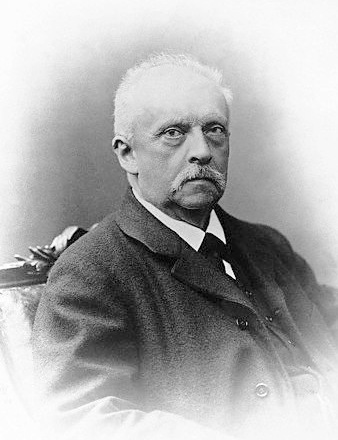
Friedrich Wilhelm Christian Karl Ferdinand von Humboldt (22 June 1767 – 8 April 1835) was a Prussian philosopher, linguist, government functionary, diplomat, and founder of the Humboldt University of Berlin. In 1949, the university was named after him and his younger brother, Alexander von Humboldt, a naturalist.
He was a linguist who made contributions to the philosophy of language, ethnolinguistics, and to the theory and practice of education. He made a major contribution to the development of liberalism by envisioning education as a means of realizing individual possibility rather than a way of drilling traditional ideas into youth to suit them for an already established occupation or social role. In particular, he was the architect of the Humboldtian education ideal, which was used from the beginning in Prussia as a model for its system of public education, as well as in the United States and Japan. He was elected as a member of the American Philosophical Society in 1822.
Key Facts
- Born: June 22, 1767 in Potsdam, Prussia
- Died: 1835
- Field: Philosophy
Legacy and Impact
The influence of Wilhelm von Humboldt extends far beyond his own lifetime. He fundamentally shaped human thought and intellectual discourse, and his ideas and philosophical frameworks remain foundational to this day.
Though he passed away in 1835, his ideas continue to be studied, debated, and built upon by scholars and practitioners worldwide.
Twenty questions, eight minutes on the clock, and a percentile measured against everyone who has taken it. No sign-up.
Take the IQ test →Wilhelm von Humboldt remains one of the most celebrated minds to emerge from Germany, a testament to the rich intellectual heritage of the region.
Notable Geniuses from Germany
Germany has produced many remarkable minds. Alongside Wilhelm von Humboldt:
View all geniuses from Germany →
Discover more brilliant minds in Philosophy
Explore Philosophy GeniusesRelated Articles
Explore More
Read the full profile of Wilhelm von Humboldt
View Wilhelm von Humboldt's Profile →