Oliver Heaviside: Biography, Achievements & Lasting Legacy

Who Was Oliver Heaviside?
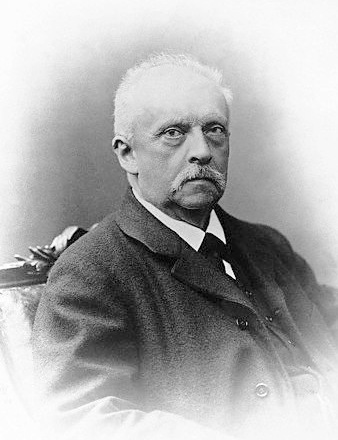
Oliver Heaviside ( HEV-ee-syde; 18 May 1850 – 3 February 1925) was a British mathematician and electrical engineer who invented a new technique for solving differential equations (equivalent to the Laplace transform), independently developed vector calculus, and rewrote Maxwell's equations in the form commonly used today. He significantly shaped the way Maxwell's equations were understood and applied in the decades following Maxwell's death. Also, in 1893, he extended them to gravitoelectromagnetism, which was confirmed by Gravity Probe B in 2005. His formulation of the telegrapher's equations became commercially important during his own lifetime, after their significance went unremarked for a long while, as few others were versed at the time in his novel methodology. Although at odds with the scientific establishment for most of his life, Heaviside changed the face of telecommunications, mathematics, and science.
Key Facts
- Born: May 18, 1850 in Camden Town, Middlesex, England
- Died: 1925
- Field: Mathematics
- Awards: Faraday Medal (1922) and Fellow of the Royal Society
Legacy and Impact
The influence of Oliver Heaviside extends far beyond his own lifetime. He fundamentally shaped the foundations of modern mathematics, and his theorems and mathematical frameworks remain foundational to this day.
Though he passed away in 1925, his ideas continue to be studied, debated, and built upon by scholars and practitioners worldwide.
Oliver Heaviside remains one of the most celebrated minds to emerge from England, a testament to the rich intellectual heritage of the region.
Twenty questions, eight minutes on the clock, and a percentile measured against everyone who has taken it. No sign-up.
Take the IQ test →Notable Geniuses from England
England has produced many remarkable minds. Alongside Oliver Heaviside:
View all geniuses from England →
Discover more brilliant minds in Mathematics
Explore Mathematics GeniusesRelated Articles
Explore More
Read the full profile of Oliver Heaviside
View Oliver Heaviside's Profile →