Norbert Wiener: Biography, Achievements & Lasting Legacy

Who Was Norbert Wiener?
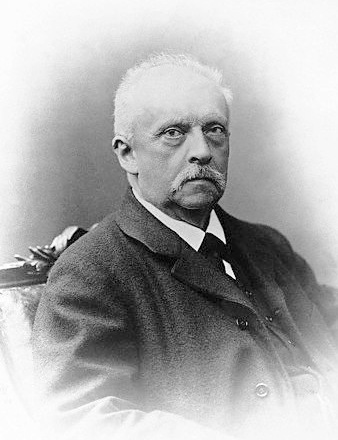
Norbert Wiener (November 26, 1894 – March 18, 1964) was an American computer scientist, mathematician, and philosopher. He became a professor of mathematics at the Massachusetts Institute of Technology (MIT). A child prodigy, Wiener later became an early researcher in stochastic and mathematical noise processes, contributing work relevant to electronic engineering, electronic communication, and control systems.
Wiener is considered the originator of cybernetics, the science of communication as it relates to living things and machines, with implications for engineering, systems control, computer science, biology, neuroscience, philosophy, and the organization of society. His work heavily influenced computer pioneer John von Neumann, information theorist Claude Shannon, anthropologists Margaret Mead and Gregory Bateson, and others.
Life and Career
Wiener is credited as being one of the first to theorize that all intelligent behavior was the result of feedback mechanisms that could possibly be simulated by machines, an important early step towards the development of modern artificial intelligence.
Key Facts
- Born: November 26, 1894 in Columbia, Missouri, U.S.
- Died: 1964
- Field: Mathematics
- Awards: Bôcher Memorial Prize (1933) and National Medal of Science (1963)
Legacy and Impact
The influence of Norbert Wiener extends far beyond his own lifetime. He fundamentally shaped the foundations of modern mathematics, and his theorems and mathematical frameworks remain foundational to this day.
Though he passed away in 1964, his ideas continue to be studied, debated, and built upon by scholars and practitioners worldwide.
Twenty questions, eight minutes on the clock, and a percentile measured against everyone who has taken it. No sign-up.
Take the IQ test →Norbert Wiener remains one of the most celebrated minds to emerge from United States, a testament to the rich intellectual heritage of the region.
Notable Geniuses from United States
United States has produced many remarkable minds. Alongside Norbert Wiener:
View all geniuses from United States →
Discover more brilliant minds in Mathematics
Explore Mathematics GeniusesRelated Articles
Explore More
Read the full profile of Norbert Wiener
View Norbert Wiener's Profile →