Ludwig Boltzmann: Biography, Achievements & Lasting Legacy

Who Was Ludwig Boltzmann?
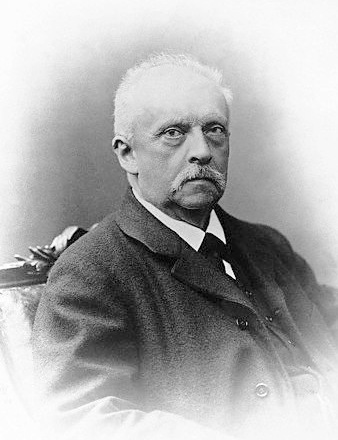
Ludwig Eduard Boltzmann ( BAWLTS-mahn or BOHLTS-muhn; German: [ˈluːtvɪç ˈeːduaʁt ˈbɔltsman]; 20 February 1844 – 5 September 1906) was an Austrian mathematician and theoretical physicist. His greatest achievements were the development of statistical mechanics and the statistical explanation of the second law of thermodynamics. In 1877, he provided the current definition of entropy,
, where Ω is the number of microstates whose energy equals the system's energy, interpreted as a measure of the statistical disorder of a system. Max Planck named the constant kB the Boltzmann constant.
Life and Career
Statistical mechanics is one of the pillars of modern physics. It describes how macroscopic observations (such as temperature and pressure) are related to microscopic parameters that fluctuate around an average. It connects thermodynamic quantities (such as heat capacity) to microscopic behavior, whereas, in classical thermodynamics, the only available option would be to measure and tabulate such quantities for various materials.
Key Facts
- Born: February 20, 1844 in Vienna, Austrian Empire
- Died: 1906
- Field: Science
- Awards: ForMemRS (1899)
Legacy and Impact
The influence of Ludwig Boltzmann extends far beyond his own lifetime. He fundamentally shaped our understanding of the natural world, and his discoveries and theories remain foundational to this day.
Twenty questions, eight minutes on the clock, and a percentile measured against everyone who has taken it. No sign-up.
Take the IQ test →Though he passed away in 1906, his ideas continue to be studied, debated, and built upon by scholars and practitioners worldwide.
Discover more brilliant minds in Science
Explore Science GeniusesRelated Articles
Explore More
Read the full profile of Ludwig Boltzmann
View Ludwig Boltzmann's Profile →