James Prescott Joule: Biography, Achievements & Lasting Legacy

Who Was James Prescott Joule?
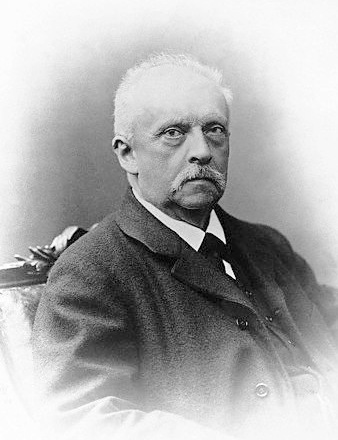
James Prescott Joule (; 24 December 1818 – 11 October 1889) was an English physicist. Joule studied the nature of heat and discovered its relationship to mechanical work. This led to the law of conservation of energy, which in turn led to the development of the first law of thermodynamics. The SI unit of energy, the joule (J), is named after him.
He worked with Lord Kelvin to develop an absolute thermodynamic temperature scale, which came to be called the Kelvin scale. Joule also made observations of magnetostriction, and he found the relationship between the current through a resistor and the heat dissipated, which is also called Joule's first law. His experiments about energy transformations were first published in 1843.
Key Facts
- Born: December 24, 1818 in Salford, Lancashire, England
- Died: 1889
- Field: Science
- Awards: Royal Medal (1852) Copley Medal (1870) Albert Medal (1880)
Legacy and Impact
The influence of James Prescott Joule extends far beyond their own lifetime. They fundamentally shaped our understanding of the natural world, and their discoveries and theories remain foundational to this day.
Though they passed away in 1889, their ideas continue to be studied, debated, and built upon by scholars and practitioners worldwide.
Twenty questions, eight minutes on the clock, and a percentile measured against everyone who has taken it. No sign-up.
Take the IQ test →James Prescott Joule remains one of the most celebrated minds to emerge from England, a testament to the rich intellectual heritage of the region.
Notable Geniuses from England
England has produced many remarkable minds. Alongside James Prescott Joule:
View all geniuses from England →
Discover more brilliant minds in Science
Explore Science GeniusesRelated Articles
Explore More
Read the full profile of James Prescott Joule
View James Prescott Joule's Profile →