Hermann von Helmholtz: Biography, Achievements & Lasting Legacy

Who Was Hermann von Helmholtz?
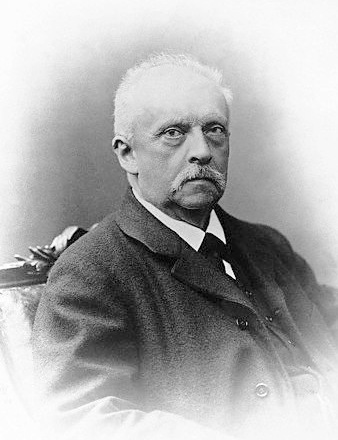
Hermann Ludwig Ferdinand von Helmholtz (; German: [ˈhɛʁman fɔn ˈhɛlmˌhɔlts]; 31 August 1821 – 8 September 1894; "von" since 1883) was a German physicist and physician who made significant contributions in several scientific fields, particularly hydrodynamic stability. The Helmholtz Association, the largest German association of research institutions, was named in his honour.
In the fields of physiology and psychology, Helmholtz is known for his mathematics concerning the eye, theories of vision, ideas on the visual perception of space, colour vision research, the sensation of tone, perceptions of sound, and empiricism in the physiology of perception. In physics, he is known for his theories on the conservation of energy and on the electrical double layer, work in electrodynamics, chemical thermodynamics, and on a mechanical foundation of thermodynamics. Although credit is shared with Julius von Mayer, James Joule, and Daniel Bernoulli—among others—for the energy conservation principles that eventually led to the first law of thermodynamics, he is credited with the first formulation of the energy conservation principle in its maximally general form.
Life and Career
As a philosopher, he is known for his philosophy of science, ideas on the relation between the laws of perception and the laws of nature, the science of aesthetics, and ideas on the civilizing power of science. By the late nineteenth century, Helmholtz's development of a broadly Kantian methodology, including the a priori determination of the manifold of possible orientations in perceptual space, had inspired new readings of Kant and contributed to the late modern neo-Kantianism movement in philosophy.
Key Facts
- Born: August 31, 1821 in Potsdam, Province of Brandenburg, Kingdom of Prussia, German
- Died: 1894
- Field: Mathematics
Legacy and Impact
The influence of Hermann von Helmholtz extends far beyond his own lifetime. He fundamentally shaped the foundations of modern mathematics, and his theorems and mathematical frameworks remain foundational to this day.
Twenty questions, eight minutes on the clock, and a percentile measured against everyone who has taken it. No sign-up.
Take the IQ test →Though he passed away in 1894, his ideas continue to be studied, debated, and built upon by scholars and practitioners worldwide.
Discover more brilliant minds in Mathematics
Explore Mathematics GeniusesRelated Articles
Explore More
Read the full profile of Hermann von Helmholtz
View Hermann von Helmholtz's Profile →