Hendrik Lorentz: Biography, Achievements & Lasting Legacy

Who Was Hendrik Lorentz?
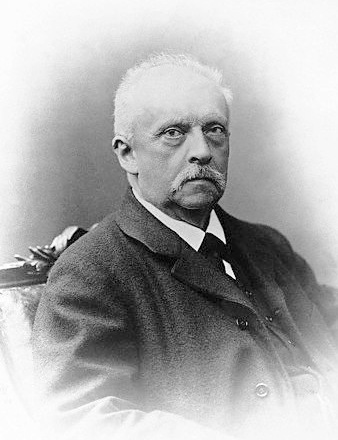
Hendrik Antoon Lorentz (18 July 1853 – 4 February 1928) was a Dutch theoretical physicist who shared the 1902 Nobel Prize in Physics with Pieter Zeeman for their discovery and theoretical explanation of the Zeeman effect. He derived the Lorentz transformation of the special theory of relativity, as well as the Lorentz force, which describes the force acting on a charged particle in an electromagnetic field. He was also responsible for the Lorentz oscillator model, a classical model used to describe the anomalous dispersion observed in dielectric materials when the driving frequency of the electric field was near the resonant frequency of the material, resulting in abnormal refractive indices.
Lorentz received many other honors and distinctions, including a term as Chairman of the International Committee on Intellectual Cooperation, the forerunner of UNESCO, from 1925 until his death in 1928.
Key Facts
- Born: July 18, 1853 in Arnhem, Netherlands
- Died: 1928
- Field: Science
Legacy and Impact
The influence of Hendrik Lorentz extends far beyond his own lifetime. He fundamentally shaped our understanding of the natural world, and his discoveries and theories remain foundational to this day.
Though he passed away in 1928, his ideas continue to be studied, debated, and built upon by scholars and practitioners worldwide.
Twenty questions, eight minutes on the clock, and a percentile measured against everyone who has taken it. No sign-up.
Take the IQ test →Hendrik Lorentz remains one of the most celebrated minds to emerge from Netherlands, a testament to the rich intellectual heritage of the region.
Notable Geniuses from Netherlands
Netherlands has produced many remarkable minds. Alongside Hendrik Lorentz:
View all geniuses from Netherlands →
Discover more brilliant minds in Science
Explore Science GeniusesRelated Articles
Explore More
Read the full profile of Hendrik Lorentz
View Hendrik Lorentz's Profile →