Gustav Kirchhoff: Biography, Achievements & Lasting Legacy

Who Was Gustav Kirchhoff?
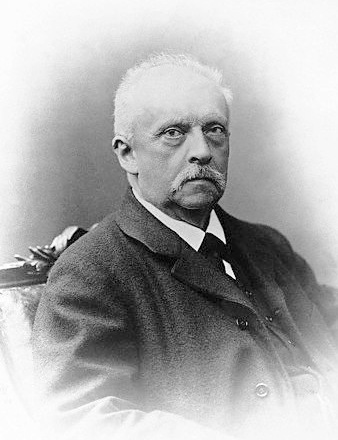
Gustav Robert Kirchhoff (German: [ˈgʊstaːf ˈʁoːbɛʁt ˈkɪʁçhɔf]; 12 March 1824 – 17 October 1887) was a German physicist and mathematician who contributed to the fundamental understanding of electrical circuits, spectroscopy, and the emission of black-body radiation by heated objects. He coined the term black body in 1860.
Several different sets of concepts are named "Kirchhoff's laws" after him, which include Kirchhoff's circuit laws, Kirchhoff's law of thermal radiation, Kirchhoff's diffraction formula, and Kirchhoff's law of thermochemistry.
Life and Career
The Bunsen–Kirchhoff Award for spectroscopy is named after Kirchhoff and his colleague, Robert Bunsen.
Key Facts
- Born: March 12, 1824 in Königsberg, Province of East Prussia, Kingdom of Prussia(pre
- Died: 1887
- Field: Mathematics
Legacy and Impact
The influence of Gustav Kirchhoff extends far beyond his own lifetime. He fundamentally shaped the foundations of modern mathematics, and his theorems and mathematical frameworks remain foundational to this day.
Twenty questions, eight minutes on the clock, and a percentile measured against everyone who has taken it. No sign-up.
Take the IQ test →Though he passed away in 1887, his ideas continue to be studied, debated, and built upon by scholars and practitioners worldwide.
Discover more brilliant minds in Mathematics
Explore Mathematics GeniusesRelated Articles
Explore More
Read the full profile of Gustav Kirchhoff
View Gustav Kirchhoff's Profile →