Understanding IQ Scores: Methodology and Limitations
Before examining the list, it's crucial to understand how these estimates were derived. Most historical figures never took IQ tests, particularly the Stanford-Binet or modern WAIS assessments. Their scores are estimated through multiple methods:
- Academic Performance: School grades, university achievements, and educational credentials
- Publication Analysis: The complexity and innovation of published work
- Patent Records: The sophistication of inventions and technical contributions
- Biographer Assessment: Historical analysis by scholars of the person's intellectual capacity
- Comparative Ranking: Position among contemporaries and across history
These estimates should be understood as informed speculation, not measured fact. There is no expert consensus behind the "160" attached to Albert Einstein: he never took an IQ test, no psychologist published an estimate, and the number has no traceable source.
The Complete List of Genius IQ Scores
The table lists the IQ figure that circulates for each person and, in the last column, the evidence behind it, checked in October 2026. Most have none. Full sourcing: Famous IQ Claims, Fact-Checked.
| Name | Field | Figure that circulates | Era | Evidence |
|---|---|---|---|---|
| William Sidis | Polymath (Mathematics, Languages) | 250-300 | 1898-1944 | Reported (1946, sister's account) |
| Terence Tao | Mathematics | 220-230 | 1975-present | Childhood test (ratio score) |
| Chris Hirata | Physics, Cosmology | 225 | 1982-present | No traceable source |
| Leonardo da Vinci | Art, Engineering, Science | 210-220 | 1452-1519 | Cox (1926) estimate: 180 |
| Garry Kasparov | Chess, Politics, Writing | 190 | 1963-present | No source (tested 135 in 1987) |
| John von Neumann | Mathematics, Physics, Computing | 190 | 1903-1957 | No traceable source |
| Isaac Newton | Physics, Mathematics, Optics | 190 | 1643-1727 | Cox (1926) estimate |
| Stephen Hawking | Theoretical Physics | 160 | 1942-2018 | No traceable source |
| Albert Einstein | Physics | 160 | 1879-1955 | No traceable source |
| Marie Curie | Physics, Chemistry | 180 | 1867-1934 | No traceable source |
| Nikola Tesla | Engineering, Physics | 175 | 1856-1943 | No traceable source |
| Charles Darwin | Biology, Natural History | 165 | 1809-1882 | Cox (1926) estimate |
| Richard Feynman | Theoretical Physics | 125-195 | 1918-1988 | Reported (school test: 125) |
| James Maxwell | Physics, Mathematics | 190 | 1831-1879 | Not yet checked |
| Benoit Mandelbrot | Mathematics, Fractal Geometry | 160 | 1924-2010 | Not yet checked |
| Alan Turing | Mathematics, Computing, Cryptography | 170 | 1912-1954 | No traceable source |
| Carl Friedrich Gauss | Mathematics, Physics, Astronomy | 180-200 | 1777-1855 | No traceable source |
| Max Planck | Physics (Quantum Mechanics) | 180 | 1858-1947 | No traceable source |
| Lise Meitner | Physics (Nuclear Physics) | 180 | 1878-1968 | Not yet checked |
| Ernesto Sabato | Physics, Literature, Philosophy | 180 | 1911-2011 | Not yet checked |
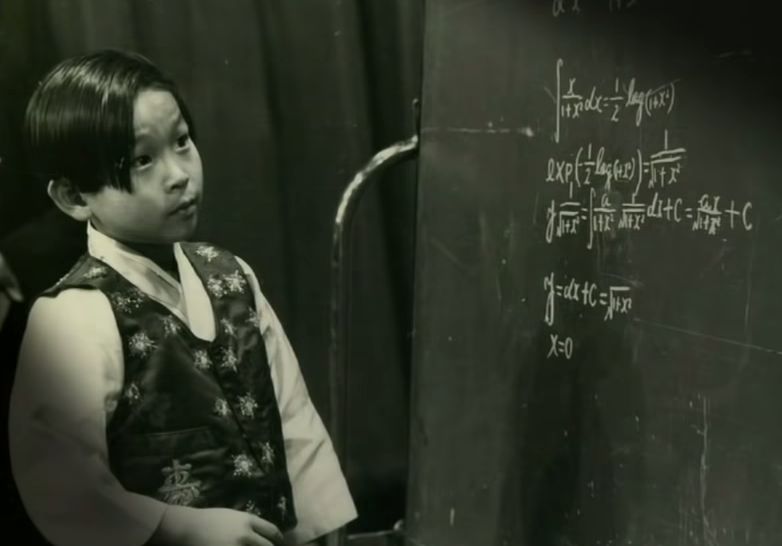
| Kim Ung-Yong | Civil Engineering | 210 | 1962-present | His own account of a childhood test |
| Srinivasa Ramanujan | Mathematics | 185 | 1887-1920 | No traceable source |
| David Hilbert | Mathematics | 180 | 1862-1943 | Not yet checked |
| Georg Friedrich Handel | Music Composition | 170 | 1685-1759 | Not yet checked |
| Johann Sebastian Bach | Music Composition | 165 | 1685-1750 | Cox (1926) estimate |
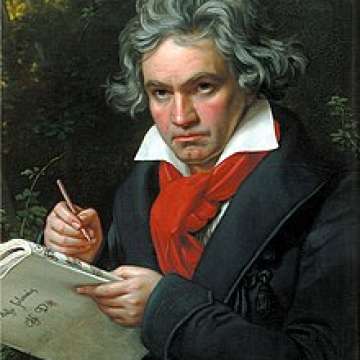
| Ludwig van Beethoven | Music Composition | 165 | 1770-1827 | Cox (1926) estimate |
| Benjamin Franklin | Science, Invention, Diplomacy | 160 | 1706-1790 | Cox (1926) estimate |
| Thomas Jefferson | Politics, Philosophy, Architecture | 160 | 1743-1826 | Cox (1926) estimate |
Key Findings from the Data
The Distribution Across Domains
Genius IQ scores span multiple domains but concentrate in abstract fields. Mathematics, theoretical physics, and polymath pursuits dominate the highest ranges. This reflects that IQ tests measure abstract reasoning and pattern recognition—capacities most directly relevant to these fields.
Arts and humanities are underrepresented in this ranking not because geniuses are less common there, but because IQ tests do not measure artistic genius. Musical genius, literary genius, and artistic vision are real but orthogonal to IQ testing. A genius composer might have IQ 130, well below the "genius" threshold used here, yet possess greater artistic impact than a mathematician with IQ 180.
Historical Shifts in IQ Distribution
Contemporary geniuses (born after 1950) tend to have higher estimated IQs than historical figures. This is partly because modern testing is more sophisticated and contemporary geniuses often take actual IQ tests. But it also reflects survivorship bias—we know about contemporary prodigies largely because they tested exceptionally on IQ assessments. Historical geniuses were identified by their contributions, not test scores.
The IQ-Achievement Relationship
A striking observation: IQ does not perfectly correlate with historical impact. Albert Einstein (IQ 160) fundamentally changed physics. Stephen Wolfram (IQ 160-190) has made significant but less transformative contributions. Leonardo da Vinci (IQ 210-220) may rank lower in pure historical impact than some lower-IQ geniuses.
Twenty questions, eight minutes on the clock, and a percentile measured against everyone who has taken it. No sign-up.
Take the IQ test →This demonstrates what psychologists have long known: IQ is necessary for genius but not sufficient. Creativity, motivation, opportunity, persistence, and historical context matter as much as raw cognitive capacity.
Caveats and Limitations
Several important limitations apply to this entire list:
IQ Tests Measure Specific Cognitive Capacities
Modern IQ tests assess logical reasoning, verbal ability, pattern recognition, and spatial visualization. They do not measure:
- Creativity and divergent thinking
- Emotional intelligence
- Social intelligence
- Practical problem-solving ability
- Artistic or musical genius
- Interpersonal skills
- Persistence and motivation
A person might score exceptionally high on IQ tests and have minimal real-world impact. Conversely, someone with IQ 130 might achieve greater things through creativity and determination.
Historical Estimates Lack Validation
We cannot re-test historical figures. Our estimates are educated guesses based on biographical data, publications, and comparative ranking. Two experts might reasonably estimate different IQ scores for the same person based on different weighting of evidence.
Survivorship and Selection Bias
This list includes people whose genius we recognize. How many historical geniuses were never documented? How many brilliant minds toiled in obscurity? Our "complete list" represents only those whose contributions survived to modern recognition.
Cohort and Era Effects
IQ has increased over generations (the Flynn Effect), complicating historical comparisons. A person with IQ 160 in 1850 might have had higher relative standing than someone with IQ 160 in 2020, because the IQ 100 baseline has shifted upward.
What These IQ Scores Actually Tell Us
Despite limitations, this list provides useful information:
The Bottom Line: What IQ Scores Mean for Genius
IQ scores provide one metric for exceptional intelligence but tell only part of the genius story. William Sidis may have possessed the highest measured IQ in history, yet had minimal lasting impact on human knowledge. Albert Einstein, with a lower measured IQ, fundamentally reshaped physics.
The lesson: if your IQ scores are high, you have the cognitive foundation for genius-level achievement. But exceptional intelligence without creativity, focus, opportunity, and persistence rarely produces breakthrough contributions. Conversely, exceptional achievement sometimes emerges from people with merely above-average IQ who compensate through other strengths.
Use this list as a reference for understanding intelligence hierarchy, but recognize that true genius encompasses far more than IQ can measure. The world's greatest minds combined high intelligence with creativity, determination, and the fortune of opportunity.
Geniuses.Club Editorial Team
Celebrating exceptional minds since 2020