IQ 130–139: The Gifted Zone
The 130–139 range is where many of the world's most successful professionals cluster. Medical doctors, successful lawyers, university professors, senior engineers, and skilled scientists typically fall in this range. At 130, you're scoring better than 97.7% of the general population — a meaningful advantage in any intellectually demanding field.
Famous people estimated or reported in this range include many prominent politicians, executives, and professionals who excel in their fields without claiming exceptional status. This range represents what we might call "high functioning normal" — high enough to excel in complex work, but not so rare as to create the social isolation issues that appear at higher levels.
IQ 140–149: The Genius Threshold
Most definitions of "genius" begin at IQ 140. At this level, individuals typically grasp complex theoretical concepts with ease, make connections across disparate fields, and can produce original work in their domains of expertise. About 1 in 260 people fall in this range.
Estimated examples: Richard Feynman's childhood IQ was reportedly around 125 by one account — yet he won the Nobel Prize in Physics. This illustrates an important point: the relationship between IQ and achievement is probabilistic, not deterministic. Many factors beyond raw IQ shape who achieves at the highest levels. Visit the IQ 140 profiles page for examples.
Twenty questions, eight minutes on the clock, and a percentile measured against everyone who has taken it. No sign-up.
Take the IQ test →IQ 150–160: Exceptional Intellect
In the 150–160 range, we're talking about individuals who typically produce foundational contributions to their fields — not just excelling at existing knowledge, but advancing the frontier. Many Nobel laureates, great mathematicians, and landmark scientists fall in this range.
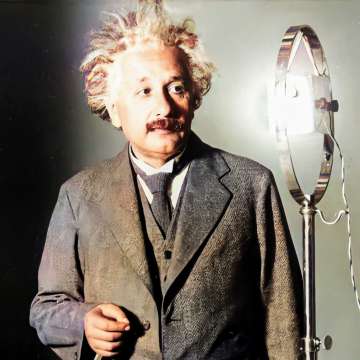
Albert Einstein: estimated 160. Stephen Hawking: stated 160. Charles Darwin: estimated 160. At this level, the cognitive gap from the average person is enormous — they are processing information several times faster and making connections that simply don't occur to people at lower levels. See the IQ 160 page.
IQ 160–175: Ultra-High Range
Beyond 160, we're into territory that's difficult to measure reliably but extraordinarily productive. Individuals in this range include many of history's most transformative thinkers: Isaac Newton (estimated 190–200), Leibniz (estimated 180–200), and Leonardo da Vinci (estimated 180–220).
At this level, the individual's cognitive world is qualitatively different from most people's. They grasp entire systems of thought simultaneously, see connections across widely separated domains, and often describe thinking in non-verbal terms — mathematical structures, spatial patterns, or analogical networks rather than step-by-step verbal reasoning.
IQ 175–200+: The Stratosphere
The verified examples in this range are few and the measurements are necessarily approximations. Terence Tao (225–230, formally tested) is the most credible modern example. Marilyn vos Savant (228, ratio score at age 10) and Kim Ung-yong (210) are the most famous record-holders.
What people in this range accomplish: Tao has solved problems that stumped the world's best mathematicians for decades. Kim Ung-yong solved university-level differential equations on television at age four. The level of output is not merely quantitatively higher than at 160 — it is qualitatively different.
Explore all of these remarkable individuals at Geniuses.Club.