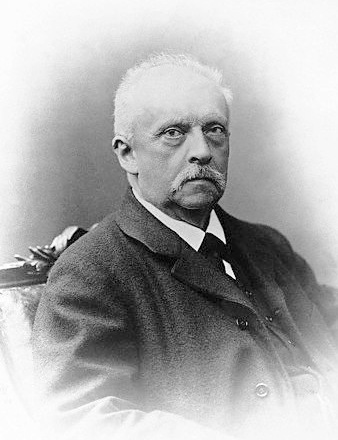
Short answer: Dostoevsky has no IQ score, measured or estimated. He died in 1881, 24 years before the first Binet intelligence scale, and he does not appear among the case studies in Catharine Cox's 1926 study of 300 geniuses, the standard source for retrospective estimates. Any number attached to him online is unsourced. His novels are the evidence.
At a glance
| Estimated IQ | No scholarly estimate |
|---|---|
| Basis of estimate | Not among Cox's (1926) case studies; online figures are unsourced |
| Measured score | None; he died before intelligence testing existed |
| Born – died | 11 November 1821, Moscow – 9 February 1881, Saint Petersburg |
| Field | Novels, short fiction, journalism |
| Signature achievement | Crime and Punishment (1866); The Brothers Karamazov (1880) |
| Comparable minds | Leo Tolstoy, Friedrich Nietzsche |
No test, and no Cox estimate
Retrospective IQ estimates for historical figures come overwhelmingly from one source: Catharine Cox's Early Mental Traits of Three Hundred Geniuses, volume two of Lewis Terman's Genetic Studies of Genius (Stanford University Press, 1926). Cox rated each subject from documented childhood and youth records. Dostoevsky is not among her case studies. Neither is Tolstoy.
Cox did rate many of the novelists Dostoevsky read. Her childhood (A1) estimates place Balzac in the 130s, Charles Dickens in the 140s, Victor Hugo in the 150s and Goethe in the 180s. Those ranges show what a documented estimate looks like. For Dostoevsky, no comparable work has been published.
His life and works are summarized on the Fyodor Dostoevsky genius page. For how Cox built her numbers and why they carry wide error bars, see historical IQ estimates explained.
Why the online numbers fail
Lists that rank writers by IQ often include Dostoevsky with a confident figure. None names an estimator, a method or the evidence used. That is the signature of an invented number.
A credible retrospective estimate needs three things: early-life records, a stated scoring method, and a named scholar who can be checked. Cox's figures meet that bar, though even hers are rough. A number posted without any of the three should be discarded. The first practical intelligence scale, by Alfred Binet and Théodore Simon, appeared in 1905. Everything said about Dostoevsky's IQ is therefore inference, and so far, unpublished inference at that. The history of the tests is on our IQ test history page.
The evidence on the page
His first completed literary work was a translation. In June and July 1843, aged 21 and trained as a military engineer, he published a Russian version of Honoré de Balzac's Eugénie Grandet. His first novel, Poor Folk (1846), won the praise of the leading critic Vissarion Belinsky and made him famous at 24.
- 1849: arrested with the Petrashevsky Circle for discussing banned books. In December he faced a firing squad, was reprieved at the last moment, and served four years of hard labor in Omsk.
- 1864: Notes from Underground.
- 1866: Crime and Punishment, whose first two parts ran in The Russian Messenger that January and February.
- 1866: The Gambler, promised to a publisher by November and not yet begun. Dictating to the stenographer Anna Snitkina, whom he married the next year, he finished it on 30 October after 26 days' work.
- 1869–1880: The Idiot, Demons and The Brothers Karamazov.
The 26-day novel is the single most telling fact. It required holding plot, character and voice in mind at dictation speed, against a contract deadline.
What other great minds said
The strongest testimony comes from readers who were themselves formidable. Friedrich Nietzsche called him “the only psychologist from whom I had something to learn.” Sigmund Freud ranked him second only to Shakespeare as a creative writer and called The Brothers Karamazov “the most magnificent novel ever written,” in his 1928 essay “Dostoevsky and Parricide.”
Albert Einstein called him a “great religious writer.” Franz Kafka described him as a “blood-relative.” His work has been translated into more than 170 languages.
Freud's comparison invites a look at Shakespeare's IQ, another case where the popular numbers outrun the evidence.
Dostoevsky, Tolstoy and Dickens
Readers most often set Dostoevsky against Tolstoy. On IQ the contest is empty, because Cox rated neither man. Their head-to-head profile is at Dostoevsky vs Tolstoy, with a second view at this comparison.
Dickens offers the one documented benchmark among his great contemporaries. Cox's childhood estimate for Dickens falls between 140 and 150, the band covered by our IQ 145 page. The two are compared directly at Dickens vs Dostoevsky. A reader may suspect the Russian belongs in the same range or above it. That remains a guess, and we label it as one.
What an IQ number cannot hold
Encyclopaedia Britannica credits him with “psychological penetration into the darkest recesses of the human heart.” That is the quality an intelligence test is least equipped to register. IQ tests sample reasoning, vocabulary, memory and speed. They do not score moral imagination, the ability to inhabit a murderer's reasoning in Crime and Punishment or to stage the debate between faith and doubt in The Brothers Karamazov.
He produced that work while managing epilepsy, gambling debts and the aftermath of a death sentence. On 8 June 1880, months before his death, he delivered his Pushkin speech, a performance that left a deep emotional mark on its audience. The greatest novelists on our greatest Russian geniuses list are measured by work of this kind, not by points.
How we assessed this
We checked the table of contents of Cox's 1926 volume for Dostoevsky and Tolstoy under every spelling and found neither among the case studies. We found no later scholarly estimate. We therefore give no number and treat every circulating figure as unsourced. Birth and death dates follow the New Style calendar; other dates follow standard biographies.
Frequently asked questions
What was Dostoevsky's IQ?
No one knows. Dostoevsky died in 1881, decades before intelligence tests existed, and he is not among the case studies in Catharine Cox's 1926 study, the main source of retrospective estimates. Figures found online name no estimator or method and should be treated as invented.
Was Dostoevsky a genius?
By the judgment of his peers and successors, yes. Nietzsche said he learned psychology from him, Freud ranked him just behind Shakespeare, and his novels have been translated into more than 170 languages. Crime and Punishment and The Brothers Karamazov remain central works of world literature.
Who had a higher IQ, Dostoevsky or Tolstoy?
The question has no evidential answer. Neither writer took an IQ test, and Catharine Cox rated neither in her 1926 study. Any ranking of the two by IQ is opinion. Their achievements can be compared on our Dostoevsky vs Tolstoy page.
Is Dostoevsky in Catharine Cox's study of 300 geniuses?
No. Cox's 1926 volume rates many European writers, including Balzac, Dickens, Victor Hugo and Goethe, but Dostoevsky does not appear among its case studies. Any IQ figure credited to Cox for him should be treated as a misattribution.
How fast did Dostoevsky write?
At his fastest, astonishingly fast. In October 1866, facing a contract deadline, he dictated The Gambler to the stenographer Anna Snitkina and finished it on 30 October after 26 days of work, in the same year Crime and Punishment appeared.
Sources
- Fyodor Dostoevsky (Wikipedia) — Life dates, education, Balzac translation, arrest and Omsk, novels, The Gambler in 26 days, Pushkin speech, tributes, translations
- Cox, Genetic Studies of Genius Vol. II: Early Mental Traits of Three Hundred Geniuses (1926), full text — Table of contents of case studies by A1 IQ band; Dostoevsky and Tolstoy absent
- Fyodor Dostoyevsky (Encyclopaedia Britannica) — Dates in both calendars; assessment of his psychological penetration
- Dostoevsky and Parricide (Wikipedia) — Freud's 1928 essay on Dostoevsky
Editorial standard: IQ figures for historical figures are retrospective estimates and are labeled as such; scores for living people appear only when the person disclosed them or a reputable outlet reported them. Corrections: contact the editors.