Albert Einstein: Failed Entrance Exams and Patent Office Obscurity
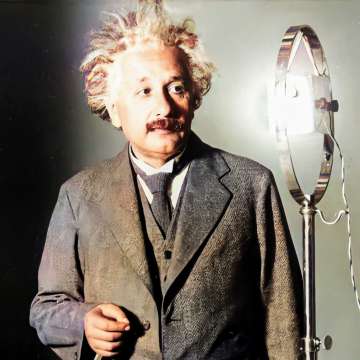
Albert Einstein did not breeze through academics. In 1896, the 17-year-old failed the entrance examination for the Swiss Federal Polytechnic in Zurich. His failure was not random—he scored well in mathematics and science, but weak in languages and other subjects. Schools dismissed him as unbalanced, more interested in abstract physics than well-rounded education.
After successfully entering the Polytechnic the following year, Einstein frustrated his professors. One called him a "lazy dog" despite his obvious brilliance. He skipped classes, challenged authority, and seemed more interested in self-directed study than formal instruction. His professors noted his ability but questioned his attitude and reliability.
After graduation, Einstein could not secure an academic position. Despite his theoretical abilities, established universities viewed him as unemployable—too difficult, too iconoclastic, insufficiently deferential to authority. For two years, he lived in poverty, unable to find academic work.
He finally obtained a position as a technical expert at the Swiss Patent Office in Bern—a clerical job assessing electrical applications. This was not a failure he overcame; it was where he made breakthrough discoveries. In 1905, while examining patent applications, Einstein published four papers that revolutionized physics: special relativity, the photoelectric effect, Brownian motion, and E=mc². His breakthrough came not despite his outsider status, but partly because of it. Unburdened by departmental politics or established dogma, he could think freely.
Thomas Edison: Fired and Dismissed as Too Curious
Thomas Edison began his career as a telegraph operator. His early employment was marked by repeated failures. At his first position in Port Huron, Michigan, he was reportedly dismissed after only a few weeks. His supervisor complained that Edison was too curious, constantly experimenting with telegraph equipment rather than performing his assigned duties.
Over the next years, Edison was fired from multiple positions. His employers viewed his endless tinkering and constant invention attempts as irresponsible. Established telegraph companies needed reliable operators, not dreamers building experimental devices in their spare time.
These rejections, however, freed Edison to pursue independent invention. He could not succeed within existing institutional structures, so he created his own laboratory. His famous maxim—"Genius is one percent inspiration and ninety-nine percent perspiration"—emerged from this experience. The light bulb, the phonograph, and dozens of other revolutionary inventions came from his "failure" to fit within existing systems.
Charles Darwin: Dismissed as Lazy and Untalented
Charles Darwin was, by his own account and his father's assessment, an unremarkable student. His father Robert Darwin, a successful physician, was disappointed by young Charles' academic performance and lack of direction. Robert pressured Charles to study medicine, but Charles found medical school uncongenial and abandoned it. His father then proposed law—equally unsuccessful.
Robert Darwin complained that Charles was "a man of no fortune" with "no business habit" and seemed destined for idleness. He called his son's interests—collecting beetles, studying nature, taking long walks—a waste of talent. A typical Victorian father would have written off such a son as a disappointment.
The turning point came through a failure: Charles' poor performance in medical school led his father to allow him to pursue natural history, initially without clear purpose. This "failure" in formal education opened the path to the HMS Beagle voyage, the observations that led to evolutionary theory, and one of history's most consequential intellectual breakthroughs.
Nikola Tesla: Poverty, Dismissal, and Vindication Through Isolation
Nikola Tesla achieved early success with his alternating current induction motor and was initially celebrated. However, his subsequent ventures—wireless transmission of electricity, ambitious engineering projects, unproven technologies—exhausted his funding and credibility. Investors withdrew support. The scientific establishment grew skeptical of his increasingly grandiose claims.
By the 1910s, Tesla lived in poverty in New York hotels, his projects abandoned, his funding depleted, and his reputation damaged. Newspapers mocked his claims of wireless power transmission and earthquake-generating devices. The scientific community dismissed him as a crank living in the past, chasing impossible dreams.
Twenty questions, eight minutes on the clock, and a percentile measured against everyone who has taken it. No sign-up.
Take the IQ test →Yet modern wireless technology—WiFi, cellular networks, wireless power transmission—vindicate Tesla's fundamental insights. His rejection was not evidence of inadequacy but rather of ideas too far ahead of their time for contemporaries to evaluate properly. Genius sometimes arrives before the world is ready to recognize it.
Vincent van Gogh: Rejected, Impoverished, and Unrecognized in Lifetime
Van Gogh sold a single painting during his lifetime. He struggled with severe mental illness, poverty, and the constant rejection of his work by galleries, patrons, and even family members. His brother Theo, an art dealer, was his primary financial support—a charity van Gogh resented but needed desperately.
Critics of his era dismissed his paintings as crude, disordered, and unmask. His bold colors and emotional expressionism violated academic standards. He was excluded from exhibitions, mocked by reviewers, and told repeatedly that his work had no value. Van Gogh's famous ear-cutting incident occurred partly as response to this isolation and rejection—a genius mind breaking under the weight of universal dismissal.
He died by suicide at 37, believing his life was a failure. Today, his paintings are among the most valuable and celebrated in art history. His "failure" to gain recognition during his lifetime is precisely inverted—his radical refusal to conform to contemporary taste is what makes his work revolutionary.
Gregor Mendel: Lost Science Rediscovered After Death
Gregor Mendel, an Augustinian friar, conducted groundbreaking experiments on heredity using pea plants in his monastery garden. In 1866, he published his findings in an obscure journal of the Brno Natural History Society. The paper was essentially ignored for 35 years.
Why? Mendel's methodology was ahead of its time. He used quantitative, mathematical approaches to biology—a rarity in the 19th century when natural history relied on descriptive observation. Scientists simply did not read his paper or understand its significance. Mendel's work on genetic inheritance, the foundation of modern genetics, was lost because the scientific community lacked the conceptual framework to recognize its importance.
Mendel's failure was one of communication and timing rather than insight. His experiments were brilliant; the world was simply not ready. After his death, three scientists independently rediscovered his work in 1900, and Mendel was posthumously recognized as the founder of genetics.
Lise Meitner: Contributions Stolen, Nobel Prize Denied
Lise Meitner worked alongside chemist Otto Hahn on nuclear research. Together, they discovered nuclear fission—one of the 20th century's most significant breakthroughs, with implications for nuclear energy and weapons.
When the 1944 Nobel Prize in Chemistry was awarded for the discovery of fission, it went solely to Otto Hahn. Meitner received nothing, despite providing the theoretical explanation that made sense of Hahn's experimental results. As a Jewish woman in Nazi Germany and later as an émigré, she was marginalized by institutional physics. Her intellectual contributions were appropriated by her male colleague and the scientific community's biases.
Meitner's "failure" was not scientific but institutional—she failed to gain credit within a male-dominated, prejudiced scientific establishment. Her theoretical insights were genuine contributions; their attribution to Hahn reflects the sexism of 20th-century science, not any deficiency in her work.
Alfred Wegener: Continental Drift Rejected for Decades
Alfred Wegener proposed the theory of continental drift in 1912, suggesting that continents move across Earth's surface. This was revolutionary—and universally rejected by geologists of the era.
The scientific establishment demanded a mechanism explaining how continents could move through oceanic crust. Wegener could not provide one that satisfied contemporary physics. Geologists mocked his theory as pseudoscience. Academic journals rejected his papers. Universities declined to hire him. He was professionally isolated and intellectually dismissed.
Wegener died in relative obscurity in 1930. Decades later, discoveries in plate tectonics vindicated his continental drift theory. The mechanism he couldn't explain—seafloor spreading—was discovered through technologies unavailable in his lifetime. Wegener's genius was not merely in his idea, but in proposing a revolutionary explanation despite professional ridicule and without the tools to prove it rigorously.
Ignaz Semmelweis: Rejected for Proposing Hand-Washing
Ignaz Semmelweis, a Hungarian physician in the 1840s, noticed that hand-washing dramatically reduced maternal mortality from childbed fever in hospitals. He proposed that doctors were transmitting "cadaverous particles" from autopsies to birthing mothers.
This should have been celebrated as a life-saving discovery. Instead, the medical establishment rejected it viciously. Established physicians were insulted by the suggestion that they were "unclean." Medical institutions did not implement his recommendations. Semmelweis was dismissed, ridiculed, and eventually committed to a mental asylum, where he died—ironically, from an infection contracted during beatings by guards.
Within a few years, germ theory vindicated his insight. Hand-washing became standard practice and saved countless lives. Yet Semmelweis died rejected and broken, his genius unappreciated by the institutions he tried to reform. His "failure" was not intellectual but political—he was ahead of medicine's willingness to accept the implications of his observation.
The Pattern: Why Geniuses Face Rejection
These stories reveal recurring patterns. Geniuses are often rejected because:
- They challenge established authority: Genius thinking threatens existing institutions and beliefs. Authorities defend their investments in current thinking.
- They arrive ahead of supporting knowledge: Tesla's wireless power, Wegener's continental drift, Mendel's genetics—these ideas outpaced the theoretical frameworks to explain them.
- They defy institutional expectations: Einstein's independent thinking frustrated professors. Edison's constant tinkering violated employment standards. Van Gogh's bold style violated academic aesthetics.
- They are subject to prejudice: Meitner faced gender discrimination. Semmelweis faced institutional resistance. Wegener faced professional skepticism rooted in conservatism.
- They communicate poorly or unconventionally: Mendel published in obscure journals using mathematics unusual for natural history. Tesla made claims impossible to verify with contemporary technology.
Lessons from Famous Failures
What can we learn from geniuses who faced rejection?
The Bottom Line: From Failure to Genius
The narratives we tell about genius often erase struggle, rejection, and failure. We present polished stories of inevitable triumph. The reality is messier: geniuses are often rejected, dismissed, and underestimated. Institutional structures resist revolutionary ideas. Prejudice, politics, and institutional inertia delay recognition.
Yet these geniuses share a common trait: they persisted despite rejection. They refused to accept the verdicts of institutions. They continued their work, their thinking, their creation, even when the world dismissed them. Some—Einstein, Edison, Darwin—lived to see vindication. Others—van Gogh, Semmelweis, Mendel—did not.
The lesson: if your ideas face institutional rejection, do not assume you're wrong. You might be ahead of your time. If you face failure in conventional structures, do not assume you're incompetent. You might be too revolutionary for current systems to recognize. The world's greatest contributions often come from those the world initially rejected.
Geniuses.Club Editorial Team
Celebrating exceptional minds since 2020