Ernest Rutherford: Biography, Achievements & Lasting Legacy

Who Was Ernest Rutherford?
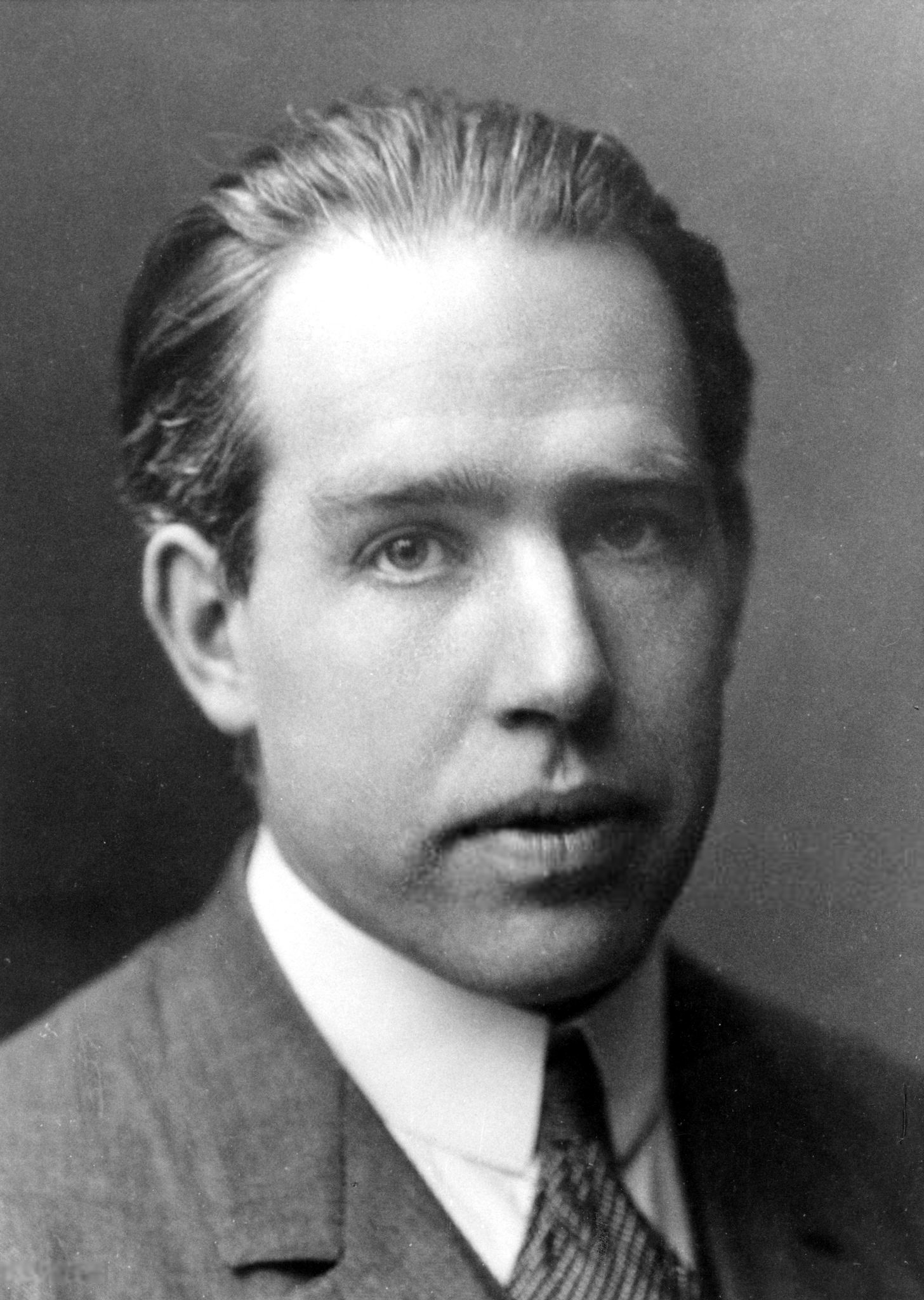
Ernest Rutherford, 1st Baron Rutherford of Nelson (30 August 1871 – 19 October 1937), was a New Zealand physicist and chemist who was a pioneering researcher in both atomic and nuclear physics. He has been described as "the father of nuclear physics" and "the greatest experimentalist since Michael Faraday." In 1908, he was awarded the Nobel Prize in Chemistry "for his investigations into the disintegration of the elements, and the chemistry of radioactive substances."
Rutherford's discoveries include the concept of radioactive half-life, the radioactive element radon, and the differentiation and naming of alpha and beta radiation. Together with Thomas Royds, Rutherford is credited with proving that alpha radiation is composed of helium nuclei. In 1911, he theorised that atoms have their charge concentrated in a very small nucleus. He arrived at this theory through his discovery and interpretation of Rutherford scattering during the gold foil experiment performed by Hans Geiger and Ernest Marsden. In 1912, he invited Niels Bohr to join his lab, leading to the Bohr model of the atom. In 1917, he performed the first artificially induced nuclear reaction by conducting experiments in which nitrogen nuclei were bombarded with alpha particles. These experiments led him to discover the emission of a subatomic particle that he initially called the "hydrogen atom", but later (more precisely) renamed the proton. He is also credited with developing the atomic numbering system alongside Henry Moseley. His other achievements include advancing the fields of radio communications and ultrasound technology.
Life and Career
Rutherford became Director of the Cavendish Laboratory at the University of Cambridge in 1919. Under his leadership, the neutron was discovered by James Chadwick in 1932. In the same year, the first controlled experiment to split the nucleus was performed by John Cockcroft and Ernest Walton, working under his direction. In honour of his scientific advancements, Rutherford was recognised as a baron of the United Kingdom. After his death in 1937, he was buried in Westminster Abbey near Charles Darwin and Isaac Newton. The chemical element rutherfordium (104Rf) was named after him in 1997. In 1999, he was named the tenth greatest physicist of all time.
Key Facts
- Born: August 30, 1871 in Brightwater, New Zealand
- Died: 1937
- Field: Science
Legacy and Impact
The influence of Ernest Rutherford extends far beyond his own lifetime. He fundamentally shaped our understanding of the natural world, and his discoveries and theories remain foundational to this day.
Twenty questions, eight minutes on the clock, and a percentile measured against everyone who has taken it. No sign-up.
Take the IQ test →Though he passed away in 1937, his ideas continue to be studied, debated, and built upon by scholars and practitioners worldwide.
Discover more brilliant minds in Science
Explore Science GeniusesRelated Articles
Explore More
Read the full profile of Ernest Rutherford
View Ernest Rutherford's Profile →