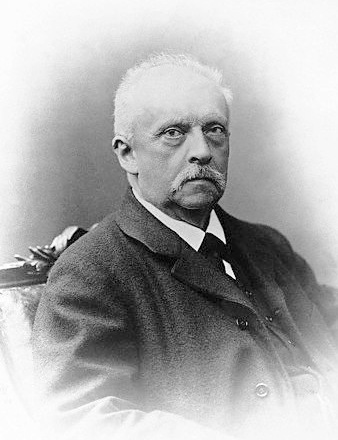
Edmund Husserl: Biography, Achievements & Lasting Legacy

Who Was Edmund Husserl?
Edmund Gustav Albrecht Husserl (Austrian German: [ˈɛdmʊnd ˈhʊsɐl]; 8 April 1859 – 27 April 1938) was an Austrian-German philosopher and mathematician who established the school of phenomenology.
In his early work, he elaborated critiques of historicism and of psychologism in logic based on analyses of intentionality. In his mature work, he sought to develop a systematic foundational science based on the so-called phenomenological reduction. Arguing that transcendental consciousness sets the limits of all possible knowledge, Husserl redefined phenomenology as a transcendental-idealist philosophy. Husserl's thought profoundly influenced 20th-century philosophy, and he remains a notable figure in contemporary philosophy and beyond.
Life and Career
Husserl studied mathematics, taught by Karl Weierstrass and Leo Königsberger, and philosophy taught by Franz Brentano and Carl Stumpf. He taught philosophy as a Privatdozent at Halle from 1887, then as professor, first at Göttingen from 1901, then at Freiburg from 1916 until he retired in 1928, after which he remained highly productive. In 1933, under racial laws of the Nazi Party, Husserl was banned from using the library of the University of Freiburg due to his Jewish family background and months later resigned from the Deutsche Akademie. Following an illness, he died in Freiburg in 1938.
Key Facts
- Born: April 8, 1859 in Proßnitz, Margraviate of Moravia, Austrian Empire(present-da
- Died: 1938
- Field: Philosophy
Legacy and Impact
The influence of Edmund Husserl extends far beyond their own lifetime. They fundamentally shaped human thought and intellectual discourse, and their ideas and philosophical frameworks remain foundational to this day.
Twenty questions, eight minutes on the clock, and a percentile measured against everyone who has taken it. No sign-up.
Take the IQ test →Though they passed away in 1938, their ideas continue to be studied, debated, and built upon by scholars and practitioners worldwide.
Discover more brilliant minds in Philosophy
Explore Philosophy GeniusesRelated Articles
Explore More
Read the full profile of Edmund Husserl
View Edmund Husserl's Profile →