David Hilbert: Biography, Achievements & Lasting Legacy

Who Was David Hilbert?
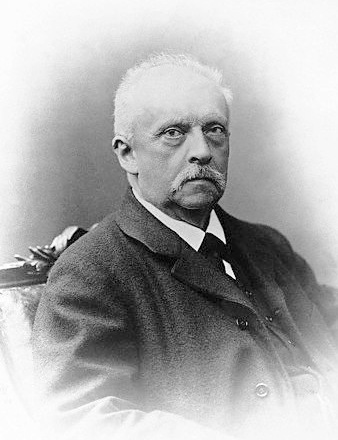
David Hilbert (; German: [ˈdaːvɪt ˈhɪlbɐt]; 23 January 1862 – 14 February 1943) was a German mathematician and philosopher of mathematics and one of the most influential mathematicians of his time.
Hilbert discovered and developed a broad range of fundamental ideas including invariant theory, the calculus of variations, commutative algebra, algebraic number theory, the foundations of geometry, spectral theory of operators and its application to integral equations, mathematical physics, and the foundations of mathematics (particularly proof theory). He adopted and defended Georg Cantor's set theory and transfinite numbers. In 1900, he presented a collection of problems that set a course for mathematical research of the 20th century.
Life and Career
Hilbert and his students contributed to establishing rigor and developed important tools used in modern mathematical physics. He was a co-founder of proof theory and mathematical logic.
Key Facts
- Born: January 23, 1862 in Königsberg or Wehlau, Province of Prussia
- Died: 1943
- Field: Mathematics
- Awards: Lobachevsky Prize (1903) Bolyai Prize (1910) ForMemRS
Legacy and Impact
The influence of David Hilbert extends far beyond his own lifetime. He fundamentally shaped the foundations of modern mathematics, and his theorems and mathematical frameworks remain foundational to this day.
Twenty questions, eight minutes on the clock, and a percentile measured against everyone who has taken it. No sign-up.
Take the IQ test →Though he passed away in 1943, his ideas continue to be studied, debated, and built upon by scholars and practitioners worldwide.
Discover more brilliant minds in Mathematics
Explore Mathematics GeniusesRelated Articles
Explore More
Read the full profile of David Hilbert
View David Hilbert's Profile →