Socrates (469–399 BC)
Socrates wrote nothing. Everything we know of him comes from Plato's dialogues and Xenophon's memoirs. His method was interrogation: relentless questioning to expose the contradictions in what people thought they knew. His central claim: the unexamined life is not worth living. He was condemned to death for corrupting the youth and impiety — charges that amount to making people think.
Plato (428–348 BC)
Plato systematized Socrates's insights into a complete philosophical program. His Theory of Forms holds that the physical world is an imperfect copy of abstract ideal Forms — the true chair, the true circle, the true Good. Political philosophy: the just city requires philosopher-kings who have ascended from the cave of appearances to the light of truth. His Academy was history's first university.
Aristotle (384–322 BC)
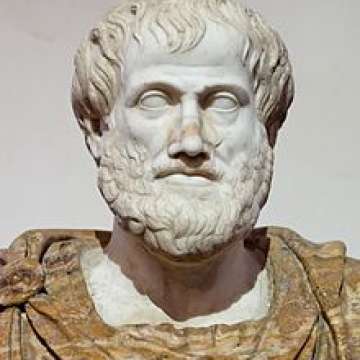
Aristotle rejected Plato's Forms. Reality is in physical things, not abstractions. He built philosophy from observation: classified animals, described politics empirically, systematized logic, defined tragedy and comedy, analyzed friendship and happiness. His Nicomachean Ethics argues that happiness (eudaimonia) is the activity of the soul in accordance with virtue — a definition that shaped Christian and Islamic ethics.
Twenty questions, eight minutes on the clock, and a percentile measured against everyone who has taken it. No sign-up.
Take the IQ test →The Stoics and Epicureans
Zeno of Citium founded Stoicism: happiness consists in virtue alone; external circumstances are indifferent. Epictetus, Marcus Aurelius, and Seneca developed this into a practical philosophy of self-control under adversity. Epicurus held that happiness is the absence of pain and anxiety — a quieter, more private ideal than Plato's political vision. Both schools influence modern psychology.
Frequently Asked Questions
What is the Socratic method?
The Socratic method is a form of dialogue based on asking questions to expose contradictions in a position. Socrates would claim ignorance and then question his interlocutor's certainties until the position collapsed or was refined. It is the basis of legal cross-examination, academic tutorials, and critical thinking education.
What did Plato believe about reality?
Plato's Theory of Forms holds that abstract ideal Forms (the perfect circle, the perfect justice, the perfect beauty) are more real than physical objects, which are imperfect copies. True knowledge is of the Forms, accessible through reason; perception of physical objects gives only opinion.
What is Aristotle's concept of eudaimonia?
Eudaimonia (often translated as happiness or flourishing) is Aristotle's term for the highest human good. He defines it as the activity of the soul in accordance with virtue over a complete life. It is not a feeling but an activity — living and acting well in accordance with one's nature as a rational social animal.