Alexander the Great: Biography, Achievements & Lasting Legacy

Who Was Alexander the Great?
Alexander III of Macedon (Ancient Greek: Ἀλέξανδρος, romanized: Aléxandros; 20/21 July 356 BC – 10/11 June 323 BC), most commonly known as Alexander the Great, was king of the ancient Greek kingdom of Macedon. He succeeded his father Philip II to the throne in 336 BC at the age of 20, and spent most of his reign conducting a lengthy military campaign throughout Asia and Egypt. By the age of 30, he had created one of the largest empires in history, stretching from Greece to northwestern India. He was undefeated in battle and is widely considered to be one of history's greatest and most successful military commanders.
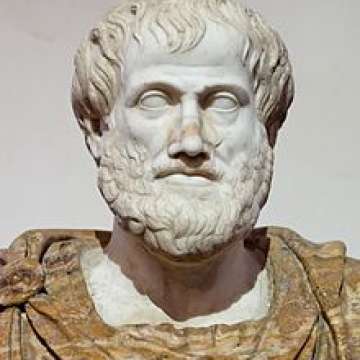
Born in Pella, Macedon, Alexander was tutored by philosopher and polymath Aristotle until the age of 16. In 335 BC, shortly after assuming the throne of Macedon, he launched a campaign in the Balkans and reasserted control over Thrace and parts of Illyria before marching on the city of Thebes, which was subsequently destroyed. Alexander then assumed leadership of the League of Corinth, created by his father.
Life and Career
With this authority over all Greeks he launched a pan-Hellenic invasion of the Persian Achaemenid Empire in 334 BC, and with it began a series of campaigns which lasted for ten years. Following his conquest of Asia Minor and a series of decisive battles, particularly at Issus and Gaugamela, the power of the Achaemenid Empire was broken. He subsequently overthrew Darius III and conquered the Achaemenid Empire in its entirety. After the fall of Persia, the Macedonian Empire held a vast swath of territory between the Adriatic Sea and the Indus River. Alexander endeavored to reach the "ends of the world and the Great Outer Sea" and invaded India in 326 BC, achieving an important victory over Porus, an ancient Indian king of present-day Punjab, at the Battle of the Hydaspes. Facing mutiny from troops, he was eventually forced to turn back at the Beas River, and later died in 323 BC in Babylon, Mesopotamia, the city which he had planned to make the capital of his empire, while on his return to Greece. Alexander's death put an end to his planned invasion of Arabia.
In the years following his death, a series of civil wars broke out across the Macedonian Empire, eventually leading to its disintegration at the hands of the Diadochi. Alexander's death marks the conventional beginning of the Hellenistic period. Through his conquests, he built a legacy that includes the cultural diffusion and syncretism, which gave rise to Greco-Buddhism and Hellenistic Judaism. He founded more than twenty cities, with the most prominent being the city of Alexandria in Egypt. Alexander's establishment of Greek colonies and the spreading of Greek culture led to Hellenistic civilization becoming a major force in the ancient world, influencing regions as far east as the Indian subcontinent. The Hellenistic period developed through the Roman Empire into modern Western culture; the Greek language became the lingua franca of the region and was the predominant language of the Byzantine Empire until its collapse in 1453 AD.
Alexander became a legendary hero similar to Achilles, featuring prominently in the historical and mythical traditions of both Greek and non-Greek cultures. His military achievements and successes in battle made him the touchstone against which many later military leaders would judge themselves. His tactics remain a significant subject of study in military academies worldwide. Legends of Alexander's exploits were coalesced into the 3rd century Alexander Romance which, in the premodern period, went through over one hundred recensions, translations, and derivations and was translated into almost every European vernacular and every language of the Islamic world. After the Bible, it was the most popular form of European literature.
Twenty questions, eight minutes on the clock, and a percentile measured against everyone who has taken it. No sign-up.
Take the IQ test →Key Facts
- Born: July 21, 356 in Pella, Macedon, Ancient Greece
- Died: 323
Legacy and Impact
The influence of Alexander the Great extends far beyond his own lifetime. He fundamentally shaped human knowledge and progress, and his achievements and contributions remain foundational to this day.
Though he passed away in 323, his ideas continue to be studied, debated, and built upon by scholars and practitioners worldwide.
Alexander the Great remains one of the most celebrated minds to emerge from Greece, a testament to the rich intellectual heritage of the region.
Notable Geniuses from Greece
Greece has produced many remarkable minds. Alongside Alexander the Great:
View all geniuses from Greece →
Related Articles
Explore More
Read the full profile of Alexander the Great
View Alexander the Great's Profile →