What AI Can Do: Remarkable Capabilities
Pattern Recognition and Optimization
AI excels at tasks requiring rapid pattern recognition across massive datasets. Machine learning algorithms identify correlations humans would miss. In protein folding, AlphaFold predicted three-dimensional protein structures from amino acid sequences—a breakthrough that would have required years of laboratory work. In drug discovery, AI systems screen millions of compounds to identify promising candidates.
This is a genuine form of problem-solving. The results represent novel knowledge. Yet the process differs fundamentally from human genius. AI doesn't "understand" protein structures; it finds patterns optimized for prediction. The capability is real, but the cognition is alien.
Mathematical Computation
AI can solve mathematical problems at speeds impossible for humans. Chess engines evaluate millions of positions per second. Quantum computers factor large numbers that would take classical computers millennia. In pure mathematical computation, AI vastly exceeds human capability.
But computation is not discovery. Calculating that 2 + 2 = 4 faster than anyone else doesn't constitute mathematical genius. Mathematical genius involves proving new theorems, discovering elegant solutions to unsolved problems, and developing entirely new frameworks (like Einstein's relativity or Fourier's harmonic analysis).
Content Generation
Large language models generate remarkably coherent text. They write essays, code, poetry, and dialogue. They perform translation, summarization, and question-answering. To a superficial reader, the output is indistinguishable from human writing.
Yet these systems are sophisticated statistical models trained on human-generated content. They identify patterns in language and generate outputs matching those patterns. This is not creativity in the human sense—the generation of genuinely novel ideas. It is recombination and interpolation of existing patterns.
What AI Cannot Do: The Limits of Machine Genius
Genuine Novelty and Conceptual Breakthroughs
AI has not generated truly novel scientific theories. It has not proposed hypotheses that fundamentally restructured our understanding of nature. AlphaGo played innovative moves, but within a rule system humans designed. No AI has proposed new rules, new frameworks, or new domains of inquiry.
Human genius frequently involves asking entirely new questions. Einstein didn't solve Newton's equations better than others; he asked whether the foundational assumptions of physics were correct. Darwin didn't optimize existing taxonomy; he proposed that species were mutable and descended from common ancestors. These breakthroughs required conceptual audacity—the willingness to question axioms others took for granted.
AI systems optimize within defined domains. They don't generate entirely new domains of thought.
Meaning and Understanding
Language models operate on statistical associations. They predict the next word based on patterns in training data. They do not understand meaning in the human sense—the comprehension that links words to experiences, intentions, and truth.
Twenty questions, eight minutes on the clock, and a percentile measured against everyone who has taken it. No sign-up.
Take the IQ test →An AI might generate a paragraph about love that statistically matches human writing about love. It would not feel love, understand love, or know why love matters. This distinction is not trivial. Human genius frequently emerges from emotional investment, personal experience, and meaningful engagement with problems. A physicist driven by the beauty of mathematical symmetry approaches problems differently than a statistical engine optimizing for prediction accuracy.
Intentionality and Purpose
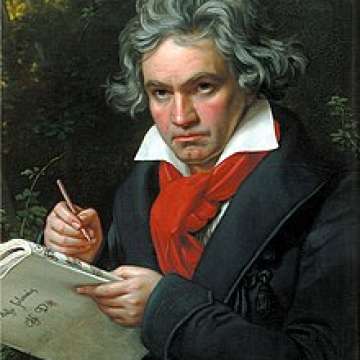
Human genius involves conscious intention—a deliberate choice to solve a problem, understand a phenomenon, create something beautiful. Marie Curie set out to understand radioactivity. Beethoven deliberately composed symphonies expressing emotional depth.
AI systems have no intentions. They optimize functions defined by their designers. They have no goals except those programmed into them. This absence of intentionality may seem technical, but it's fundamental. Genius requires caring about outcomes. AI systems don't care.
Wisdom and Judgment
Genius is not purely intellectual; it involves judgment—the capacity to discern what matters, what is true, what is beautiful, what is worth pursuing. Benjamin Franklin's genius encompassed not just scientific discovery but wisdom about society and human nature. Thomas Jefferson articulated values beyond technical competence.
AI systems lack this evaluative capacity. They cannot judge importance except by metrics their designers define. They cannot distinguish between solving trivial problems efficiently and addressing meaningful challenges. This is not a current limitation that AI will overcome; it may be fundamental to what AI is.
The Future of AI and Human Genius
Scenario 1: Human-AI Collaboration
Rather than replacement, the likely path is collaboration. AI excels at computational tasks, pattern recognition, and optimization within defined domains. Humans excel at questioning assumptions, generating novel frameworks, and judging significance. Together, they might achieve more than either could separately.
A physicist using AI tools to simulate quantum systems, test hypotheses, and process experimental data might make discoveries that neither AI nor unaided humans could. The genius remains human—the questions asked, the frameworks proposed, the significance understood. The AI is a tool, like mathematics or laboratory equipment.
Scenario 2: AGI and Recursive Self-Improvement
Some theorists propose artificial general intelligence (AGI)—AI systems with flexible reasoning comparable to humans but operating at faster speeds. If AGI achieved recursive self-improvement, it might surpass human genius in all domains. This is speculative; we don't know if AGI is possible.
Even if AGI arrived, it would represent a different kind of intelligence, not a superior version of human genius. An AGI system might solve mathematical theorems faster than any human. It wouldn't experience the intellectual beauty that motivates human mathematicians. It might optimize designs more efficiently than da Vinci. It wouldn't experience the creative joy that animated his work.
Scenario 3: Complementary Forms of Intelligence
Human genius and AI intelligence may remain fundamentally different—not hierarchically ordered but operationally distinct. Humans excel at conceptual breakthroughs, meaning-making, and value judgment. AI excels at computation, pattern matching, and optimization within defined frameworks.
Rather than competition, we might see diversification. Humans ask questions; AI helps answer them. Humans identify what matters; AI finds efficient solutions. This partnership could enhance civilization without replacing distinctly human forms of genius.
What Makes Human Genius Irreplaceable
Even if AI exceeds human performance in narrow domains, certain aspects of human genius may remain distinctive:
The Real Question: What Is Genius For?
The AI vs. human genius debate often assumes a competitive framing. But genius is not a competition. It's a response to meaningful challenges. The question is not whether AI can outperform humans at all intellectual tasks. It's whether AI can address the profound questions that human genius tackles:
- What is the nature of reality? (Physics)
- How did life arise and evolve? (Biology)
- How should humans live together justly? (Philosophy, Politics)
- What is beautiful and moving? (Art)
- What is right and wrong? (Ethics)
AI might provide tools for addressing these questions. It cannot authentically address them itself. The genius required to understand the universe, create meaningful art, or design just societies is distinctly human—rooted in consciousness, meaning-making, and value judgment.
The Path Forward: AI and Human Intelligence in Dialogue
The future likely involves neither replacement nor rejection, but integration. Humans will harness AI's computational power while retaining responsibility for crucial judgments. Artists will collaborate with generative models while maintaining authentic creative vision. Scientists will use AI for simulation and analysis while posing the questions that define research.
In this future, human genius remains irreplaceable. The capacity to ask meaningful questions, recognize significant patterns, make wise judgments, and create with authentic intention—these are distinctly human gifts. AI augments human intelligence without supplanting it.
The greatest geniuses of the coming era may be those who integrate AI capabilities into distinctly human purposes—harnessing machine power while maintaining human values, meaning, and moral agency.
Geniuses.Club Editorial Team
Celebrating exceptional minds since 2020