What he did
The Better India reported on 10 January 2018 that Thacker had finished the four-year electrical engineering programme of Gujarat Technological University in one year, studying at the SAL Institute of Technology and Engineering Research in Ahmedabad, and had come out with a CGPA of 8.23. The Ahmedabad Mirror carried the story locally.
The compression was not a single stunt. He had already moved through the school years eight to twelve at one year each, which is how a boy born in 2002 arrived at a university final year in his mid-teens. The degree year was the last and steepest step of an acceleration that had been running for half a decade.
The detail the coverage kept returning to
The reports included a line that explains why the story travelled: his kindergarten teachers had called him weak. It is the kind of detail Indian newspapers use to frame an acceleration story, and it is also the reason the family's account of his schooling matters more than any label applied to him at four years old.
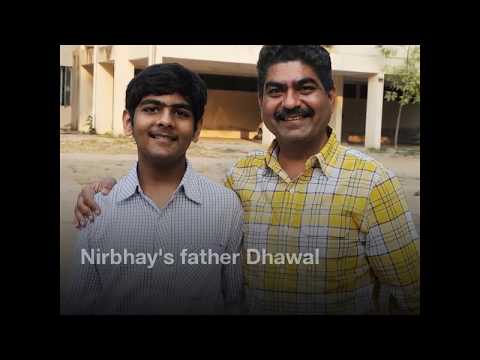
His father, Dhawal Thacker, is an electrical engineer, which is the field his son then compressed into a year. No source used here describes the teaching arrangement in any detail beyond that, and this page does not reconstruct it.
What he said he would do next
In the 2018 coverage Thacker said he was aiming for a PhD by 16, and that he was working on a project involving a superconducting synchronous machine, with support from IIT-Gandhinagar. A synchronous machine is a motor or generator whose rotation locks to the frequency of the supply; building one with superconducting windings is a serious engineering problem, pursued for the efficiency gains it promises in large generators.
That was a statement of intent made at 15, reported as such. Whether the doctorate followed, and on what timetable, is not recorded in any source used for this page.
How to read a record like this
Indian universities certify degrees on credits completed and examinations passed, not on years served, which is what makes a compressed degree possible at all. A CGPA of 8.23 on a ten-point scale is a solid result rather than a perfect one, and the reporting gives it plainly.
The claim that deserves care is not the speed but the sequel. Acceleration stories are covered heavily in the week they happen and rarely followed up, which leaves years of a young person's life undocumented. This page records the 2018 facts and stops where the reporting stops.
What is documented, and what is not
Documented: the one-year completion of the four-year Gujarat Technological University electrical engineering degree, the CGPA of 8.23, his age of 15, his institute, his father's profession, and his stated plans for a PhD and a superconducting machine project.
Not documented in these sources: whether the doctorate was completed, what he is doing now, any published research, and the detail of the arrangement that let him sit five school years and a degree at speed. One of the two reports used here was seen only as a link, with its headline unverified, and is cited on that basis.
Watch: Nirbhay Thacker on camera

| 人物 | 国家 | 里程碑 | 年龄 / 数据 |
|---|---|---|---|
| Viemens Bamfo | 加纳 | 12岁时被加纳大学录取 (2019) | 12岁 |
| Yahya Elnajaar | 埃及 | 他在埃及科学大学录取他时仍处于六年级 | 12岁 |
| Dafne Almazán | 墨西哥 | 13岁时完成心理学学位 | 13岁 |
| Shania Muhammad | 美国 | 兰斯顿大学最年轻的毕业生,年仅15岁 | 15岁 |
| Nirbhay Thacker | 印度 | 一年内完成四年制工程学位 (2018) | 16岁 |
What is documented — and what is not
✓ Documented
- He completed a four-year GTU electrical engineering degree in one year at 15, reported January 2018
- His CGPA was 8.23 and he studied at the SAL Institute of Technology and Engineering Research
- He stated an aim of a PhD by 16 and a superconducting synchronous machine project with IIT-Gandhinagar support
? Unverified, disputed or wrong
- Whether the doctorate was completed
- What he is doing now, and any published research
- The detail of the teaching and examination arrangement behind the compression
- The headline and full text of the Ahmedabad Mirror report, which was seen only as a link
Questions people ask about Nirbhay Thacker
How old is Nirbhay Thacker?
He was 15 when the degree was reported in January 2018; his birth year is recorded as 2002. No exact date of birth appears in these sources.
What did Nirbhay Thacker do?
He completed the four-year electrical engineering degree of Gujarat Technological University in a single year, at 15, with a CGPA of 8.23.
Which college did he attend?
The SAL Institute of Technology and Engineering Research in Ahmedabad, affiliated to Gujarat Technological University.
Did he get his PhD by 16?
He said in 2018 that this was his aim. No source used here records whether it happened.
Who are Nirbhay Thacker's parents?
The coverage names his father, Dhawal Thacker, an electrical engineer. No other family detail appears in these sources.
What was his school record?
He is reported to have taken classes eight to twelve at one year each before entering the degree, and his kindergarten teachers had described him as weak.
Where is Nirbhay Thacker now?
Nothing after 2018 appears in the sources used here. His current studies or work are not documented on this page.
What is his IQ?
No IQ figure for him is reported in any source used here, and none should be attributed to him.
Quick quiz: how well do you know Nirbhay’s story?
How long did Nirbhay Thacker take over a four-year engineering degree?
What CGPA did he finish with?
What did he say he wanted next?
Sources
- Brilliant 15-Year-Old Finishes 4-Year Engineering Degree in One Year! — The Better India, 2018-01-10
- Report on Nirbhay Thacker's one-year engineering degree (headline not verified) — Ahmedabad Mirror
Checked by the Geniuses.club editorial team. Ages are given as of September 2026.