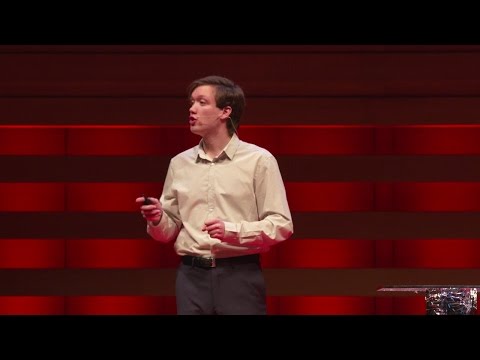
The entry
EdTech Magazine published the 2015 finalist list on 11 August, and Rieder's line reads: extracting clean water from air, solar-powered potable water. He is one of two Canadians on the list, alongside Isabella O'Brien, who was recycling shells to counter ocean acidification.
Atmospheric water generation is an old idea with a hard constraint. Air always contains water vapour, and cooling it below its dew point condenses that vapour into liquid; the question is where the energy for the cooling comes from. Doing it with solar power means the device works where the grid does not, which is where the water problem actually is, but it also means working inside a strict energy budget, because condensing a litre of water requires removing a great deal of heat.
The cohort of 2015
The finalists that year were drawn from ten or more countries, and clean water was one of the two dominant themes. Deepika Kurup of the United States was working on solar-powered silver technology for clean drinking water. Lalita Prasida Sripada Srisai of India was absorbing pollutants from water using corn cobs. Zhilin Wang of Singapore was working on affordable renewable energy.
The other dominant theme was medical detection: Anika Cheerla and Krtin Nithiyanandam both on Alzheimer's diagnosis, Tanay Tandon on automated blood morphology tests, Adriel Sumathipala on early detection of cardiac disease, Olivia Hallisey on transporting Ebola antibodies in silk. Between them, the twenty projects mapped what teenagers with internet access considered the world's solvable problems in 2015.
How the fair worked
The Google Science Fair was an online competition, which is what made its finalist lists look like an atlas rather than a school district. Entrants aged roughly thirteen to eighteen submitted their projects over the web from anywhere with a connection; the selected finalists were then flown to California to face judges in person.
EdTech Magazine records that the twenty presented to judges at Google headquarters in Mountain View on 21 September 2015, and that the grand prize was a $50,000 scholarship together with other prizes. Reaching the final twenty out of thousands of entries is the measurable achievement; the article does not state where each finalist placed on the day.
Why water from air is difficult
The appeal of pulling water out of the atmosphere is obvious: the resource is everywhere, requires no well, no pipe and no permission, and it is clean before it touches the ground. The difficulty is thermodynamic. In humid air the yield is respectable; in the arid places that need the water most, relative humidity is low, the dew point is far below ambient temperature, and the energy needed per litre rises steeply.
This is why the field has divided into two approaches: refrigeration cycles, which work well in humidity and badly in deserts, and sorbent materials that grab water molecules at low humidity and release them with modest heat, which is the route large research groups pursued through the late 2010s. A solar-powered condensing device built by a secondary school student sits in the first tradition, and the honest test of any such design is litres per day per watt rather than whether it produces water at all.
What is documented, and what is not
Firm: Rieder was named a global finalist at the 2015 Google Science Fair; his project was a solar-powered device extracting clean drinking water from air; he competed for Canada; the twenty finalists were judged at Google's Mountain View headquarters on 21 September 2015; the grand prize was a $50,000 scholarship.
Not documented, in the source used here: his age, his school, his home province, the yield or design of the device, where he placed in the final judging, and anything he has done since 2015. The finalist list is a strong, checkable record of selection, and it is all that the sources for this page establish.
Watch: Calvin Rieder on camera

| 人物 | 国家 | 里程碑 | 年龄 / 数据 |
|---|---|---|---|
| Lauren Hodge | 美国 | 赢得 2011 年首届 Google Science Fair 13-14 岁组冠军... | 14 岁 |
| Sophie Healy-Thow | 爱尔兰 | 2014 年 Google Science Fair 大奖联合获得者 | 16 岁 |
| Calvin Rieder | 加拿大 | 2015 年 Google Science Fair 全球入围者 | — |
| Viney Kumar | 澳大利亚 | 2013 年 Google Science Fair 13-14 岁组获胜者 | — |
| Anela Arifi | 波斯尼亚和黑塞哥维那 | 2015 年 Google Science Fair 全球入围者 | — |
What is documented — and what is not
✓ Documented
- Named a 2015 Google Science Fair global finalist, representing Canada
- Project: solar-powered extraction of clean drinking water from air
- Twenty finalists were chosen from thousands of entries worldwide
- Final judging took place at Google headquarters on 21 September 2015
? Unverified, disputed or wrong
- Age, school and home province are not stated
- No design detail or water yield is published
- His placing on the day, and anything after 2015, is not documented
Questions people ask about Calvin Rieder
What did Calvin Rieder build?
A solar-powered device for extracting clean, drinkable water from the air, which made him a 2015 Google Science Fair global finalist.
Did he win the Google Science Fair?
The source used here lists him as one of twenty global finalists, not as the grand prize winner. The grand prize was a $50,000 scholarship.
How old is Calvin Rieder?
No source consulted gives his age or birth year. The fair was open to teenagers.
How does water come out of air?
Cooling air below its dew point condenses the water vapour it already carries. The engineering problem is supplying that cooling from a limited energy source, which is what solar power imposes.
Who else was a 2015 finalist?
Among the twenty: Olivia Hallisey, Deepika Kurup, Anika Cheerla, Krtin Nithiyanandam, Tanay Tandon, Eliott Sarrey, and fellow Canadian Isabella O'Brien.
Where is Calvin Rieder now?
No source consulted for this page records anything about him after 2015.
Is Calvin Rieder on Wikipedia?
No Wikipedia article was found for him.
Quick quiz: how well do you know Calvin’s story?
What did Calvin Rieder's device do?
Which country did he represent?
How many global finalists were named in 2015?
Sources
- Google Spotlights 20 Student Science Fair Finalists — EdTech Magazine, 2015-08-11
Checked by the Geniuses.club editorial team. Ages are given as of September 2026.

.jpg)