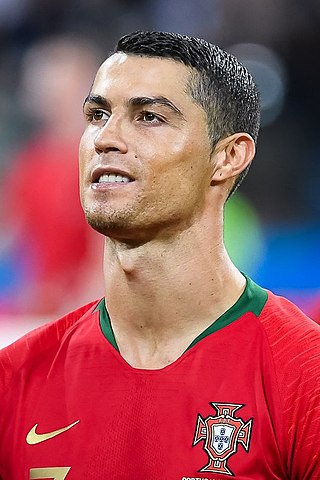
Cristiano Ronaldo dos Santos Aveiro was born on February 5, 1985, in Funchal, the capital of Madeira — a volcanic island in the Atlantic, 600 miles from mainland Portugal, where the streets are steep and the Atlantic wind is constant and professional football is a dream that requires a boat or a plane to pursue. His father, José Dinis, was a municipal gardener and part-time kit man for a local club who died of alcohol-related illness when Ronaldo was twenty. His mother, Maria Dolores, cleaned floors in a hotel while raising four children in a two-room tin-roofed house in the parish of Santo António. The family was, by any measure, poor. What they gave Cristiano, beyond love and a ball, was the understanding that aspiration was not negotiable.
He joined Sporting CP's youth academy at twelve, living in the Lisbon dormitory away from his family for the first time, homesick and mocked by teammates for his Madeiran accent. He cried himself to sleep regularly. He also practised obsessively, returning to the training pitch after sessions were finished, staying until the groundskeepers turned off the lights. By the time he was seventeen, at Sporting's first team, he had the body of a twenty-three-year-old and a first touch that made opponents' hands reach involuntarily for their pockets to feel for the ball. In August 2003 he played against Manchester United in a pre-season friendly and so thoroughly humiliated the full-backs that United's own players lobbied Sir Alex Ferguson to sign him immediately. Ferguson obliged, for £12.24 million.
At Manchester United he transformed from a showboating teenager into one of the most lethal forwards in the history of English football. Under Ferguson's patient mentorship — a relationship the two men have described as father-and-son — Ronaldo developed the relentless work ethic that would define his career. Three consecutive Premier League titles between 2007 and 2009, the 2008 Champions League in Moscow, 42 goals in 49 appearances in the 2007–08 season. He won his first Ballon d'Or in 2008. He was twenty-three years old, and already some people were comparing him to Messi. He did not object.
The move to Real Madrid in 2009 for a world-record £80 million was inevitable — a marriage of the world's most marketable player and the world's most commercially aggressive club. Over nine seasons he scored 450 goals in 438 appearances, a ratio that is simply not available in nature. He won La Liga twice, the Copa del Rey twice, and the Champions League four times — including three in succession between 2016 and 2018. The hat-trick of European crowns matched Zidane's record from the managerial side; Ronaldo achieved it as a player. He won a further Ballon d'Or in 2013, 2014, 2016 and 2017 — five in total — and was for a decade the joint-answer (with Messi) to every question about the world's best player.
For Portugal, the story was one of prolonged individual excellence in the service of a team that often struggled to match it — until 2016, when the European Championship in France produced a tournament of grinding results and fortunate draw, and a final against the hosts in which Ronaldo was injured in the opening minutes and watched from the touchline in tears, then re-emerged at half-time to coach and implore from the sidelines. Portugal won 1–0 in extra time. The image of Ronaldo in street clothes, arm in a sling, running the length of the touchline in celebration, is one of the most recognisable in the modern history of the sport.
He has continued, into his late thirties, to score at rates that have embarrassed younger players in their prime. His international record of 130+ goals — surpassing every footballer who has ever played the game at international level — is the single most remarkable individual statistical achievement in the history of football. He is the most-followed person on Instagram, a global brand that transcends sport. Whether at Juventus, Manchester United again, or Al-Nassr in Saudi Arabia, his hunger to score, to improve, to be the best version of himself each morning in the gym, has never dimmed. Cristiano Ronaldo is, above all else, a monument to will.
बीस प्रश्न, घड़ी पर आठ मिनट, और अब तक टेस्ट देने वालों के सामने मापा गया पर्सेंटाइल। साइन-अप नहीं।
IQ टेस्ट दें →"Talent without working hard is nothing."— Cristiano Ronaldo
"I don't have to show anything to anyone. There is nothing to prove."— Cristiano Ronaldo
| Player | Career Goals | Ballon d'Or | World Cups |
|---|---|---|---|
| 🇧🇷 Pelé | 1,000+ | 1 (honorary) | 3 |
| 🇦🇷 Maradona | 345 | 1 | 1 |
| 🇫🇷 Zidane | 125 | 3 | 1 |
| 🇧🇷 Ronaldo R9 | 414 | 2 | 2 |
| 🇦🇷 Messi | 850+ | 8 | 1 |
| 🇵🇹 C. Ronaldo | 900+ | 5 | 0 |






.jpg)

