
Dresden, October 2014
The Mental Calculation World Cup 2014 was held from 10 to 12 October at Erlebnisland Mathematik, the mathematics museum in Dresden, with thirty-nine calculators taking part, according to the official results published by the organisers.
Thakkar won the combination category, the composite event that determines the overall champion, with a score of 577.77. He also won the addition category: adding ten ten-digit numbers, with a first-round performance of ten tasks in 242 seconds. He finished second in multiplication, with nine correct answers in the first round of eight-digit-by-eight-digit problems, and joint fifth in square roots. The other category winners were Andreas Berger in versatility, Marc Jornet Sanz in calendar and multiplication, and Rhea Shah in square roots.
What the tasks actually are
The World Cup's formats explain why the numbers sound impossible. Competitors add ten ten-digit numbers within seven minutes. They multiply two eight-digit numbers within ten minutes. They extract square roots from six-digit numbers within ten minutes. Calendar tasks require naming the day of the week for dates spread across five centuries, from 1600 to 2100.
Nothing is written down beyond the answer. Speed comes from memorised multiplication structures, decomposition methods and calendar algorithms practised until they are automatic. It is a trained discipline more than a gift, which is why the same names recur at the top of the results tables year after year.
The 2022 record
At the 2022 edition of the World Cup, Thakkar set a world record in the square-roots event with a time of 47.73 seconds, finishing seventh overall, according to the research record and the World Cup results published by World Mental Calculation. Holding a record in the discipline he had finished joint fifth in eight years earlier is a plain measure of how far his specialism had moved.
The competition around him had also changed. World Mental Calculation's coverage of the 2022 and 2024 World Cups documents a field that has grown younger and deeper, with junior competitors now scoring at adult level.
What is documented, and what is not
The results pages establish the events, the dates, the scores and the categories. They do not give Thakkar's age, his birth year, his home city, his school or how he trained. The research record notes that no age was found, and this page does not supply one.
The Indian mental-calculation scene is often described in press coverage through abacus and Vedic-maths programmes, but none of the sources gathered here states which method, if any, Thakkar used. That is left open below.
Vingt questions, huit minutes au chronomètre et un centile mesuré face à tous ceux qui l’ont passé. Sans inscription.
Passer le test de QI →Why the World Cup is the measure
Claims about mental arithmetic are easy to make and hard to check: a stopwatch in a living room proves nothing. The World Cup matters because it is adjudicated, standardised and published, with every competitor's score in every category available for inspection afterwards.
That is why a page like this one can state what Thakkar did in Dresden with precision, and why it will not say anything about what he might be able to do now. The answers are in the results tables, and where the tables are silent, so is the record.
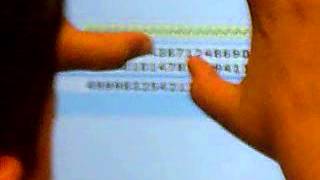
Watch: Granth Thakkar on camera
| Personne | Pays | Étape | Âge / Donnée |
|---|---|---|---|
| Granth Thakkar | Inde | Vainqueur de la Coupe du Monde de Calcul Mental 2014 | — |
| Abhilakshya Arora | Inde | Vainqueur du Championnat du Monde Junior de Calcul Mental des moins de 20 ans… | — |
| Mekan Nurgeldiyev | Turkménistan | Bronze des moins de 12 ans, Championnat du Monde Junior de Calcul Mental 2026 | — |
| Arshika Gupta | Inde | Championne du monde des moins de 12 ans, calcul mental, 2026 | — |
| Shashank Jain | Inde | Or en multiplication à 8 chiffres et racines carrées, Memoriad 2024 | — |
What is documented — and what is not
✓ Documented
- He won the combination category of the Mental Calculation World Cup 2014 with 577.77 points
- He won the addition category, completing ten tasks in 242 seconds in round one
- The 2014 World Cup was held in Dresden, 10-12 October, with 39 competitors
- He set a square-root record of 47.73 seconds at the 2022 World Cup, finishing seventh overall
? Unverified, disputed or wrong
- No source read states his age, birth year or home city
- No source describes his training method or coaching
- Nothing documents his education or current activity
Questions people ask about Granth Thakkar
What did Granth Thakkar win?
The Mental Calculation World Cup 2014, held in Dresden from 10 to 12 October, where he took the combination category with 577.77 points and won the addition category.
How old is Granth Thakkar?
No source read for this page states his age or birth year.
What is the addition task?
Adding ten ten-digit numbers within seven minutes. Thakkar completed ten such tasks in 242 seconds in the first round of 2014.
Does he hold a world record?
He set a square-root record of 47.73 seconds at the 2022 World Cup, where he finished seventh overall.
How many people competed in 2014?
Thirty-nine mental calculators, according to the official results.
Is Granth Thakkar on Wikipedia?
The research record found no standalone Wikipedia article about him.
Did he use an abacus method?
No source read here states which training method he used.
Quick quiz: how well do you know Granth’s story?
Where was the 2014 Mental Calculation World Cup held?
Which category did Granth Thakkar win alongside the overall combination title?
What square-root time did he record in 2022?
Sources
- Mental Calculation World Cup 2014 - Results — Mental Calculation World Cup (official), 2014
- Mental Calculation World Cup 2022 - Results — Mental Calculation World Cup (official), 2022
- Mental Calculation World Cup 2022: Results — World Mental Calculation, 2022-07-19
- Mental Calculation World Cup 2024: Results — World Mental Calculation, 2024-09-20
Checked by the Geniuses.club editorial team. Ages are given as of September 2026.
Découvrez D'Autres Jeunes Prodiges
Plus de 50 récits de jeunes génies contemporains qui transforment les échecs, la musique, la science et l'art.
Explorer Tous les Prodiges →Profils de Jeunes Prodiges Associés
 Abhilakshya Arora🇮🇳 Inde — Trois titres mondiaux consécutifs, remportés sur papier en deux heures…
 Arshika Gupta🇮🇳 Inde — Elle a battu tous les autres concurrents de moins de 12 ans au monde…
 Mekan Nurgeldiyev🇹🇲 Turkménistan — Sa médaille de bronze à Bielefeld était la première médaille obtenue…
 Shashank Jain🇮🇳 Inde — Dix racines carrées à six chiffres en 40,82 secondes lui ont valu l'or.…
 Jay Baldiya Jain🇮🇳 Inde — Cent vingt-cinq dates, chacune convertie en un jour de la…
 Siddhi Mukesh Jain🇮🇳 Inde — Des nombres affichés sur un écran à plus d'un par seconde…