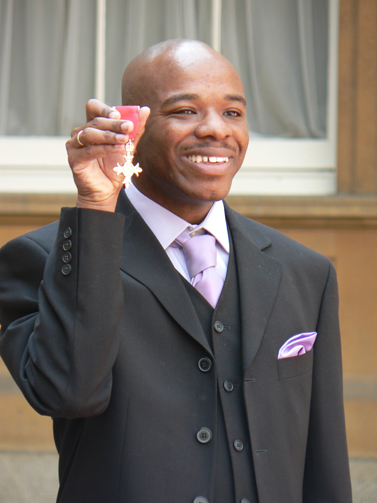
Six objects nobody had catalogued
The Society for Science described Wang's project plainly: machine-learning analysis of public telescope data that discovered six previously unknown near-Earth asteroids. Near-Earth objects are the ones whose orbits bring them into the neighbourhood of our own, which is why they are catalogued with more care than the millions of bodies further out.
The significant word in that description is "public." The images were already available; what was missing was someone willing to sift them. Sky surveys generate far more data than the astronomers who commission them can examine by hand, and faint moving objects hide easily in that excess.
Automated searching is now the standard method for this kind of work. Surveys photograph the same patch of sky repeatedly, and software compares frames to find the points of light that move against the fixed background of stars. Training a model to do that reliably, without drowning in false positives from cosmic rays and image artefacts, is the whole difficulty.
Why an award for communication
The Peggy Scripps Award for Science Communication, worth $10,000 in 2021, is not given for the result alone. It recognises a finalist's ability to explain the work — to make a technical project intelligible to people outside the field.
That distinction is worth keeping straight. Wang's asteroids are the achievement; the prize is for how he presented them. At a fair judged by interview, where finalists defend their methods repeatedly over a judging day, the two are harder to separate than they sound.
The first virtual fair
Regeneron ISEF 2021 was the first entirely online edition in the competition's history of more than seventy years. More than 1,800 finalists, from 49 US states and 64 countries, competed for over $5 million in prizes, presenting to judges by video.
The top award, $75,000, went to Michelle Hua of Troy, Michigan, for a deep-learning system that recognises human actions from silhouettes. John Benedict Estrada of Fresno took $50,000 for infrared detection of drought stress in plants, and Arya Tschand of New Jersey took the $10,000 innovation award for an irrigation model. Maya Ajmera, the Society's chief executive, said that every finalist that year had "persevered in their pursuit of science in the face of the myriad challenges of the COVID-19 pandemic."
What the discovery claim does and does not say
The source states that six previously unknown near-Earth asteroids were discovered through the analysis. It does not publish their provisional designations, the survey the data came from, the confirmation process, or whether the objects were subsequently accepted into a formal catalogue.
Veinte preguntas, ocho minutos de reloj y un percentil medido frente a todos los que la han hecho. Sin registro.
Hacer la prueba de CI →Those are meaningful omissions for anyone who wants to check the work, and they are recorded here as gaps rather than glossed over. What can be said with confidence is that the organisation running the competition published the claim as part of its award announcement.
What is known since
No source gathered for this page reports Wang's university, later research or current work. The published trail ends in May 2021.
That silence is normal for science-fair winners and tells a reader nothing about the person. It does mean that anyone citing a current position for him is citing something that is not in this record.
| Persona | País | Hito | Edad / Dato |
|---|---|---|---|
| Cannan Huey-You | Estados Unidos | Presentación de una investigación sobre una nube de gas de la Vía Láctea en la American Astronomical... | 11 años |
| Franklin Wang | Estados Unidos | Aplicó un modelo de aprendizaje automático a archivos de telescopios públicos y descubrió seis asteroides... | 17 años |
| Pranav Sivakumar | Estados Unidos | Dos años después de perder en un concurso de deletreo sobre cianofíceas, buscaba lentes... | — |
| Ana Humphrey | Estados Unidos | Primer lugar, Regeneron Science Talent Search 2019 | — |
| Wolf Cukier | Estados Unidos | Detección de TOI 1338 b, el primer planeta circumbinario de TESS | — |
What is documented — and what is not
✓ Documented
- Peggy Scripps Award for Science Communication, $10,000, Regeneron ISEF 2021, aged 17 (Society for Science)
- Reported discovery of six previously unknown near-Earth asteroids from public telescope data
- Listed home town of Palo Alto, California
? Unverified, disputed or wrong
- No designations, survey names or confirmation details published for the six objects
- No linked paper, catalogue entry or observatory credit in this record
- No information on his university or work after 2021
Questions people ask about Franklin Wang
How many asteroids did Franklin Wang discover?
Six previously unknown near-Earth asteroids, according to the Society for Science's award announcement.
How did he find them?
By applying machine-learning analysis to publicly available telescope data rather than by observing with his own instrument.
What award did he win?
The Peggy Scripps Award for Science Communication at Regeneron ISEF 2021, worth $10,000.
How old was he?
Seventeen, according to the organisers. His date of birth is not published in these sources.
Are the asteroids officially named after him?
No source in this record states any designation, naming or catalogue entry for the six objects.
Where is Franklin Wang from?
Palo Alto, California, as listed by the fair organisers.
Where is he now?
Not stated in any source gathered here. The published record ends with the 2021 award.
Is Franklin Wang on Wikipedia?
No Wikipedia article was found. The Society for Science press release is the strongest available source.
Quick quiz: how well do you know Wang’s story?
How many previously unknown near-Earth asteroids did Wang's analysis find?
What kind of data did he use?
Which ISEF award did he receive?
Sources
- Teen Scientists and Engineers Win $5 Million at Largest Global High School STEM Competition — Society for Science, 2021-05-21
Checked by the Geniuses.club editorial team. Ages are given as of September 2026.
Descubre Más Niños Prodigio
Más de 50 historias de jóvenes genios contemporáneos que transforman el ajedrez, la música, la ciencia y el arte.
Explorar Todos los Prodigios →Perfiles de Niños Prodigio Relacionados
 Cannan Huey-You🇺🇸 Estados Unidos — A los once años se puso ante astrónomos profesionales…
 Pranav Sivakumar🇺🇸 Estados Unidos — Dos años después de perder en un concurso de deletreo sobre…
 Ana Humphrey🇺🇸 Estados Unidos — Primer lugar en una competición que ha producido trece…
 Wolf Cukier🇺🇸 Estados Unidos — A los tres días de una pasantía de verano…
 Shania Muhammad🇺🇸 Estados Unidos — Terminó una licenciatura a los 15 años. Un año después…
 Arvind Mahankali🇺🇸 Estados Unidos — Deletreó 'knaidel', ganó el concurso nacional…