William Herschel: Biography, Achievements & Lasting Legacy

Who Was William Herschel?
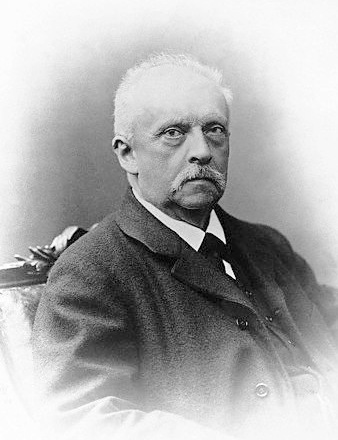
Frederick William Herschel ( HUR-shəl; German: Friedrich Wilhelm Herschel [ˈfʁiːdʁɪç ˈvɪlhɛlm ˈhɛʁʃl̩]; 15 November 1738 – 25 August 1822) was a German-British astronomer and composer. He frequently collaborated with his younger sister and fellow astronomer Caroline Herschel. Born in the Electorate of Hanover, he followed his father into the military band of Hanover, before immigrating to Britain in 1757 at the age of 19.
Taking an interest in astronomy in 1766, Herschel constructed his first large telescope in 1774, after which he spent nine years carrying out sky surveys to investigate double stars. Herschel published catalogues of nebulae in 1802 (2,500 objects) and in 1820 (5,000 objects). The resolving power of the Herschel telescopes revealed that many objects called nebulae in the Messier catalogue were actually clusters of stars. On 13 March 1781 while making observations he made note of a new object in the constellation of Gemini. This would, after several weeks of verification and consultation with other astronomers, be confirmed to be a new planet, eventually given the name of Uranus. This was the first planet to be discovered since antiquity, and Herschel became famous overnight. As a result of this discovery, George III appointed him Court Astronomer. He was elected a Fellow of the Royal Society and grants were provided for the construction of new telescopes.
Life and Career
Herschel pioneered the use of astronomical spectrophotometry, using prisms and temperature measuring equipment to measure the wavelength distribution of stellar spectra. In the course of these investigations, Herschel discovered infrared radiation.
Other work included an improved determination of the rotation period of Mars, the discovery that the Martian polar caps vary seasonally, the discovery of Titania and Oberon (moons of Uranus) and Enceladus and Mimas (moons of Saturn). Herschel was made a Knight of the Royal Guelphic Order in 1816. He was the first President of the Royal Astronomical Society when it was founded in 1820. He died in August 1822, and his work was continued by his only son, John Herschel.
Twenty questions, eight minutes on the clock, and a percentile measured against everyone who has taken it. No sign-up.
Take the IQ test →Key Facts
- Born: November 15, 1738 in Hanover, Electorate of Hanover, Holy Roman Empire
- Died: 1822
- Field: Science
- Awards: Copley Medal (1781)
Legacy and Impact
The influence of William Herschel extends far beyond his own lifetime. He fundamentally shaped our understanding of the natural world, and his discoveries and theories remain foundational to this day.
Though he passed away in 1822, his ideas continue to be studied, debated, and built upon by scholars and practitioners worldwide.
Discover more brilliant minds in Science
Explore Science GeniusesRelated Articles
Explore More
Read the full profile of William Herschel
View William Herschel's Profile →