Famous Polymaths in History
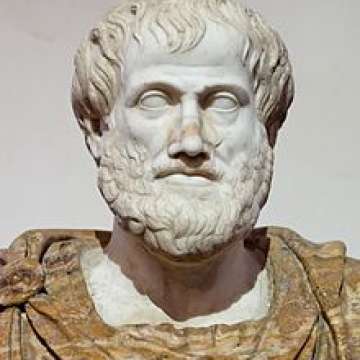
Aristotle (384–322 BC)
Aristotle created original frameworks in logic, metaphysics, physics, biology, ethics, politics, aesthetics, rhetoric, and poetics. His biological classifications were not superseded for nearly 2,000 years. His logical system (syllogistic reasoning) defined valid inference until the 19th century. He taught Alexander the Great and founded the Lyceum school in Athens. His estimated IQ is around 180–190.
Leonardo da Vinci (1452–1519)
Da Vinci achieved mastery in painting, sculpture, architecture, anatomy, engineering, optics, botany, geology, cartography, music, and mathematics. His notebooks contain designs for machines centuries ahead of their time. His estimated IQ of 180–220 reflects the extraordinary scope of his original contributions. Full profile in our da Vinci IQ article.
Gottfried Wilhelm Leibniz (1646–1716)
Leibniz contributed foundationally to mathematics (co-invented calculus, invented binary arithmetic), philosophy (monadology), physics (vis viva/kinetic energy), geology, law, and history. He designed some of the first mechanical calculators. His binary arithmetic became the basis for digital computing three centuries later. His estimated IQ of 180–200 reflects a mind that operated at the frontier of multiple fields simultaneously.
Benjamin Franklin (1706–1790)
Franklin was a printer, author, publisher, scientist (electricity, bifocals, lightning rod, Gulf Stream), inventor (Franklin stove, flexible catheter), diplomat (Treaty of Paris), and Founding Father. A self-educated man who left school at 10, his achievements across such diverse fields remain extraordinary. His IQ is estimated at 160–180.
Twenty questions, eight minutes on the clock, and a percentile measured against everyone who has taken it. No sign-up.
Take the IQ test →Johann Wolfgang von Goethe (1749–1832)
Goethe was Germany's greatest writer (Faust, The Sorrows of Young Werther) and simultaneously a serious scientist who contributed to botany (metamorphosis of plants), optics (theory of color), geology, and comparative anatomy. He exemplifies the romantic polymath ideal that art and science are part of one continuous act of understanding nature.
What Makes Polymaths Possible?
Research on creative cross-domain thinkers suggests several consistent traits: very high general intelligence (which allows rapid learning across domains), intrinsic curiosity that drives exploration beyond assigned fields, tolerance for ambiguity (ability to work in multiple areas without needing mastery in all of them simultaneously), and a tendency to recognize when insights from one domain apply to another.
The declining possibility of polymathism in the modern era is real but overstated. As total knowledge grows, the breadth available to any one person shrinks relative to the whole — but the ability to connect knowledge across fields remains enormously valuable. The biggest innovations today often occur at the interfaces of disciplines.
Modern Polymaths
Contemporary figures who approach the polymath ideal include: Elon Musk (engineering, physics, computing, business, energy, space); Steven Pinker (experimental psychology, linguistics, evolutionary psychology, cognitive science, philosophy, and public writing); Edward O. Wilson (biology, ecology, evolutionary theory, social science, naturalistic writing); and Noam Chomsky (linguistics, philosophy, logic, political theory, and history).
None of these fully parallel the historical polymaths — the total volume of knowledge in any single field today exceeds what any individual can master. But they demonstrate that cross-domain excellence is still possible and still produces important results. Explore history's greatest polymaths at Geniuses.Club.