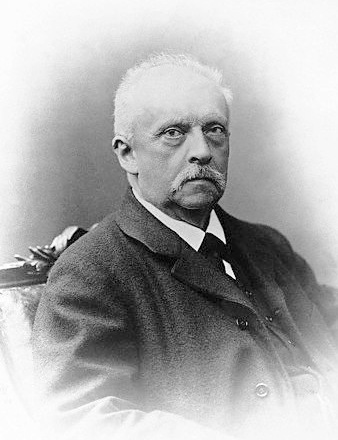
Joseph Fourier: Biography, Achievements & Lasting Legacy

Who Was Joseph Fourier?
Jean-Baptiste Joseph Fourier (; French: [ʒɑ̃ batist ʒozɛf fuʁje]; 21 March 1768 – 16 May 1830) was a French mathematician and physicist born in Auxerre, Burgundy and best known for initiating the investigation of Fourier series, which eventually developed into Fourier analysis and harmonic analysis, and their applications to problems of heat transfer and vibrations. The Fourier transform and Fourier's law of conduction are also named in his honour. Fourier is also generally credited with the discovery of the greenhouse effect.
Key Facts
- Born: March 21, 1768 in Auxerre, Burgundy, Kingdom of France
- Died: 1830
- Field: Mathematics
Legacy and Impact
The influence of Joseph Fourier extends far beyond his own lifetime. He fundamentally shaped the foundations of modern mathematics, and his theorems and mathematical frameworks remain foundational to this day.
Though he passed away in 1830, his ideas continue to be studied, debated, and built upon by scholars and practitioners worldwide.
Twenty questions, eight minutes on the clock, and a percentile measured against everyone who has taken it. No sign-up.
Take the IQ test →Discover more brilliant minds in Mathematics
Explore Mathematics GeniusesRelated Articles
Explore More
Read the full profile of Joseph Fourier
View Joseph Fourier's Profile →