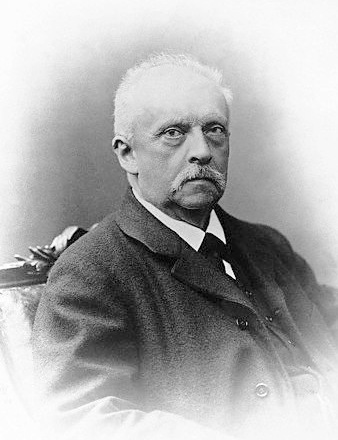
Nicolaus Copernicus (1473–1543)
Copernicus proposed heliocentrism — the revolutionary idea that Earth orbits the Sun, not vice versa — in his De Revolutionibus Orbium Coelestium (1543), published the year he died. The Copernican Revolution displaced humanity from the center of the cosmos and triggered the Scientific Revolution. He is the hinge point between ancient and modern astronomy.
Tycho Brahe (1546–1601)
Tycho Brahe made the most accurate naked-eye astronomical observations in history. Without a telescope, he measured star and planet positions to within 1–4 arcminutes — dramatically more accurate than any predecessor. His data, passed to Johannes Kepler on his death, directly enabled Kepler to discover his laws of planetary motion.
Johannes Kepler (1571–1630)
Kepler used Tycho's data to discover the three laws of planetary motion: planets orbit in ellipses, sweep equal areas in equal times, and have orbital periods proportional to the 3/2 power of their distance from the Sun. These laws replaced the epicycles of Ptolemy and Copernicus and gave Newton the foundation for the law of universal gravitation.
Galileo Galilei (1564–1642)
Galileo turned the newly invented telescope on the sky in 1609, discovering Jupiter's moons, Saturn's rings, lunar craters, Venus's phases, and sunspots. His observations confirmed heliocentrism empirically and brought him into fatal conflict with the Church. He is the father of observational astronomy.
Twenty questions, eight minutes on the clock, and a percentile measured against everyone who has taken it. No sign-up.
Take the IQ test →Edwin Hubble (1889–1953)
Hubble transformed astronomy's scale. In 1924, he proved that the Andromeda Nebula lies far outside the Milky Way — revealing that the universe contains billions of galaxies. In 1929, he discovered Hubble's Law: distant galaxies are receding at speeds proportional to their distance, proving the universe is expanding. The Space Telescope bears his name.
Modern Astronomy
From Vera Rubin's discovery of dark matter's gravitational effects to the Event Horizon Telescope team's first image of a black hole (2019) — astronomy continues to reveal a universe stranger and vaster than any of its pioneers imagined.
Frequently Asked Questions
Who was the greatest astronomer in history?
Copernicus is often called the greatest for triggering the Copernican Revolution; Kepler for the mathematical precision of his laws; Galileo for founding observational astronomy. Hubble's discovery that the universe contains billions of expanding galaxies may be the most consequential astronomical result of the 20th century.
Who invented the telescope?
The telescope was invented by Hans Lippershey, a Dutch spectacle maker, around 1608. Galileo independently improved the design and was the first to use it systematically for astronomical observation — transforming it from a curiosity into a scientific instrument.
Who discovered that the universe is expanding?
Edwin Hubble discovered in 1929 that distant galaxies are receding from us at speeds proportional to their distance — Hubble's Law. This discovery proved the universe is expanding and was the key observational evidence for the Big Bang theory.